The Genetic Genealogist

Adding DNA to the Genealogist's Toolbox

Archive for the "Uncategorized" Category


Article Discussing Genetic Genealogy in the Los Angeles Times

mtDNA-based chart of large human migrations.

Image via Wikipedia

In “Called back to Africa by DNA,” journalist Teresa Watanabe highlights the recent surge of interest in the genetic genealogy by African Americans.  This increased interest is often written about during February, which is Black History Month (see “Genetic Genealogy and Black History Month” from February 2008 and “DNA Testing Jumps During Black History Month” from February 2007).  Although the LA times article rehashes some of the same issues, it also contributes a number of new points to the conversation.

Interesting Tidbits:

Among other things, the article mentions several of the projects that focus on African American genetic genealogy, including African Ancestry:

The curiosity has fueled the growth of DNA testing outfits. African Ancestry Inc., a Washington-based firm, has tested the DNA of 15,000 people against its database of 25,000 African genetic lineages, according to its president, Gina M. Paige. The firm’s clients include Winfrey, film director Spike Lee, musician Quincy Jones, comedian Whoopi Goldberg and actors Morgan Freeman and Don Cheadle.

And the African American DNA Roots Project:

Other DNA testers include Bruce A. Jackson, co-director of the African American DNA Roots Project at the University of Massachusetts, who said he is swamped with so many requests that he has stopped taking them until he works through a two-year backlog.

It appears that both projects are doing very well, and adding valuable new information to the diverse genetic ancestry of African Americans.

Article About Genetic Testing and Privacy at Salon.com

Peter Dizikes at Salon.com writes “Your DNA is a Snitch,” about privacy concerns surrounding genetic testing.  Peter contacted me a little while ago and we talked about some of my thoughts on the topic.  My opinion on the security measures at genetic testing companies was included in the story:

Early-adopting customers tend to agree [that genetic testing companies can protect personal information]. “They have every incentive to keep information private,” says Blaine Bettinger, a law student and genetics blogger in New York state and a 23andMe customer. “A security breach would be devastating for those companies.” Certainly well-funded firms like Navigenics and 23andMe can devote substantial resources to data protection.

I wrote a longer post about the importance of testing company protections last November (see “Security at Navigenics and 23andMe.”)

The Salon.com article is very well-written, and looks at numerous aspects of the issue.  There are a number of other people that I highly respect quoted in the article, including Misha Angrist, Hank Greely, and Linda Avey, among others.  Misha mentioned on his blog today, too; see “Peek-a-boo I sequence you” (Misha, I usually don’t announce my law school career unless I know it’s safe!).

Colleen Fitzpatrick’s New Website

Last September, I interviewed Colleen Fitzpatrick here at TGG.  Colleen has been very busy since then!  She has launched a new website called Identifinders, which offers a number of forensic genealogy services.

Additionally, Colleen was featured in “Does Publishing Need Genealogists?” by Publisher’s Weekly for her work in researching the circumstances surrounding two recent publishing cases: Misha Defonseca’s Misha: A Memoire of the Holocaust and Herman Rosenblat’s Angel at the Fence. From the article:

Their research uncovered baptismal and school records proving that Defonseca didn’t escape the Holocaust by running with wolves. She didn’t need to; her father was a Nazi collaborator. And if Defonseca had denied the evidence, Fitzpatrick and Sergeant were prepared to use DNA, which, along with photographs and archival records, are a forensic genealogist’s stock in trade. “I almost feel disappointed that Misha confessed,” wrote Fitzpatrick on her IdentiFinders.com Web site. “I was looking forward to identifying her through DNA.”

Stephen Pinker, The New York Times, and Counsyl

imageAlthough I can hardly hope to introduce or discuss these recent events any better than Daniel MacArthur has already given at Genetic Future, I will at least bring this new information to your attention.

Last Wednesday the New York Times printed “My Genome, My Self”, an article written by Stephen Pinker, one of the Personal Genome Project’s “First 10.”  In the article, Pinker talks about his experience with genome sequencing through the PGP.  It is especially interesting since Pinker analyzes the issue from the point of view of a psychologist.  I highly recommend reading this article if you are at all interested in personalized medicine or genetics.

Much of the article discusses the confusing results that are returned by genome/disease analysis, due to our current lack of understanding in this enormous field:

“It became all the more confusing when I browsed for genes beyond those on the summary page. Both the P.G.P. and the genome browser turned up studies that linked various of my genes to an elevated risk of prostate cancer, deflating my initial relief at the lowered risk. Assessing risks from genomic data is not like using a pregnancy-test kit with its bright blue line. It’s more like writing a term paper on a topic with a huge and chaotic research literature. You are whipsawed by contradictory studies with different sample sizes, ages, sexes, ethnicities, selection criteria and levels of statistical significance. Geneticists working for 23andMe sift through the journals and make their best judgments of which associations are solid. But these judgments are necessarily subjective, and they can quickly become obsolete now that cheap genotyping techniques have opened the floodgates to new studies.”

Pinker and Genetic Genealogy

Pinker, who has had mtDNA and Y-DNA ancestry testing, discusses these results as well:

“It’s thrilling to find yourself so tangibly connected to two millenniums of history. And even this secular, ecumenical Jew experienced a primitive tribal stirring in learning of a deep genealogy that coincides with the handing down of traditions I grew up with. But my blue eyes remind me not to get carried away with delusions about a Semitic essence. Mitochondrial DNA, and the Y chromosome, do not literally tell you about “your ancestry” but only half of your ancestry a generation ago, a quarter two generations ago and so on, shrinking exponentially the further back you go. In fact, since the further back you go the more ancestors you theoretically have (eight great-grandparents, sixteen great-great-grandparents and so on), at some point there aren’t enough ancestors to go around, everyone’s ancestors overlap with everyone else’s, and the very concept of personal ancestry becomes meaningless. I found it just as thrilling to zoom outward in the diagrams of my genetic lineage and see my place in a family tree that embraces all of humanity.”

Counsyl – A New Player in the Field

In the article, Pinker references a new entrant in the field of personalized medicine, Counsyl:

“The genes analyzed by a new company called Counsyl are more actionable, as they say in the trade. Their “universal carrier screen” is meant to tell prospective parents whether they carry genes that put their potential children at risk for more than a hundred serious diseases like cystic fibrosis and alpha thalassemia.”

According to their website, Counsyl plans to offer a saliva-based test for more than 100 serious genetic diseases.  The test will be offered directly to consumers through the website, as well as through medical centers in the U.S.  There is no launch date set.

In addition to the articles at Genetic Future, you can read more reactions to this piece at:

The ASHG Ancestry Testing Task Force

Charmaine Royal, Ph.D., discusses “The pitfalls of tracing your ancestry” at NatureNews.  Dr. Royal, an associate professor at the Duke Institute for Genome Sciences and Policy, co-chairs the ASHG Ancestry Testing Task Force.

Brendan Maher of Nature’s In the Field blog has more at “ASHG 2008: A stance, more or less, on genetic ancestry testing.”  Not much more covered here that was already written at The Spittoon – see “ASHG Releases Ancestry Testing Statement Emphasizing Interpretation.”

If you’re interested in seeing the Task Force’s webcast, it’s available here.

The Genetic Genealogist’s Wordle

Since everyone else in the genealogical world has already submitted a version of their Wordle, I thought I’d join in on the fun.

Here’s mine:

And another:

TGG Interview Series VII – Katherine Hope Borges

image The next interview in the TGG Interview Series with members of the Genetic Genealogy field is with Katherine Hope Borges.  Katherine is the Director of the ISOGG, the International Society of Genetic Genealogists.  In June of last year, I highlighted a video interview with Katherine done by Roots Television.
In addition to the her work with the ISOGG, Katherine recently launched DNA Fund to provide scholarships and funding for DNA testing, which can often be expensive.

In the following interview, Katherine talks about her introduction to genetic genealogy as well as the launch of DNA Fund.

TGG: How long have you been actively involved in genetic genealogy, and how did you become interested in the field?

Katherine Hope Borges: I learned about genetic genealogy in 2003 from a speaker at a Daughters of the American Revolution (DAR) meeting.  The speaker, a DNA Project Administrator, shared her success in using DNA for genealogy so I decided to try it.  My father tested in May 2003 and I established a DNA project in October of the same year.

TGG: You are one of the founders of the International Society of Genetic Genealogy.  How did the group come about, and what are the goals of the organization?
KHB: The birth of ISOGG was a result of the 2004 International Conference on Genetic Genealogy hosted by Family Tree DNA.  Part of the credit goes to one of the conference speakers, Megan Smolenyak-Smolenyak, who mentioned how there were so many misconceptions about genetic genealogy that people were being banned from forums and lists for even talking about it.  This illustrated the lack of education on the subject and the need for a supportive network for genetic genealogists.  I held meetings in Northern and Southern California to find out if others shared this vision and those people became the Founders.

ISOGG is a dues free society with no revenue sources.  It probably sounds a little crazy to run an organization with no funding, but as a dues paying member of several lineage and genealogical societies, if I have extra spending money, I want it to go to DNA testing!  Since ISOGG is primarily an internet-based society, the costs are relatively low.  Those who share the mission of ISOGG, to promote and educate about genetic genealogy support it by answering questions on the mailing lists, compiling information on web pages, giving a speech to a local society, etc.

TGG: Has genetic genealogy helped you break through any of your brick walls or solve a family mystery?

KHB: Many times now, but what is funny is that when my father tested and compared against two others of the same surname, no one matched!  Good thing a close match came in later that year or otherwise, I might have thrown in the towel on the whole business.

The brick wall that was broken by my father’s match was whether two men with the same surname in the same county listed in the 1790 South Carolina U.S. Census were related or not.  Indeed they were and a bible record was later discovered showing the two men were brothers.

TGG: What do you think the future holds for genetic genealogy?

KHB: Currently, genetic genealogy still seems to be used as a  “last resort”  to get through  a brick wall;  but I think that as it grows in popularity and use, that people just beginning genealogy may start by doing a DNA test.  Additionally, I think that advances in genetics research hold many amazing discoveries to come on what can be learned about our ancestral origins.

TGG: Aside from the ISOGG, what other genealogy-related projects are you involved with?

KHB: I recently launched The DNA Fund www.dnafund.org – an organization to provide scholarships and grants for DNA testing.  There is a real need for this as it can be a rather costly aspect of genealogy, but I also want it to benefit the scientific genetics community as the two are symbiotic.
I am also very involved in DAR and have formed a local society of Children of the American Revolution.  In addition, I am a Girl Scout Leader and the first badge my troop earned as Cadettes was the heritage badge!  (What else, right?  There is no “DNA badge”…yet…)
All of this leaves little time for traditional genealogy research, but I do manage a few days for that out of the year.  I attend an annual family reunion in South Carolina and always try to fit in research at either the South Carolina Archives or  the University of South Carolina.  If I have the opportunity to attend DAR Continental Congress in Washington DC, then most of my free time there is spent in the stacks of the DAR Library.

TGG: Thank you for a great interview Katherine!

In Memoriam – Leo William Little

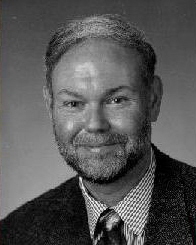
Last week the genetic genealogy community lost one of its treasured members, Leo W. Little.

Leo’s passing was announced on the GENEALOGY-DNA mailing list on Sunday evening. Since then, many members of that mailing list, the ISOGG Yahoo Group, and the DNA- ANTHROGENEALOGY Yahoo Group have expressed their sympathy to Leo’s family and expressed their admiration for his work and contributions to the field of genetic genealogy.

Leo was the administrator of at least two DNA Projects, including the null439 DNA Project, and the Little DNA Project. The null439 group was begun by Leo after he helped characterize the “Little SNP” in 2002, a SNP that is also called “L1″ or “S26″. In 2005 Leo posted an email to the GENEALOGY-DNA that explained the discovery of the SNP, which defines the R1b1b2a1c Haplogroup in the new 2008 ISOGG Y-DNA Haplogroup Tree (previously known as R1b1c9a). The L1 SNP causes the primers used by Family Tree DNA to analyze Y-STR repeats at DYS439 to fail to anneal, and thus no result is recorded for that locus (i.e., it is “null”). The result is recorded as a default 12 with a blue asterisk. Here is Leo’s description from the null439 page:

“SNPs are passed down from father to son, and all males with a null439 SNP descend from a common ancestor who lived within the last 5000 years. Most null439 males with known origins have roots in England or Germany. The null439 SNP is also called “L1” or “S26“. L1/S26 is carried by about a half of one percent of R1b males. All males with L1/S26 also have the SNP “S21” (also known as “U106“) which defines the R1b1b2g subgroup (formerly R1b1c9).”

The null439 Project currently has at least 83 members, including myself. In June 2006 my Y-DNA analysis revealed that I have the L1 SNP and thus had no result at DYS439. When I joined the null439 project at FTDNA, Leo promptly emailed me and welcomed me to the group.

Other Contributions

But the S26 SNP and the null429 group are just a few of Leo’s contributions to the field. Other work includes his incredibly useful “Eclectic Genetic Genealogy Information” page, or a number of articles at the Little DNA Project (including this one entitled “Tracing the Borders Littles through DNA Testing“). Indeed, a search of the GENEALOGY-DNA archives reveals at least 150 messages posted by Leo’s email address (lwlittle@yahoo.com), and a search of his name reveals many more messages in which he was mentioned. Leo was a consultant for the Sorenson Molecular Genealogy Foundation, a member of the following organizations: the Association of Professional Genealogists, the International Society of Genetic Genealogy, and the Austin Genealogical Society. In July 2005, Leo’s work was highlighted in an article from Time magazine entitled “Can DNA Reveal Your Roots?“:

“One of the less controversial aspects of genetic genealogy is its ability to help people fill in gaps in their family tree. Leo Little, a retired engineer in Austin, Texas, had used historical records to trace his lineage back to his great-great-grandfather Thomas Little, who was born in Alabama in 1816. Then, he says, “I hit a brick wall. I knew my Littles were from the South, but there were a lot of Littles from the South, and it was impossible to sort out.” After he took a DNA test from Family Tree DNA, he began leading one of the company’s 1,900 surname projects, in this case checking test results on Littles. As a result, he has identified three distant cousins. By pooling their family records, the cousins have been able to trace their roots all the way back to 1680.”

Since Leo’s passing was so unexpected, the family is still dealing with the shock. On Monday, Terry Barton posted to the ISOGG Yahoo Group that the family had been contacted, and that Mrs. Little had requested that there be “no phone calls, no emails, no cards, no contact of any kind.” She did mention the possibility of a memorial fund in the future. Additionally, Mrs. Little indicated that she would try to respond to Leo’s emails at some point.

If you would like to leave a comment below, I will compile them and send them in letter to Mrs. Little when she is ready to receive mail. In addition, this post will be available indefinitely as a memorial to Leo Little. Thank you to Katherine Hope Borges for her assistance in completing this post.

UPDATE From Katherine (May 27 2008):

Leo was heavily involved in his church history project and donations may be made in his name to (with thanks to Derrell and Terry for sharing this info):

Highland Park Baptist Church
5206 Balcones Drive
Austin TX 78731

In DNA Fund, we will have fund designated for a “Leo Little Memorial Scholarship”, but since the 501(c)(3) is not yet in effect, contributions are not tax-deductible. However, contributions may be sent to DNA Fund’s General Fund at Family Tree DNA and will be designated for null research.

TGG Accepted To The 9rules Network

9rules The Genetic Genealogist has been accepted to 9rules in the latest round of submissions! I’m honored to be accepted since 9rules is a collection of some of the best blogs around, and I hope that I can live up to the challenge. 9rules has a ‘technology’ community, but not a ’science’ community; think there’s any chance they’ll start one? More news to come.

And don’t forget that starting next Tuesday I’m starting a great nine-part series of interviews with some of the biggest names in the field of genetic genealogy!

Welcome to The Genetic Genealogist!

tggfinal To the readers coming from yesterday’s article by George C. Morgan in The Ancestry Weekly Journal, welcome to The Genetic Genealogist! The eBook that George mentioned – I Have the Results of My Genetic Genealogy Test, Now What? – is available by simply clicking “Download Now” in the right sidebar.

If you are interested in reading more about genetic genealogy and personal genomics, visit my Featured Articles page for all of my favorite and most popular articles. And please subscribe to my feed to stay up-to-date on the latest in genetic genealogy news and information.

In the coming weeks, I’ll be featuring an interview series with some of the biggest names in genetic genealogy, so stay tuned!