The Genetic Genealogist

Adding DNA to the Genealogist's Toolbox

Archive for the "Miscellaneous" Category


TGG Interview Series VIII – Max Blankfeld

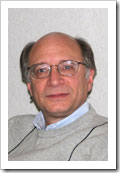
image The eighth edition of the TGG Interview Series is with Max Blankfeld.  Max is Vice-President of Marketing and Operations at Family Tree DNA, one of the largest genetic genealogy companies in the world.  In addition, together with Bennett Greenspan, Max launched DNA Traits, a company that tests DNA for genetic diseases and inherited conditions.  Max is a frequent contributor to genetic genealogy mailing lists and has answered many people’s questions about testing, results, an the field in general.

From the “About” page at Family Tree DNA:

“Originally from Brazil, received his BBA from Fundação Getulio Vargas, and MBA from Rice University. While his first college education was in the field of Aeronautical Engineering, he gave it up to become a foreign correspondent. After that, he started and managed several successful ventures in the area of public relations as well as consumer goods both in Brazil and the US.”
In the following interview, Max discusses his lengthy roots with genetic genealogy, the launch of DNA Traits, and the future of genetic genealogy.

TGG: How long have you been actively involved in genetic genealogy, and how did you become interested in the field?  Have you undergone genetic genealogy testing yourself?  Were you surprised with the results?  Did the results help you break through any of your brick walls or solve a family mystery?

Max Blankfeld: I was introduced to the concept of genetic genealogy at the very beginning when Bennett was talking about doing the “proof of concept” with Mike Hammer at the University of Arizona, even before the name Family Tree DNA had been registered. This was in 1999, and since I have the habit of not trashing my emails, I still have our exchanges on the subject dated from 1999.

I certainly did test, in 2000, and while the results did not surprise me, it helped find and confirm distant relationships, and also gave me very close matches with people that I was not aware of.

So here’s my DNA break through: in 1983, when I was still in Brazil, our family received a letter from a Blankfield living in Australia, where he gave us some of his genealogy and asked if we could possibly be related. The problem was that my father passed away in 1981, and never discussed very much his family with me because he was a Holocaust survivor, and both parents and sisters were murdered by the Nazis in 1942. So, I didn’t have any facts to check against that letter. I kept the letter in the drawer. Fast forward to the year 2000, and the start of genetic genealogy. I start looking for Blank(en)f(i)elds to be test. Saul Isseroff, an avid genealogist  from England tells me that he’s related to some Blankfields in South Africa, and gives me the name of a female Blankfield. She convinces her father to be tested. High expectations. Results come in and bingo – very close match. I ask for their family tree and guess what – that man from Australia is in that tree! We put together both trees, and it looks like we shared the same great-great-great-great-grandfather! (I must say that I had a previous attempt with another Blankfield that did not show a relationship)

TGG:  Is there any concern that people with little experience in the area of genetic genealogy will confuse ancestry testing with personal genomics services, especially in light of all the recent negative press about personal genomics?

MB: Certainly. That is why our first priority has always been to educate before selling. I remember that the first trade-shows that Bennett and I went, we never took kits to sell, and our entire approach was just to make people aware of genetic genealogy and how they could use it. With time, people started coming to our booth and ask if we brought kits to test them.

As a former journalist I can tell you that negative press will always be there, no matter what area of business one is in. Unfortunately, many journalists write about topics that they are not experts, and this leads to negative press or some absurd and totally wrong statements (I have good stories from my times as a foreign correspondent, but I will leave this to a different forum).

Educating is the key. Not just the customer, but also the press. We spend hours on the phone with journalists from all over the United States and abroad, in very detailed conversations so that they can understand the subject. In fact, our favorite thing is to educate people about it and we do not measure the time we spend on the phone for this purpose.

TGG: You recently launched DNATraits together with Mr. Greenspan.  Could you tell us a little bit about the new company and what it offers?

MB: This is a field that we were reluctant to get in, as genealogists normally don’t like to mix genealogy and health information. However, we noticed that over the years more and more people approached us on the subject of genetic diseases or inherited conditions. This lead us to form a separate entity for this specific purpose, where we use totally different test kits, absolutely unrelated to Family Tree DNA tests and stored DNA. It is currently offering Mendelian tests for several inherited diseases, and we will be adding more tests every few months. We want to change the paradigm in this field, allowing people to get tested for substantially less than what the current market price is. We want for DNATraits to make a difference in this area, and by being very affordable, allow the widest number of people to get tested so that the quantity of people with inherited diseases can be reduced.

TGG: What do you think the future holds for genetic genealogy?

MB: It may not grow at the rate that we have seen it growing in the past years, but it will still grow, and also, with the team of scientists that Family Tree DNA has, we will keep seeing additional discoveries, and offering additional tests that can help further one’s genealogical research. And, as we integrate additional features in the future, more tools that embed more traditional genealogy along with the results of DNA testing, Family Tree DNA will continue being positioned as the leader, as the most complete and scientifically accurate company in the market – and of course, with the largest database – which is a key element in this field.

TGG:  Thank you Max for a great interview!

Sequencing the Cacao Tree Genome

Although it’s not really genetic genealogy, this story was too interesting to pass up.

Mars food company announced on Friday that it is partnering with IBM and the Department of Agriculture to sequence and analyze the entire cocoa genome. Mars will provide more than $10 million and will make the sequencing and analysis results freely accessible through the Public Intellectual Property Resource for Agriculture.

Unfortunately for those of us that love chocolate, the cacao tree is under attack. According to an article in the Washington Post, “West Africa, which produces 70% of the world’s cocoa, has been hammered by bad weather in the past few years.” Additionally, the cocoa industry in Brazil has been almost completely destroyed by a fungus known as witches’ broom.

The cocoa genome is roughly 400 to 500 million base pairs, compared to 3 billion in the human genome. As a result, the scientists involved in the project estimate that it will take a year to sequence the cocoa genome.

TGG Interview Series V – Whit Athey

The name Whit Athey is undoubtedly very familiar to many genetic genealogists. Whit’s Haplogroup Predictor, used to predict an individual’s paternal haplogroup based on DNA test results, is one of the most valuable online (and FREE) tools for genetic genealogists.

Among Whit’s many contributions to the field, he is also the Editor (and frequent contributor) of the Journal of Genetic Genealogy. From his biosketch:

“Whit Athey is a retired physicist whose working career was primarily at the Food and Drug Administration where he was the chief of one of the medical device labs. He received his doctorate in physics and biochemistry at Tufts University, and undergraduate (engineering) and masters (math) degrees at Auburn University. For several years during the 1980s, he also taught one course each semester in the Electrical Engineering Department of the University of Maryland. Besides his interest in genetic genealogy, he is an amateur astronomer and has his own small observatory near his home in Brookeville, MD.”

In the following interview, we talk about Whit’s introduction to genetic genealogy, the creation of the JoGG, and Whit’s thoughts about the future of the field.

TGG: How long have you been actively involved in genetic genealogy, and how did you become interested in the field?

Whit Athey: I have always been interested in molecular biology, and my graduate work, though primarily in physics, was partly in molecular biology. When the article by Cann, Stoneking, and Wilson came out about 20 years ago, I was really struck by the potential for a better understanding of human origins. However, at that time I was heavily involved in other things, so I was just an interested bystander for many years.

I bought Bryan Sykes’s book, The Seven Daughters of Eve, when it was published in 2001, and this rekindled my interest. I almost ordered the mtDNA sequencing that his company was offering, but it was rather pricey in those days, so I again held off getting personally involved. I did develop a course that I called “The Human Family,” and presented it several times in 2001 and 2002 to local groups.

In 2003 I finally took the plunge and ordered both Y-STR tests and mtDNA sequencing for myself, and I started a surname project for my own surname. I started five other projects during 2004 and 2005.

TGG: You are one of the founders of the Journal of Genetic Genealogy. How did this journal come about, and what are the journal’s goals?

WA: JoGG was really the brainchild of Ann Turner and Dennis Garvey. They had really brought a lot of good work to bear on our fledgling field, and the journal was really their idea. Ann and Dennis can better address the question of why they thought that we needed a journal. The idea immediately appealed to me because of the quality of some of the “amateur” genetics studies that I was aware of. I thought that a number of these studies were worthy of publication in some form.

Anyway, Ann and Dennis organized a meeting of several interested people, including myself, just after the first Family Tree DNA (FTDNA) conference in Houston in November 2004, with the purpose of discussing the possibilities of a new journal. I volunteered to help with getting the journal off the ground. Probably because I seemed to have the most time available, I ended up as its editor.

TGG: Have you undergone genetic genealogy testing? Were you surprised with the results? Did the results help you break through any of your brick walls or solve a family mystery?

WA: Yes, I have tested myself on over 115 Y-STR markers and I have had a full mtDNA sequence done. I am a hopeless test junkie.

My Y haplogroup was quite a surprise to me, considering that my paternal line came to the U.S. from Galway, which is in a part of Ireland that is over 95% R1b. I am in Haplogroup G2-U8, which occurs in northwest Europeans at only about a 1.5% frequency. Furthermore, my cluster of 20 G2 Atheys is a considerable genetic distance from any other G2’s, except for one small family cluster that has the surname, Whitfield. This is quite a coincidence since my given name is Whitfield. So far, we cannot see how it is possible that our two lines are so similar when it appears that the common ancestor must have lived prior to the year 1400.

Most people seem to think that mtDNA has little role to play in genealogy. If you are simply looking for matches in the large databases, then I would agree that most matches that are found are likely to be meaningless for genealogy. However, in the area of hypothesis testing, I think that it can be quite useful. If you are comparing the mtDNA of two people who are suggested (by traditional genealogical methods) to be related along a matrilineal line, then the mtDNA results can either disprove or support your hypothesis.

TGG: What do you think the future holds for genetic genealogy?

WA: I can’t help but believe that we will see a continuing decrease in price and an increase in the number of tests that are available. For the Y-chromosome phylogenetic tree it appears to me that the addition of new SNPs will probably double every 2-3 years. We are also likely to see many new complete mtDNA sequences added to the world’s databases. This increase in resolution for both Y-chromosome and mtDNA trees, together with more people participating in testing, will bring new understanding of human migrations.

I believe that “amateurs” will continue to play a key role in new developments in the future, probably even more than at present. We have the ability to move quickly on a new question and a vast population available of people who have been tested. I think that the time has past when our community just waits on the professional population geneticists to bring new data to us through publications in traditional journals. I think that we will be playing a leading role in the future.

TGG: Thank you, Whit, for a terrific interview!

Other posts in the TGG Interview Series:

TGG Interview Series IV – Alastair Greenshields

button_dnah_tgg

Today’s interview is with Alastair Greenshields, founder of the genetic genealogy testing company DNA Heritage. Alastair is also the founder of Ybase, a Y-DNA database. I recently wrote about a helpful and informative video series by Alastair for DNA newbies (see “New Videos for Genetic Genealogists“).

In today’s interview, I ask Alastair about his introduction to genetic genealogy, some of the ethical issues raised by the recent launches of personal genomics companies, and about the future of genetic genealogy.

TGG: How long have you been involved in genetic genealogy, and how did you become interested in the field? Have you undergone genetic genealogy testing yourself? Were you surprised with the results? Did the results help you break through any of your brick walls or solve a family mystery? You founded DNA Heritage in 2003. What led you to create the company? Can you also tell us a little bit about Ybase?

Alastair Greenshields: I got started in genetic genealogy back in 2002. My mother had been researching the family line for many years and this new DNA thing looked promising in connecting lineages up, untangling them, and proving if the paper trails were correct. After so much invested in paper research it was a sensible idea to check using a different method. A company in the UK was contacted, swabs were sent out and samples sent in. Results came back but it was very hard to work out how people were related. As the scientist in the family I tried my best in interpreting them but came to the conclusion that the 10 markers that we were tested upon weren’t enough for any accurate comparison.

I looked around at the current research at that time and came to the conclusion that the test could be made far more accurate. Working alongside a university research lab, I developed a 21-marker Y-chromosome STR test and brought it to market. While the test was in development, I also created Ybase which helped people compare results more easily (at the time there were only in-house databases). That first year of Ybase allowed me to get fully-acquainted with the many different types of questions genealogists wanted answered and put me in good stead when DNA Heritage was officially launched.

The testing into our own family line is ongoing…

Have I been tested? Many times. My own DNA is often one of the guinea-pig samples for the tests that we do. Surprised by the results? I have an open mind undertaking any test – a better word would be intrigued. It’s a source of satisfaction when customers feel the same way; and if it gets people thinking how we are all connected and part of a bigger picture then I’m happy.

TGG: In light of the recent ethical issues raised by the launch of companies like 23andMe and deCODEme, have you noticed any increase in concern by either European or American customers?

AG: There is of course differentiation between genetic genealogy tests and medically informative tests. Companies providing direct-to-consumer health tests have been around for some time; 23andMe and deCODEme are simply getting a lot of media focus right now. The SNP chips used have been available for a while but when you have a lowering of cost, two competitors fuelling the media interest and combine that with a big marketing push, they are naturally being widely discussed about. I think the valid concern of most ethicists is the volume of potentially medically-informative genetic data provided vs. our current understanding of what it all means along with what impact it has on the individuals concerned. And then add to this the desire of many customers to want to share this data with others.

Prevention is less expensive than treatment. An environment where people are more savvy about their health is obviously desirable. But we are still in our infancy of our understanding. When a journal comes out with ground-breaking research on a link between genetics and physical condition, it is often tempered with conflicting results months later. So there has to be a balance on the interpretation of results and expectation by the customer. Companies understand this but ethicists do an essential job of pointing out the need for this balance.

One harder stance is taken by the State of New York in that a doctor is required as an intermediary for their residents, even for paternity testing. This view isn’t shared by other states and so maybe this is the start of the trend, but more likely that NY will relax their own regulations. Incidentally, because of the nature of our own tests, no intermediary is required.

In all, the genetic cat is out of the bag and people knowing more about their genetic selves will increase dramatically in the years to come. Personalized medicine will make a big impact. It’s the medical unknown of what it all means which raises doubt.

The sharing of this data raises issues also. Do you share just the conclusions that e.g. you may have a pre-disposition to Celiac Disease, or do you share the hard data for which not everything is known? On the whole, the participants are self-selecting, do their homework and are quite aware that the data may reveal other genetic information later on. It’s the sub-section who aren’t fully aware that need protection. And this is the crux.

In genetic genealogy, the picture is much clearer. The results aren’t medically informative*. The results of a Y-chromosome or mtDNA test won’t even identify you as an individual. They are good for known lineages and thus, to make sense of them it works best if results are shared, particularly the Y-chromosome STR test.

*There are two exceptions; very rarely a DYS464 on the Y-chromosome is not present which may indicate infertility (although never encountered by us in several years of testing), and with whole mtDNA sequencing when you venture into genes you reveal medical information. Which is why we don’t perform that full sequencing test.

If there are any differences between American and European customers regarding their genetic data at all it has been on privacy and the perceived threat from insurance companies and employers. In the US, there was always the overhanging question of medical genetic data being used against them. With the (impending) passing of GINA, the basis for this worry will be minimal. And again, because of the tests that we do, any issue has been negligible.

TGG: What do you think the future holds for genetic genealogy?

AG: Always hard but as ever, genetic genealogy will continue to be more mainstream. We’re now seeing many more professional genealogists using it alongside their library research with great results. I’m sure that one day DAR and SAR will begin to accept lineage data as acceptable evidence for inclusion.

TGG: Thank you, Alastair, for a great interview!

Other posts in the TGG Interview Series:

Interview Series III – Terry Barton

imageTerry Barton is co-founder of WorldFamilies.net (along with Richard Barton), a website devoted to helping genealogists host Surname, Geographic, or Haplogroup Projects and learn more about genetic genealogy. When I began the Bettinger Surname DNA Project, Terry helped me through the entire process of setting up the site. From the WorldFamilies website:

“Terry is co-founder of WorldFamilies.net, President of the Barton Historical Society (BHS) and Co-Leader of the 193 member Barton DNA Project. He is the “Line Leader” for the Thomas (1,2,3) Barton family of Stafford Co VA and for the David Barton married Ruth Oldham family. He has made a number of presentations about using DNA in Genealogy, the Barton DNA project and his great-grandparent’s “Barton House” and has written many articles for the BHS Newsletters and website.”

In the following interview, I ask Terry about his introduction to genetic genealogy, the origin of the World Families Network, and his thoughts on the future of genetic genealogy.

The Genetic Genealogist: How long have you been actively involved in genetic genealogy, and how did you become interested in the field?

Terry Barton: I got involved in genetic genealogy in 2001 as assistant admin for the Barton Surname Project – when it was formed. We worked with BYU’s Center for Molecular Genealogy – which eventually became Relative Genetics. Our first two rounds of testing were in “batches”, with 52 men in the first batch and 42 in the second. I became the lead admin with batch 2 and have led the project since then. I was already actively researching my ancestry by traditional means and was President of the Barton Historical Society, leading that group into becoming the sponsoring organization for the Barton DNA Project.

TGG: Have you undergone genetic genealogy testing? Were you surprised with the results? Did the results help you break through any of your brick walls or solve a family mystery?

TB: I am personally tested on 116 yDNA markers, the available SNPs and the Full mtDNA Genetic Sequence. I have tested my son to the same 116 markers (we match perfectly) However, my Dad and I each started a mutation (his is at DYS388, while mine is at DYS452) So, I am 41/43 when compared to my Uncle. I use this example to explain how you can’t count mutations to determine how closely related you are to someone. I was pleased to identify the probable ancestral home of my Bartons as Lancashire and the probable home of my mother’s Hodges family as Kent. My Bartons appear to be the Celts and my mother’s Hodges to be the Frisians (both conclusions are still tentative) I have also learned that most southern American Bartons are my genetic kin and that a number of the southern American Hodges are my genetic kin. I have dna tests for another half dozen of my ancestral lines and mtDNA FGS tests on my Dad and Wife. There are too many success stories across this range of testing to share here.

TGG: You are one of the co-founders of the World Families Network. How did the site come about, and what are its goals?

TB: My partner, Dr. Richard Barton (also co-admin of the Barton Project) is my genetic kin – we found each other through the project. Our most recent common ancestor was born no later than c1620s – we have no paper trail connection. (Rich is a 43/43 match to my Uncle) We used Rich’s website leadership to help us address our early project weakness of low internet visibility and started thinking in early 2004 about how we could share our learning with other surname projects who needed information and/or website help. Over the course of 2004, we evolved into much of what you see today, providing an array of helpful information and supporting many surname projects in a variety of ways. Our goal is to provide an array of useful services to the Genetic Genealogy community – and to have fun doing it.

TGG: What other genetic genealogy-related projects are you involved with?

TB: I am lead or support admin for over 50 of my ancestral surname dna projects. In many cases, I have evolved to being only the technical advisor or support, while I (or our staff) provide leadership for many more of the projects than I wish (which means I haven’t found the right cousin to get involved). I love the connections I’ve made and am constantly amazed at how many folks will go out of their way to help me – or to share info with me. I also co-lead the Va-1600s geographical projects and the mt-T1 haplogroup project and am one of four admins on the T_FGS research project. I am webmaster and founding board member of the Journal of Genetic Genealogy, serve on the Board of the Cobb County Genealogical Society and a member of ISOGG. I continue as President of the Barton Historical Society and am a founding member of the Hodges-Hodge Society, which came out of the Surname dna project it now sponsors. I speak regularly on genetic genealogy. I probably missed something.

TGG: What do you think the future holds for genetic genealogy?

TB: When I started in 2001, 12 markers was a lot! By the time Barton (finally) got our first batch of results in 2002, we received info on 23 markers – which was incredible. I used to think 100 markers and 100 members would bring all of the answers (neither did). When I look to the future and try to imagine – I really can’t identify specifics – other than to anticipate that we’ll know so much more than now. I realize that we are building the foundation for that future and hope that those who follow appreciate what we have done (as they laugh at the primitive info and understanding that we had “way back in 2008″. )

My personal quest is to develop enough learning through dna to replace the lost paper trails. I don’t know if that will be possible – but I intend to keep trying.

TGG: Thank you, Terry, for this terrific interview!

Other posts in the TGG Interview Series:

Interview Series II – Megan Smolenyak Smolenyak

image If you’ve ever even thought about testing your own DNA for genealogical purposes, then you are almost guaranteed to have heard of Megan Smolenyak Smolenyak. Megan is the Chief Family Historian and North American spokesperson for Ancestry.com, as well as the co-founder of Roots Television, an online channel of genealogy and history-oriented programming. Additionally, Megan is the co-author of “Trace Your Roots With DNA”, the premiere book on genetic genealogy (the other co-author, Ann Turner, will be featured later in this series).
Megan blogs about genetic genealogy and other genealogical topics at Megan’s Roots World (which I highly recommend adding to your feed reader or daily reading list). In the following interview, Megan talks about her introduction to genetic genealogy, about the field as it stands today, and about some of the possible future directions of DNA testing.

The Genetic Genealogist: How long have you been actively involved in genetic genealogy, and how did you become interested in the field?

Megan Smolenyak Smolenyak: I’ve been an almost lifelong genealogist, but the genetic component entered the picture for me around 1999-2000 thanks to some work I was doing with the U.S. Army. I track down families of soldiers still unaccounted for — mostly from Korea, but also Southeast Asia, WWII and even WWI. It’s my responsibility to locate the next of kin and three mtDNA candidates — in other words, three relatives of the soldier who share the same mtDNA (maternal) line. Because of this, when the first couple of companies launched in 2000, I was one of the first in line simply because I had already had the opportunity to learn the fundamentals of how DNA testing could be used for genealogical purposes.

TGG: Has genetic genealogy helped you break through any of your brick walls or solve a family mystery?

MSS: Definitely. My first experience with genetic genealogy was the Smolenyak tale featured in the “Did She Marry Her Cousin? episode of DNA Stories in the video player on your blog. It turned out my hypothesis was wrong, and although I was initially disappointed, I realized that I had just saved myself years of effort and who knows how much money trying to prove something that was completely false. That’s what made me an early proponent. I realized right out of the gate that DNA can sometimes resolve mysteries that the paper trail never will.

TGG: Lately the news has been filled with stories about the ethical issues associated with genetic testing, largely as a result of the launch of new companies like 23andMe, deCODEme, and Navigenics. How does genetic genealogy factor into this discussion?

MSS: As much as I’d like to claim that we’re a different animal, the fact is that these new companies provide some ancestral information. In fact, there already seems to be slightly greater emphasis on this aspect than when they first launched, perhaps because they’ve realized there’s an existing market. So going forward, it’s virtually inevitable that the general public will intermingle genetic genealogy companies and offerings with these new tests and companies. Overall, I’m delighted with these new possibilities, but I confess there’s a small part of me that’s mourning a loss of innocence of sorts. Strictly genealogical tests didn’t give away your secrets (well, except for the occasional NPE!), so folks could feel quite comfortable taking them. Now, with the addition of medical and other information, people will likely think twice. Having said that, I think we all knew this time was coming and I’m glad to see the field moving forward.

TGG: What do you think the future holds for genetic genealogy?

MSS: My poor little brain can’t fathom all the possibilities, but I believe we’re entering the genomics age. The genetic genie is out of the bottle, so it’s time to buckle our seatbelts and hang on (how’s that for a mixed metaphor?)! I’ve always thought it would be the medical aspects of genetics that would drive things forward in a big way and that’s clearly happening. I can’t even begin to imagine all the ethical issues we’ll all wrestle with, but because of the medical benefits, I think it’s inevitable that genetics will become a routine part of our everyday lives. Just as we have a generation or so that’s grown up taking computers and the internet for granted, I think the same will be true of genetics for those being born now.

What’s especially interesting to me is the public’s involvement in all this. I recently interviewed with a journalist from Le Monde, and remarked that this is the first scientific revolution that will at least be partly driven by public participation. An obvious example of this is impatient genealogists applying pressure on scientists to uncover more ancestrally-informative SNPs. We do this because we want to know more about our roots. Imagine the amplification of this phenomenon when the mass public starts campaigning for specific genetic research for medical conditions that affect their families. And I suspect that the existence of companies like 23andMe will only encourage this kind of (to me, positive!) behavior.

Because genetic genealogy has been around since 2000, I think anyone trying to get a handle on this interplay between the scientific community and the general public would be smart to study us. And yes, genetic genealogists will definitely benefit from all the advances. Remember, it was just circa 2000-2001 that a 4-marker Y-DNA test sold to the public was considered amazing, and now, none of us would waste our time with such a test. We ain’t seen nothing yet!

TGG: Aside from genetic genealogy, what other genealogy-related projects are you involved with?

MSS: Phew! A lot! I already mentioned my work with the U.S. Army, but I’m also the Chief Family Historian and North American spokesperson for Ancestry.com and co-founder of RootsTelevision.com, a free, online channel of genealogical programming. And I write and speak and consult for television programs. Basically, I’m all about getting the g-word out there!

TGG: Thank you, Megan, for this interesting and very enjoyable interview!

Other posts in the TGG Interview Series:

Interview Series I – Bennett Greenspan of Family Tree DNA

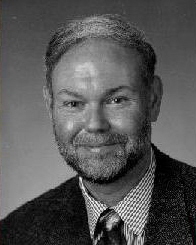
image Genetic genealogy has been commercially available since 2000, and in the last 8 years many genealogists have used this new tool to learn about their ancestry. Over the course of the next two weeks, I will be sharing interviews I recently conducted with 9 individuals who have had a huge impact on the field of genetic genealogy. The list includes – in the random order that their interview will appear – Bennett Greenspan, Megan Smolenyak Smolenyak, Terry Barton, Alastair Greenshields, Whit Athey, Ann Turner, Katherine Hope Borges, Max Blankfeld, and Ana Oquendo Pabón.
Just a quick disclaimer about the list of interviewed individuals before I begin this series. Genetic genealogy has become the valuable tool that it is due to the efforts of many people, but I was not able to interview everyone (and some were unable to commit the time to do an interview). I apologize to anyone that should be on the list but isn’t.

Now, without further ado, I present the first interview in this exciting series. Bennett Greenspan is the President and CEO of Family Tree DNA, as well as a Founding Partner of the new start-up DNATraits. In the following interview, I ask Mr. Greenspan about the founding of the two companies, and about his thoughts regarding the future of genetic genealogy.

TGG: How long have you been actively involved in genetic genealogy, and how did you become interested in the field?

Bennett Greenspan: I started Family Tree DNA in early 2000 because I had hit a brick wall and needed a new tool to determine if my cousin was related to a person I founding Argentina with the same name. Once I saw how effective using DNA for genealogy were I knew that every genealogist would need to avail themselves of this wonderful confirmation tool.

TGG: You founded Family Tree DNA in 1999, one of the first companies to offer genetic genealogy testing. What led you to create FTDNA?

BG: I got the idea in 1999 but before the proof of concept was completed it was march of 2000…we began to accept orders at that time and formally launched the service, for Y DNA, in May of 2000…3 days after Oxford Ancestors launched their mtDNA testing service…As we all know Y-DNA is much more genealogical then the female inherited mitochondria because of the much faster mutation rates for the STR’s that we test in male genetic genealogy, as well as the fact that in the Western world surnames go down the line along with the Y-DNA, which is not the case with the mtDNA.

TGG: Genetic genealogy, unfortunately, has received some bad press lately, largely through the misconceptions of journalists or confusion between genetic genealogy and other types of personal genomic services. What can amateur genetic genealogists do to counteract this bad press?

BG: I’d say be aggressive in writing letters to the editor and making your positive feelings known. I have received scores of support letters since that silly article came out in the English press last week, even thought we were not among the companies that they used…It’s clear that the amateur genealogist who uses our services knows much better then the reporter who, in many cases, seem to have an agenda of fear uncertainly and doubt (FUD) because FUD sells newspapers.

TGG: You recently launched DNATraits. What led you to explore this area of genetic testing?

BG: After being reluctant for some time to offer these tests I thought that it was time to launch them for 2 reasons. 1. We saw the demand starting from our own community 2. Mendelian disorders ARE genealogy…we either have had a disaster in our families and therefore we know that someone carries the mutation, or they are hidden and depending upon whom we marry they might create a personal disaster for the family who is a carrier. 2. Because Mendelian diseases are testable and predictable along the lines of 1-2-1 (presuming both parents are carriers for the same recessive mutation) we can actually prevent the birth of sick children by education and screening pre-conception or pre-marriage. This seems to us a noble if not earnest task. It’s quite different form the associated gene tests by 23&Me, et. al. since they tell you that you have a greater risk but the SNP’s are incomplete and therefore, IMHO, not ready for prime time.

TGG: What do you think the future holds for genetic genealogy?

BG: Will we have high double digit growth rates like in the past? I don’t know. But, as our database grows the likelihood of everyone finding matches with their surname (and prior to surname adoption) is growing exponentially. Today we are beginning to find that most people from a western European background find a strong match…quite often with the same surname. The matches are also beginning to get exciting in the group of adoptees who number in the 1-2,000,000 in the US alone. As the database grows and as this gets mapped out the concept of anonymous sperm donor will become like Jumbo Shrimp…an oxymoron. At least when it comes to adoptees intend to help in that regard more so then we can do today (and we already have a pretty good number of adoptees that found through us their biological surname).

In Memoriam – Leo William Little

Last week the genetic genealogy community lost one of its treasured members, Leo W. Little.

Leo’s passing was announced on the GENEALOGY-DNA mailing list on Sunday evening. Since then, many members of that mailing list, the ISOGG Yahoo Group, and the DNA- ANTHROGENEALOGY Yahoo Group have expressed their sympathy to Leo’s family and expressed their admiration for his work and contributions to the field of genetic genealogy.

Leo was the administrator of at least two DNA Projects, including the null439 DNA Project, and the Little DNA Project. The null439 group was begun by Leo after he helped characterize the “Little SNP” in 2002, a SNP that is also called “L1″ or “S26″. In 2005 Leo posted an email to the GENEALOGY-DNA that explained the discovery of the SNP, which defines the R1b1b2a1c Haplogroup in the new 2008 ISOGG Y-DNA Haplogroup Tree (previously known as R1b1c9a). The L1 SNP causes the primers used by Family Tree DNA to analyze Y-STR repeats at DYS439 to fail to anneal, and thus no result is recorded for that locus (i.e., it is “null”). The result is recorded as a default 12 with a blue asterisk. Here is Leo’s description from the null439 page:

“SNPs are passed down from father to son, and all males with a null439 SNP descend from a common ancestor who lived within the last 5000 years. Most null439 males with known origins have roots in England or Germany. The null439 SNP is also called “L1” or “S26“. L1/S26 is carried by about a half of one percent of R1b males. All males with L1/S26 also have the SNP “S21” (also known as “U106“) which defines the R1b1b2g subgroup (formerly R1b1c9).”

The null439 Project currently has at least 83 members, including myself. In June 2006 my Y-DNA analysis revealed that I have the L1 SNP and thus had no result at DYS439. When I joined the null439 project at FTDNA, Leo promptly emailed me and welcomed me to the group.

Other Contributions

But the S26 SNP and the null429 group are just a few of Leo’s contributions to the field. Other work includes his incredibly useful “Eclectic Genetic Genealogy Information” page, or a number of articles at the Little DNA Project (including this one entitled “Tracing the Borders Littles through DNA Testing“). Indeed, a search of the GENEALOGY-DNA archives reveals at least 150 messages posted by Leo’s email address (lwlittle@yahoo.com), and a search of his name reveals many more messages in which he was mentioned. Leo was a consultant for the Sorenson Molecular Genealogy Foundation, a member of the following organizations: the Association of Professional Genealogists, the International Society of Genetic Genealogy, and the Austin Genealogical Society. In July 2005, Leo’s work was highlighted in an article from Time magazine entitled “Can DNA Reveal Your Roots?“:

“One of the less controversial aspects of genetic genealogy is its ability to help people fill in gaps in their family tree. Leo Little, a retired engineer in Austin, Texas, had used historical records to trace his lineage back to his great-great-grandfather Thomas Little, who was born in Alabama in 1816. Then, he says, “I hit a brick wall. I knew my Littles were from the South, but there were a lot of Littles from the South, and it was impossible to sort out.” After he took a DNA test from Family Tree DNA, he began leading one of the company’s 1,900 surname projects, in this case checking test results on Littles. As a result, he has identified three distant cousins. By pooling their family records, the cousins have been able to trace their roots all the way back to 1680.”

Since Leo’s passing was so unexpected, the family is still dealing with the shock. On Monday, Terry Barton posted to the ISOGG Yahoo Group that the family had been contacted, and that Mrs. Little had requested that there be “no phone calls, no emails, no cards, no contact of any kind.” She did mention the possibility of a memorial fund in the future. Additionally, Mrs. Little indicated that she would try to respond to Leo’s emails at some point.

If you would like to leave a comment below, I will compile them and send them in letter to Mrs. Little when she is ready to receive mail. In addition, this post will be available indefinitely as a memorial to Leo Little. Thank you to Katherine Hope Borges for her assistance in completing this post.

UPDATE From Katherine (May 27 2008):

Leo was heavily involved in his church history project and donations may be made in his name to (with thanks to Derrell and Terry for sharing this info):

Highland Park Baptist Church
5206 Balcones Drive
Austin TX 78731

In DNA Fund, we will have fund designated for a “Leo Little Memorial Scholarship”, but since the 501(c)(3) is not yet in effect, contributions are not tax-deductible. However, contributions may be sent to DNA Fund’s General Fund at Family Tree DNA and will be designated for null research.

Featured Articles From The Genetic Genealogist

I’ve added a new page to the blog called “Featured Articles“. It’s available 24/7 at the top of every page, and contains a categorized list of about 50 of my favorite articles from the last year. These posts are listed under categories including “Popular Articles”, “Personal Genomics”, “Learning About Genetic Genealogy”, “Ethical Issues”, and “Famous DNA”. This easy-to-read format is much easier to navigate than the clumsy “Categories” column in the right sidebar, which returns too many results in no apparent organization. If you’re relatively new to The Genetic Genealogist, you might find some interesting articles that you missed the first time around. Happy reading!

TGG Rated 9.0 at Blogged

I recently received notification that The Genetic Genealogist has been rated a 9.0 at Blogged:

The Genetic Genealogist at Blogged

What is Blogged? From the website:

“Blogged.com is all about blog discovery. It’s a place for readers to discover interesting blogs and for authors to discover who their readers are. Blogged goes beyond being a traditional blog directory. We focus on providing tools for bloggers and readers alike. Through our database of over 200,000 blogs, readers can discover and explore new blogs. Through our user community, blog authors and their readers can communicate and interact directly with each other. Our blogs are reviewed, rated, and categorized by our editors, so you won’t have to experience the frustration of filtering through blogs that are either spam, outdated, or irrelevant. You’ll be able to find quality blogs that you would have unlikely found through a traditional blog search.”