The Genetic Genealogist

Adding DNA to the Genealogist's Toolbox

Archive for the "Famous DNA" Category


Border Reivers DNA Research

A study conducted by researchers at the Institute of Human Genetics at the Center for Life in Newcastle, England discovered that only 50% of males with the last name Robson can be traced back to a recent single ancestor. The research, commissioned to create a new exhibit called “The Robson Encyclopedia,” compared 12 markers from the Y-chromosomes of 100 male volunteer Robsons.

Apparently the Border Reiver clan of the Robsons in the Tyne Valley was notorious in the 1600’s and was made famous in a book called “The Steel Bonnets” by George MacDonald Fraser. According to one site:

“The term Border Reivers describes a number of English and Scottish families who fought a seemingly endless series of bloody confrontations from the 13th Century to the mid 17th Century. Sheep stealing and burning each other’s homes were part of everyday Border Reiver life – they were rugged, tough people who lived by their own laws.”

The researchers theorize that males may have adopted the Robson surname in an act of subservience to this powerful family. As always, however, there could have been non-parental events such as adoption and illegitimacy. For more information on this topic than you could ever need, see the Border Reivers DNA Project Website.

For the First Time, a Human Receives (Almost) Entire Personal Genome!

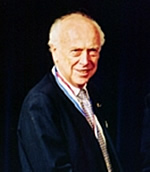
watson_james.jpgAdmit it, you’re dying to get your hands on Watson’s genome, aren’t you? Who isn’t?! Yesterday James Watson was handed his sequenced genome on DVD from 454 Life Sciences. There’s a great press release from the Baylor College of Medicine where the ceremony took place.
In a very big day for genetics and human beings alike, Watson was the first person to be handed his entire genetic sequence (for those in the know, Venter only received some or most of his sequence according to most sources).

Amazingly, according to the press release, the genome was sequenced over two months for $1 million. Incredible, considering the Human Genome Project took years and billions of dollars, and even Venter’s project took $300 million.

The article is very interesting, and I took the following quote:

“A report on the project and a commentary on its ethical implications are scheduled to appear in the near future. The raw sequencing data was released today to the publicly available resource called GenBank National Center for Biotechnology Information Trace Archive.”

Additionally,

“Watson, who chose BCM as the site at which the data transfer will take place, plans to evaluate the information included in the genome and write about its significance to him, his family and the future of genetic medicine at a later time.”

In the right sidebar there’s video of the presentation, biographies, and links to more information. I’m really looking forward to the genome-mining that I hope is taking place even as we speak! By the way, I put ‘almost’ in the title because Watson didn’t want to know about his own ApoE4 gene.

Warren Buffett, Jimmy Buffett, and 23andMe Continued

Earlier today I wrote about how 23andMe used genetic genealogy to confirm that Warren Buffett and Jimmy Buffett are not recently related via their Y chromosome. I also mentioned that this was a great way to introduce the company (as well as genetic genealogy) to the masses.

This evening I saw a story posted at The Motley Fool entitled “Warren Buffett is No Parrothead.” Similar to the story that I linked to this morning, it appears that the author is not familiar with genetic genealogy:

However, solving the Buffett mystery illustrates how a stake in 23andMe is a good fit in Google’s portfolio. The one thing that blows me away here is that a simple spit test was enough to uproot a family tree deep enough to find an ancestral link before surnames were even around.

“I’m not naive enough to think that 23andMe’s elaborate tests can ever be cheap enough to create a deep genealogical database loaded with data of anyone within spitting distance. However, it would certainly be cool if this was the start of a genealogical social networking hub — a Zillow for the family tree scrapbooking set.

The author probably doesn’t know that lots of other companies have offered these elaborate tests (see Sidebar), and thousands of customers have entered their results into large databases (Ysearch, mitosearch, etc…). With the amount I’ve spend on genetic genealogy, a $1000 genomic sequencing doesn’t really seem very high. That isn’t the current price of course, but numerous scientists have made it their goal (see my recent series entitled “You and the $1000 Genome”).

So, it appears that 23andMe has successfully introduced yet another person to the wonderful world of genetic genealogy! By the way, I emailed this post to the author of the article in case he might be interested in joining the conversation here at the Genetic Genealogist.

Famous DNA Review, Part III – Warren and Jimmy Buffett

Buffett_Buffett.03.jpg

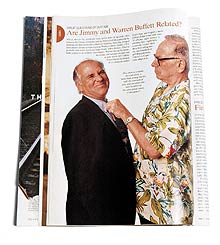
It turns out that 23andMe isn’t just a startup idea that’s waiting for technology to catch up. In 1999, Fortune Magazine posed the question, “Are Jimmy and Warren Buffett Related?” This week, 23andMe revealed the long-awaited answer, which is that the two Buffetts – well, let’s save that for the end.

Apparently Warren Buffett (finance guru) and Jimmy Buffett (musician), have always wondered if they are related to each other, potentially through a common ancestor who lived in a penal colony in the South Pacific. Earlier this year Anne Wojcicki, the co-founder of 23andMe, asked Jimmy and Warren if they would submit DNA for analysis. According to Warren Buffett’s assistant, he “just kept spitting into a little receptacle, and then we FedExed it. Not very elegant.” 23andMe then did Y chromosome and mtDNA analysis of Warren and Jimmy’s DNA.

I think this was a brilliant marketing move. There’s already strong evidence that people are interested in genetic genealogy (after all, you’re reading The Genetic Genealogist!), and involving celebrities is a great way to both introduce people to the technology and to the company. Congratulations to 23andMe on an interesting project. Looks like I’m going to have to add you to my sidebar of Genetic Genealogy Testing Firms!

Oh, and by the way, it turns out that Warren and Jimmy Buffett are not related (at least not through their Y chromosome or mtDNA lines). Joanna Mountain, the head of 23andMe’s ancestry product line and a former professor of anthropological genetics at Stanford, revealed that Jimmy and Warren would have to go back more than 10,000 years to find a common paternal ancestor. Warren shared his ten-page DNA report with Fortune, and it turns out that his paternal ancestors likely originate from northern Scandinavia, while his mtDNA likely has roots in Iberia or Estonia.

There is more discussion of this project at Valleywag, Buzzle.com, the WSJ, the Genealogue, and InfoWorld. Interestingly, by reading the InfoWorld article it would appear that the author has never previously heard of genetic genealogy, and thus it would appear that 23andMe’s project is already bearing fruit.

Celebrity Genomes on DVD

As I mentioned recently, James Watson is about to be the first person to have his entire genomic information handed to him. According to this article in Today’s issue of the Observer, Watson “has decided to go ahead and have his entire genome put on the internet this week.” I’m not sure what the Observer used as its source – according to my research Watson hadn’t yet decided what he was going to do with the sequence. Update: A huge story from Newsweek states that Watson has decided to release his entire genome to a NIH database (minus the ApoE gene)!

I hope this gets lots of media coverage. This is a HUGE moment for genetics, one that we will all look back on. And I have to admit, I am very jealous of Watson’s opportunity! Here’s a great article on the subject, well worth a read!  Here are some highlights from the Observer article:

“Jim Watson, the Nobel laureate and co-discoverer of the structure of DNA, will be presented with a unique scientific prize this week: a DVD disc containing details of every one of the 3 billion units of DNA that make up his genes.

The award – to be made at Baylor College of Medicine in Houston on Thursday – is unprecedented. Yet if biotechnology companies get their way, a host of other scientists and celebrities will soon follow suit.

Among those lined up are Stephen Hawking; Larry King, the US talk show host; and Paul Allen, co-founder of Microsoft. In addition, Watson has been pushing, in private, for British stars, such as Wayne Rooney and Kate Moss, to be asked to have their genomes published.

The aim is to defuse public worries as it becomes cheaper and cheaper to decode genomes. The first genome cost more than $1 billion, and took several years, to sequence. Now costs have dropped to under $1 million and could be cut to under $1,000 in a few years.

Armed with this knowledge, doctors will be able to personalise treatments so medicines meet specific individuals’ requirements and match their genetic blueprints. Hence the involvement of famous scientists and celebrities. They are being involved to calm public worries that sequencing would provide data that could be misused by police, insurers or employers. But many scientists dislike involving famous people this way. At a recent genomics meeting in New York, several leading scientists raised objections to the rise of celebrity genetics.

‘I’d hate the availability of genome sequencing to be based purely on money and fame,’ Professor Michael Ashburner, a geneticist at Cambridge University, told the journal Nature. ‘Just doing famous or very rich people is bloody tacky, actually.’

In addition, many scientists fear cheap genome sequencing could have other, worrying consequences. Professor Steve Jones of University College London, said: ‘If you make your genome public, you are not just revealing information about yourself and what diseases you might be susceptible to, you are also giving away crucial data about the kind of illnesses your children might be prone to. Each of your children gets half your genes, after all. They might not want the world to know about the risks they face and become very unhappy in later life that you went public. Your other relatives might equally be displeased.’

This point has been acknowledged by Watson. Nevertheless, he has decided to go ahead and have his entire genome put on the internet this week – with the exception of one gene associated with the development of Alzheimer’s disease – Watson does not wish to reveal his risks of getting the disease.

However, there are other concerns, as Professor Ashburner points out. ‘Anyone who commits relatively minor offences can have their DNA taken and analysed. At present, the main use of this process is to create a DNA fingerprint that can be used to identify that individual. But soon we will be able to create an entire genome sequence of that individual from a swab or blood sample. We will end up knowing everything about their genes. In the end, we could have millions of people on a database and know every single genetic secret of each person. That has to be a very worrying prospect.’ “

I missed a couple of these ethical issues when I wrote about the $1000 genome, but Keith of Omics! Omics! was kind enough to share them with me in a comment to that post.

It does make some sense to sequence the genomes of famous people – it gives sequencing some media attention and plants that seed in people’s minds. I do have a suggestion for the researchers at 454 Life Sciences (who sequenced Watson’s genome and are probably looking forward to finally hearing from me!), why don’t you sequence a few genomes from some people who are suffering from disabling genetic disorders? Although remote, there might be BOTH a medical benefit and the necessary media attention!

Famous DNA Review, Part II – Genghis Khan

In 2003, researchers from around the world released a paper that suggested that 8% of all Mongolian males have a common Y chromosome because they are the descendants of Genghis Khan (See “The Genetic Legacy of the Mongols,” 2003, Zerjal, et. al., American Journal of Human Genetics, 72: 717-721). The researchers examined the Y chromosome variability of over 2000 people from different regions in Asia and discovered a grouping of closely related lines. The cluster is believed to have originated about 1,000 years ago in Mongolia and its distribution coincides with the boundaries of the Mongol Empire.

Genghis Khan’s empire (he ruled from 1206 – 1227) stretched across Asia from the Pacific Ocean to the Caspian Sea and was reportedly extremely prolific. Khan’s son Tushi had as many as 40 sons. His grandson Kublai Khan is reported to have had as many as 22 sons, and perhaps many more. Together this family may have as many as 16 million descendants alive in Asia today. It is extremely important to note that until DNA can be extracted from Khan’s bones (which have never been found), there is no definitive proof that this Y chromosome cluster is actually descended from Genghis Khan.

When Family Tree DNA compared the markers in the paper to their database they determined that the Y chromosome cluster belongs to Haplogroup C3 (M217+). Forty-seven samples in their database exactly matched the markers identified in the paper. The company has summarized the marker results from the paper and have made that information freely available.

A newly released study from Russian scientists examined the Y chromosomes of 1,437 men from 18 Asian ethnic groups (Altai Kazakhs, Altai-Khizhis, Teleuts, Khakasses, Shor, Tuvinians, Todjins, Tofalars, Soyotes, Buryats, Khamnigans, Evenks, Mongolians, Kalmyks, Tajiks, Kurds, Persians and Russians). The researchers discovered that approximately 35% of Mongolians possess the “Khan” Y chromosome. Surprisingly, the results of the study suggest that although the Mongol Empire held eastern Russia for 250 years, there are few “Khan” Y chromosome carriers in that region.

You can read more about the 2007 study at UK Channel 4 or at Scientific Blogging.

Famous DNA Review, Part I – Thomas Jefferson

Thomas Jefferson, 3rd President of the United States, has been at the center of a DNA controversy for over 200 years. In September 1802 journalist James T. Callender wrote in Richmond Reporter that Jefferson had for many years “kept, as his concubine, one of his slaves. Her name is Sally [Hemmings]. The name of her eldest son is Tom. His features are said to bear a striking though sable resemblance to those of the president himself.” Although these rumors had reportedly already been passed around quietly, this article spread the rumor far and wide, setting off many years of debate.

In 1998 analysis of a male descendant of Jefferson’s paternal uncle showed that Jefferson’ Y chromosome belonged to haplogroup K2 (Thomas Jefferson did not have any male descendants to provide DNA. For more information, see: “Jefferson fathered slave’s last child.” 1998. Nature 396 (6706): 27–28. PMID 9817200). Haplogroup K2 is rather rare, constituting just 1% of worldwide Y chromosomes (See “Thomas Jefferson’s Y chromosome belongs to a rare European lineage.” Am J Phys Anthropol 132(4): 584-9. PMID 17274013 ). Surprisingly, or perhaps not-so-surprisingly depending on which side of the debate you stood, a male descendant of Sally named Easton Hemmings possessed the same K2 chromosome, suggesting a genetic link between Jefferson and Easton. Keep in mind, however, that this is not determinative since it is possible that any of Jefferson’s male relatives (who possessed the same Y chromosome) could have fathered Easton. And keeping in mind that non-paternal events are ALWAYS a possibility, nothing is 100% certain. Not until we can time-travel and obtain DNA samples from the source!

To see Jefferson’s genetic profile or to compare it to your own, it is available on Y-Search Q8UXG .

DYS19 – 15
DYS388 – 12
DYS389I – 12
DYS389II-I – 15
DYS390 – 24
DYS391 – 10
DYS392 – 15
DYS434 – 11
DYS435 – 11
DYS436 – 12
DYS437 – 14
DYS438 – 9
DYS439 – 12
DYS460 – 10
DYS461 – 11
DYS462 – 13

What do all those numbers mean? They are Short Tandem Repeats (STRs), informational markers that are measured by the number of times a certain sequence repeats. DYS390, for example, is composed of a the repetitive sequence [TCTG]8 [TCTA]11[TCTG]1[TCTA]4. I match Jefferson at four loci – how does your DNA match up with Jefferson’s?

Whoopi Goldberg’s DNA Testing Creates Ripples in Small African Nation

Whoopi Goldberg, like many others, is turning to DNA testing to learn more about her ancestry. Goldberg participated in the PBS program African American Lives which used DNA testing in conjunction with traditional genealogical research methods to elucidate the genealogy of famous African Americans (including, among others, Goldberg, Oprah Winfrey, and Dr. Mae Jamieson). The results of Goldberg’s mtDNA testing has revealed that her maternal line descends from the Papel and Bayote tribes who are found in the tiny West African Nation of Guinea-Bissau. Her admixture test suggested that her ancestry was 92% sub-Saharan African and 8% European. As with all DNA testing, Goldberg’s results only examined a small fraction of her actual ancestry.

After hearing of the results of the test, the government of Guinea-Bissau held a high level meeting and wrote her a letter that ended with a request to visit their country. The letter was hand-delivered to the U.S. Embassy and forwarded to the State Department in Washington for delivery to Goldberg. Goldberg’s publicist Brad Cafarelli, in an e-mail to the Associated Press, wrote that Goldberg has yet to receive the letter.