The Genetic Genealogist

Adding DNA to the Genealogist's Toolbox

Archive for the "Famous DNA" Category


Finding Your Roots with Henry Louis Gates Jr.

Finding Your Roots with Henry Louis Gates Jr.” is a new series from Henry Louis Gates Jr., who previously brought us series such as Faces of America, African American Lives, and African American Lives 2.  The show, which airs on PBS stations on Sunday nights, premieres March 25th, 2012 with singer/actor Harry Connick, Jr.

Last week I participated in a conference call with members of the show, including Senior Story Editor and Producer Leslie Asako Gladsjo and Chief Genealogist Johni Cerny.  Also on the call, although only able to participate for a few minutes, was Henry Louis Gates Jr.

Here are some interesting tidbits about Finding Your Roots – and genealogy in general – that I learned from the conversation:

  • Gates believes that genetic genealogy is deconstructing the notion of race; never has FTDNA or 23andMe returned an African American’s testing results and reported 100% African, for example.  In other words, science is demonstrating that things are much more complicated than we would have guessed without the benefit of DNA.
  • All guests on Finding Your Roots used both 23andMe and FTDNA for DNA testing – all African Americans participating in the series also used African Ancestry.  While the guests receive all their results, we may not always see them.
  • Many are still wary of genetic genealogy; many potential guests even turned down the series largely because of the DNA testing involved.
  • Gladsjo and Cerny noted that DNA is just another tool for the genealogist; sometimes the guests’ DNA results were very interesting, and sometimes they were “pretty boring.”

I hope you’ll be tuning in tomorrow to see Finding Your Roots.  I have a feeling that this is going to be a fascinating series.

By the way, did you catch last night’s episode of “Who Do You Think You Are” with Helen Hunt? It was another fantastic episode.  Too bad they didn’t bring in DNA testing.  With Hunt’s Jewish ancestry, it would have been a terrific opportunity to education viewers about the many unique facets of genetic genealogy testing in this population.


Napoleon Bonaparte’s Y-DNA Haplogroup Belonged to E1b1b1c1* (E-M34)

Researchers have recently discovered that Napoleon Bonaparte’s Y-DNA belongs to haplogroup E1b1b1c1* (M34+).

Dominique Vivant Denon was the director-general of French museums under Napoleon.  Denon made a reliquary (a container for relics) that included the beard of Henry IV, a tooth from Voltair, and a lock of Bonaparte’s hair. 1  The “Vivant-Denon reliquary” is currently deposited in the Bertrand Museum of Châteauroux, and contains in the “right lateral compartment” a lock of Napoleon’s hair (two of which were used for mtDNA analysis. 2  Also in the reliquary is three beard hairs belonging to Napoleon.

Interestingly, when the beard hairs were examined using scanning electron microscopy, it was discovered that they were covered by remnants of shaving soap and some microscopic iron debris from the razor used to cut the beard.

DNA was extracted from the base of two of the three hairs, and was then analyzed.  First, the DNA underwent an amologenin test to confirm that it was Y-DNA.  Next, the DNA was tested for the DYS19, XCAIIa, and YCAIIb Y-STRs, and for ten Y-SNPs in the following order: M125, M174, M35, M33, M123, M81 and M78, followed by M34, M84 and M290.

The Results

The testing showed the following Y-STR results: DYS19 = 13, XCAIIa = 19, and YCAIIb = 22 (which show a probability in Whit Athey’s predictor program of 76.5% E1b1b). 3  Further, the Y-SNP results suggested the haplogroup E1b1b1c1*.

Great-Great-Great Uncle Napoleon

The results were further compared to the Y-DNA profile of Prince Charles Napoleon Bonaparte, born in 1950, who is the 4th generation descendant of Napoleon’s younger brother Jérôme Bonaparte (1784-1860) (a family tree can be found in the article).  Not surprisingly, Charles’s DNA matched that of the DNA extracted from the beard, suggesting both that the beard hairs did belong to Napoleon and that the scientist’s results are likely accurate.

The article is licensed under a Creative Commons Attribution 3.0 License and is available through the journal’s website (here).

For more information:

Footnotes:

  1. B. Foulon, ed., Dominique-Vivant Denon: L’oeil de Napoléon, exh. cat., Paris: Musée du Louvre (Paris, 2000), 480.
  2. Lucotte, et al. (2011) Haplogroup of the Y Chromosome of Napoleon the First. J. Mol. Biol. Research, 1:12-19.
  3. Athey, W. (2006). Haplogroup prediction from Y-STR values using a Bayesian allele frequency approach. J. Genet. Geneal. 2:34-39.

NFL Players Xavier Omon and Ogemdi Nwagbuo Confirmed as Half-Brothers

Direct-to-consumer DNA testing has led to the re-joining of yet another family.

Y-DNA and autosomal testing by Family Tree DNA has revealed that two NFL players , Xavier Omon (San Francisco 49ers)) and Ogemdi Nwagbuo (San Diego Chargers), are half-brothers.  ESPN has a long write-up of the story at “A brothers’ tale for Omon, Nwagbuo.”

Meeting for the First Time

The brothers had planned to meet face-to-face yesterday, September 1, 2011, as their teams met on the field.  Turns out Omon’s team, the 49ers, were victorious, meaning that if he’s anything like my brothers, he gave Nwagbuo a hard time about it!  The Mercury News has a story about the brothers’ first meeting at “Omon meets half-brother (a Charger) for first time,” and the SF Gate has a story at “49ers’ Xavier Omon meets half-brother.”

Family Tree DNA’s Press Release:

Houston, TX – August 31,2011 – Family Tree DNA, the pioneer and largest DNA testing company for genealogy purposes, through its Family Finder test, provided the conclusive proof that two NFL players are half-siblings.

Until a few months ago, Xavier Omon, from the San Francisco 49ers and Ogemdi Nwagbuo from the San Diego Chargers did not have a clue that they were related. Early August, at the request of ESPN, Family Tree DNA performed the Family Finder test on both, and the result was unequivocal: definitely half-siblings. More of the story can be found at the ESPN website,under the “Brother’s Tale” story.

The Family Finder test allows connecting with family members across all ancestral lines. While the Y-DNA matches men with a specific paternal line and the mtDNA finds potential relatives only along the maternal line, Family Finder can look for close relationships along all ancestral lines. Anyone, regardless of their gender, may confidently match to male and female cousins from any of their family lines in the past five generations. The science is based on linked blocks of DNA across the 22 autosomal chromosomes that are matched between two people. Based on this concept, Family Tree DNA bioinformatics team has worked extensively to develop the calculations that would yield the closeness of the relationship. The possibilities to find matches abound: grandparents, aunts and uncles; half siblings; first, second, third and fourth cousins; and, more tentatively, fifth cousins.

About Family Tree DNA

Founded in April 2000, Family Tree DNA was the first company to develop the commercial application of DNA testing for genealogical purposes, something that had previously been available only for academic and scientific research. Almost a decade later, the Houston-based company has a database with over 345,000 individual records – the largest DNA database in genetic genealogy, and a number that makes Family Tree DNA the prime source for anyone researching recent and distant family ties. In 2006 Family Tree DNA established a state of the art Genomics Research Center at its headquarters in Houston, Texas, where it currently performs R&D and processes over 200 advanced types of DNA tests for its customers.

Media contact

Sharon Weisz, —tel: 323-934-2700; e-mail: Sharon@familytreedna.com

Sequencing the Genome of Sitting Bull and Other Famous People

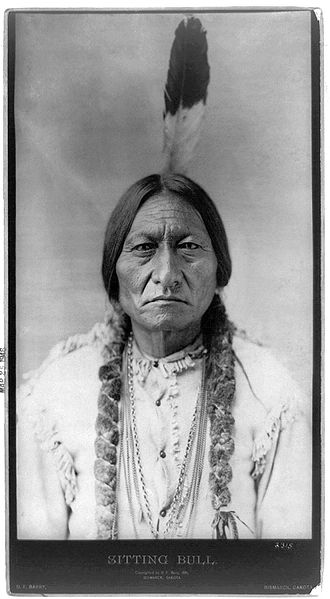
ScienceNews reports that researchers led by Eske Willerslev at the University of Copenhagen are attempting to sequence the genome of legendary Native American “Sitting Bull” (see “Genome of a Chief”).

Earlier this year (2010), Eske Willersleve announced the successful sequencing of approximately 80% of the genome of “Inuk,” a man from Greenland who left behind a few small fragments of bone and four hairs frozen in permafrost when he died about 4,000 years ago (see “Long-Locked Genome of Ancient Man Sequenced”).  Using these ancient DNA sequencing techniques, Willersleve’s group is analyzing DNA from other samples.

One of these samples is a lock of hair from Sitting Bull.

Sitting Bull (c. 1831 – Dec. 15, 1890) was a Hunkpapa Lokota Sioux born in South Dakota.  Sitting Bull played an important role in the June 25, 1876 Battle of the Little Bighorn, and later toured as a performer in Buffalo Bill’s Wild West show.

It is not clear from the ScienceNow article, but the lock of hair being used for the analysis could be the same lock of hair that was repatriated to Ernie LaPointe, the great-grandson of Sitting Bull, in December 2007 (see “Assessment of a Lock of Hair and Leggings Attributed to Sitting Bull, a Hunkpapa Sioux, in the National Museum of Natural History, Smithsonian Institution”).  Ernie LaPointe is believed to be the closest lineal descendant of Sitting Bull, and one of his few remaining descendants (see “Smithsonian traces Sitting Bull’s descendants”).  The lock of hair was acquired from Sitting Bull’s body upon his death in 1890 by U.S. Army surgeon Dr. Horace M. Deeble, and when Deeble died in 1896 it was loaned to the National Museum of Natural History.

It’s unknown when the researchers plan to release their results.  The ScienceNews article mentions that one of the researchers, Cristina Valdiosera, revealed the plan to sequence Sitting Bull’s genome at an August 2010 scientific meeting:

“Valdiosera said that the researchers have the approval of Sitting Bull’s descendents to perform DNA tests on a sample of his hair, and that the team is trying to extract a full genome. If so, his would become the first ancient, non-frozen, Native American genome sequenced.”

Interestingly, it appears that working with Sitting Bull’s genome may be a life-long dream for Willersleve (see “Fossilized feces found in Oregon suggest earliest human presence in North America”):

“[Willersleve] said his own interest in the subject [of ancient American DNA] was sparked by a boyhood fascination with Sitting Bull and other American Indians.”

Sequencing Famous Genomes

As new techniques for sequencing ancient or low-quality DNA samples are developed, researchers will begin to analyze any famous or ancient genome they can get their hands on, which is already beginning to happen.  As a genealogist, I know very well the affiliation humans have for keeping mementos of the past.  There are probably hundreds of famous and ancient DNA samples waiting their turn for sequencing.

Off the top of my head, here are 5 people – either known or likely to have DNA kicking around – that I would nominate for analysis:

  • Albert Einstein;
  • Abraham Lincoln;
  • Ötzi (I believe this one is already in the works);
  • Juanita the Peruvian Ice Maiden (a 600-year-old mummy); and
  • My great-grandmother Helen (hey, I can’t deny my genealogy side!).

Whose genome would you nominate for sequencing?

Ethical Issues

The ScienceNews article notes “the researchers have the approval of Sitting Bull’s descendents to perform DNA tests on a sample of his hair.”  Certainly they needed permission to obtain DNA from the hair clipping, but did they need permission to sequence that DNA? (setting aside for the moment the many ethical concerns regarding Native American remains).

For example, if I find a hair clipping in a book I purchased at an estate sale, do I have a duty to find the owner’s descendants and ask for permission before sending it away for sequencing?  What if the hair clipping is clearly labeled with the owner’s name and other identifying information?  Further, can I leave instructions for my descendants that they do not sequence or give permission to sequence my DNA?

I’m not a believer in genetic exceptionalism, so I look outside the realm of DNA for insight.  If that book I’d purchased at the estate sale was an old diary or journal, it most likely would not cross my mind to contact the author’s descendants before reading it.  And, interestingly, that diary or journal is much more likely to reveal personal information about the author than anything I could possibly discover in their genome.

What are your thoughts?  What permission might be required when sequencing ancient or famous DNA?

Columbia Professor Alondra Nelson Reviews The PBS Series “Faces of America”

Faces of America

In October 2008, I reviewed an article by Dr. Alondra Nelson in the journal Social Studies of Science entitled “Bio Science: Genetic Genealogy Testing and the Pursuit of African Ancestry” (Social Studies of Science 2008 38: 759-783).  The article was about the complex interpretation of the results of genetic genealogy testing by African-Americans and black British.  Dr. Nelson is Associate Professor of Sociology at Columbia University in NY.

On Friday, an article by Dr. Nelson appeared in The Chronicle of Higher Education entitled “Henry Louis Gates’s Extended Family,” which is an introduction and review of the current PBS documentary miniseries Faces of America. Regarding the genetic testing aspect of the show, Nelson writes:

If the findings of conventional genealogical research produce fireworks, the results of the DNA analysis generate shock and awe. “Know Thyself,” the final episode, which shares its title with the slogan of Knome Inc., focuses mostly on genetic genealogy. Whereas prior shows relied heavily on analysis of mitochondrial DNA (mtDNA) and Y-chromosome (Y-DNA), yielding results that included at most about 2 percent of one’s complete genetic inheritance, in Faces techniques are used that probe deeper into more of the genome.

The technical aspects of genetic ancestry tracing are explained, but without sufficient social context, much the way a manual can tell you how to operate a car without explaining automobiles’ role in modern industry, the development of suburbia, or the emergence of youth culture. We can’t hold a documentary for a general audience responsible for not presenting a complex metanarrative on the philosophy of genetic science. But we can expect some acknowledgment and interpretation of technology’s limits.

It is likely that some genetic genealogists will instantly disagree with or discredit Nelson after reading this article, since it might appear that she is being critical of genetic genealogy, but I would disagree.  In my opinion, however, it is important to be aware of Nelson’s concerns, since they are concerns shared by many people across the globe.  For better or for worse, Faces of America will be many individual’s first introduction to genetic genealogy, and without seeing the whole series yet, I hope that Gates does a fair job of introducing this wonderful technology without glossing over its limitations, particularly as they might apply to minority or marginalized populations.

That being said, I also believe that the individual shares the responsibility for understanding this technology before deciding to undergo testing.  We are all responsible, in part, for our own education.

Rather than discrediting genetic genealogy, I believe that Nelson embraces the ability of genetic testing to help some people – and ultimately society – understand our present and our past, as well as how we are all so closely related, either through our genetics or through our shared history.  Indeed, the end of the article ends with the note that Nelson “is at work on a book about genetic ancestry tracing and African diaspora culture,” which I look forward to reading.

What are your thoughts after reading Dr. Nelson’s article?

Faces of America continues every Wednesday evening from 8 – 9 p.m. ET on PBS stations through March 3rd.

Family Tree DNA Discovers Y-DNA Signature That Might Represent the Prophet Mohammed

DNA An article in the United Arab Emirate newspaper The National (wikipedia) does a terrific job of highlighting recent research from Family Tree DNA.  The story – “DNA could illuminate Islam’s lineage” – discusses research that has attempted to elucidate the Y-DNA signature of Mohammed.  Although Mohammed did not have a son, he had a daughter who married her paternal second cousin, thus passing to Mohammed’s grandchildren the same Y-DNA.  From the article:
“For almost 1,600 years, the title Sharif, Sayyed, or Habib has been bestowed on Muslims who have been able to trace their roots back to the Prophet Mohammed through intricate family trees, oral histories and genealogical records. But now an American DNA lab says it may have identified the DNA signature of descendants of the Prophet Mohammed, and perhaps the prospect of a direct, more accurate means of confirming or identifying such a connection.”

The caveat, as the story briefly mentions by the phrase “if their oral tradition is accurate”, is that no one has an authenticated DNA sample directly from Mohammed.  If there were, this type of research would not be needed.  Instead, the conclusion that it might be Mohammed’s Y-DNA is based on testing individuals who are likely to be descended from Mohammed and looking for a common Y-DNA signature.  Until a DNA sample from Mohammed is obtained (likely an impossibility), the conclusion will not be 100% proven, which means that any information about this conclusion should also contain info about this caveat.  Of course, as all genealogists know, almost none of our conclusions about ancestry/descendancy are 100% proven, especially when they are based at least in part on oral and paper records.

Sharifs DNA Project at FTDNA

There is a public Sharifs DNA Project at Family Tree DNA, which contains the following information:

“Sharif’s are people who claim to be descendant from the Prophet Muhammad, Peace on him, through the two sons of his daughter Fatima Ezzahra, which are Hassan and Hussein. The descendants of Hassan and Hussein sons of Ali Ibn Abi Taleb spread all over the world and particularly in the muslim world from Indonesia to Moroco. There are actually hundreds of thousand of people who are claiming to be be Sharifs. Some of them have a lot of genealogy documents heritated from fathers to sons and which contain many data about the genealogy trees.”

Perhaps the deduced Y-DNA signature is there?

Twitter

I first announced this story early this morning via twitter.  If you are a twitter user and would like to follow me, just click below:

Follow Blaine at Twitter

Personal Genome Project Begins Releasing Information

image The Personal Genome Project (PGP) was established to analyze and publicly share the genomes and personal information of up to 100,000 volunteers in order to advance understanding of “genetic and environmental contributions to human traits and to improve our ability to diagnose, treat, and prevent illness.”  In the first phase of the PGP, ten volunteers (the “First 10″ – see information about the First 10 here on my blog and at the PGP website) have had their DNA analyzed and have given their personal information.

Last month, George Church, the PGP’s principal investigator, reported that the project expected to publish data about the First 10 on its website in mid- to late October.  Church might have meant genotype (i.e. sequencing) information, since some information about phenotype, health history, and medication has already been posted on the PGP website.  There is information about each of the 10 participants, although there is currently no active link to their genetic information:

  1. George Church
  2. John Halamka
  3. Esther Dyson
  4. Misha Angrist
  5. Kirk M. Maxey
  6. Stan Lapidus
  7. Keith Batchelder
  8. Steven Pinker
  9. Rosalynn Gill
  10. James Sherley

Note that the First 10 are listed as “Participant #1″, “#2″, etc.  I debated about whether or not to attempt to identify them based on sex, ancestry, and date of birth, but since it was so simple to do that I decided to assign a name to the Participant number (I’m pretty sure I got them all right, depending on the quality of the source information I was able to find online).  Indeed, the PGP has clearly stated over and over that anonymity cannot be guaranteed for participants.  Additionally, I’ve always felt that one of the goals of the first phase of the PGP was to educate people about the effects of making your genomic sequencing information and health information freely available online.  Some would argue that the effects are completely or mostly dangerous, while others would argue that the effects are completely or mostly benign.  The PGP might help examine some of these questions.

There’s more information about the PGP in a recent Wired article.  HT: twitter from Jason Bobe of The Personal Genome.

The Confucius Genealogy Compilation Committee Rejects DNA Testing

iStock_000002679865XSmallSee the new article at Seed Magazine “Inheriting Confucius,” which discusses efforts to generate a family tree containing the 2 million+ descendants of Confucius.

Kong De-Yong, a 77th(!) generation descendant of Confucius, has been compiling the tree for the last 10 years.  Although the Committee is accepting submissions from women and other previously excluded groups, it is not accepting DNA contributions.  According to the article, this “hints at the limits of Chinese engagement with the age of genomics, and demonstrates how high cultural stakes can constrain science.”  Unfortunately, as the author of the article suggests, many people might be afraid of the results of such DNA testing: “Given the potential implications of genetic knowledge for long-presumed members of the [Confucius] family, they think it better not to know.”

However, there is of course no need for the Committee’s participation in order to learn more about Confucius’ DNA or Confucuis’ descendants (although it would be nice, of course).  A Confucius DNA Project has already been initiated by the Beijing Institute of Genomics, and Confucius descendants can submit a sample for analysis for the price of $125.

TGG Interview Series V – Whit Athey

The name Whit Athey is undoubtedly very familiar to many genetic genealogists. Whit’s Haplogroup Predictor, used to predict an individual’s paternal haplogroup based on DNA test results, is one of the most valuable online (and FREE) tools for genetic genealogists.

Among Whit’s many contributions to the field, he is also the Editor (and frequent contributor) of the Journal of Genetic Genealogy. From his biosketch:

“Whit Athey is a retired physicist whose working career was primarily at the Food and Drug Administration where he was the chief of one of the medical device labs. He received his doctorate in physics and biochemistry at Tufts University, and undergraduate (engineering) and masters (math) degrees at Auburn University. For several years during the 1980s, he also taught one course each semester in the Electrical Engineering Department of the University of Maryland. Besides his interest in genetic genealogy, he is an amateur astronomer and has his own small observatory near his home in Brookeville, MD.”

In the following interview, we talk about Whit’s introduction to genetic genealogy, the creation of the JoGG, and Whit’s thoughts about the future of the field.

TGG: How long have you been actively involved in genetic genealogy, and how did you become interested in the field?

Whit Athey: I have always been interested in molecular biology, and my graduate work, though primarily in physics, was partly in molecular biology. When the article by Cann, Stoneking, and Wilson came out about 20 years ago, I was really struck by the potential for a better understanding of human origins. However, at that time I was heavily involved in other things, so I was just an interested bystander for many years.

I bought Bryan Sykes’s book, The Seven Daughters of Eve, when it was published in 2001, and this rekindled my interest. I almost ordered the mtDNA sequencing that his company was offering, but it was rather pricey in those days, so I again held off getting personally involved. I did develop a course that I called “The Human Family,” and presented it several times in 2001 and 2002 to local groups.

In 2003 I finally took the plunge and ordered both Y-STR tests and mtDNA sequencing for myself, and I started a surname project for my own surname. I started five other projects during 2004 and 2005.

TGG: You are one of the founders of the Journal of Genetic Genealogy. How did this journal come about, and what are the journal’s goals?

WA: JoGG was really the brainchild of Ann Turner and Dennis Garvey. They had really brought a lot of good work to bear on our fledgling field, and the journal was really their idea. Ann and Dennis can better address the question of why they thought that we needed a journal. The idea immediately appealed to me because of the quality of some of the “amateur” genetics studies that I was aware of. I thought that a number of these studies were worthy of publication in some form.

Anyway, Ann and Dennis organized a meeting of several interested people, including myself, just after the first Family Tree DNA (FTDNA) conference in Houston in November 2004, with the purpose of discussing the possibilities of a new journal. I volunteered to help with getting the journal off the ground. Probably because I seemed to have the most time available, I ended up as its editor.

TGG: Have you undergone genetic genealogy testing? Were you surprised with the results? Did the results help you break through any of your brick walls or solve a family mystery?

WA: Yes, I have tested myself on over 115 Y-STR markers and I have had a full mtDNA sequence done. I am a hopeless test junkie.

My Y haplogroup was quite a surprise to me, considering that my paternal line came to the U.S. from Galway, which is in a part of Ireland that is over 95% R1b. I am in Haplogroup G2-U8, which occurs in northwest Europeans at only about a 1.5% frequency. Furthermore, my cluster of 20 G2 Atheys is a considerable genetic distance from any other G2’s, except for one small family cluster that has the surname, Whitfield. This is quite a coincidence since my given name is Whitfield. So far, we cannot see how it is possible that our two lines are so similar when it appears that the common ancestor must have lived prior to the year 1400.

Most people seem to think that mtDNA has little role to play in genealogy. If you are simply looking for matches in the large databases, then I would agree that most matches that are found are likely to be meaningless for genealogy. However, in the area of hypothesis testing, I think that it can be quite useful. If you are comparing the mtDNA of two people who are suggested (by traditional genealogical methods) to be related along a matrilineal line, then the mtDNA results can either disprove or support your hypothesis.

TGG: What do you think the future holds for genetic genealogy?

WA: I can’t help but believe that we will see a continuing decrease in price and an increase in the number of tests that are available. For the Y-chromosome phylogenetic tree it appears to me that the addition of new SNPs will probably double every 2-3 years. We are also likely to see many new complete mtDNA sequences added to the world’s databases. This increase in resolution for both Y-chromosome and mtDNA trees, together with more people participating in testing, will bring new understanding of human migrations.

I believe that “amateurs” will continue to play a key role in new developments in the future, probably even more than at present. We have the ability to move quickly on a new question and a vast population available of people who have been tested. I think that the time has past when our community just waits on the professional population geneticists to bring new data to us through publications in traditional journals. I think that we will be playing a leading role in the future.

TGG: Thank you, Whit, for a terrific interview!

Other posts in the TGG Interview Series:

DNA Testing of New York’s New Governor David Paterson

As of Monday the 17th of March, David Paterson will be the Governor of New York State.  Lt. Gov. Paterson recently sat down with Susan Arbetter of WHMT’s NYNOW to discuss the results of his genetic genealogy test results.  Paterson is probably the first governor in the United States to have undergone genetic genealogy testing, and might be the highest government official to do so and then speak openly about it.  These videos are very enjoyable, and it’s interesting to learn more about the future Governor.

In the first segment, Arbetter and Paterson discuss some of Paterson’s genealogy.  They also discuss Paterson’s Y-DNA, which is of European origin.  Arbetter writes on her blog: "On the Lt. Governor’s paternal side, like almost 25% of all African Americans, he’s got white progenitors from England, Ireland and Scotland."


In the second segment, Paterson starts out discussing his maternal ancestry and the West African origin of his mtDNA.  Arbetter writes on her blog: "On his maternal side he has eastern European Jewish ancestry, as well as strong ties to what’s known as the Guinea Bissou region of West Africa which is now divided among Cameroon, Sierra Leone and Gambia."

In the final section, Arbetter and Paterson discuss issues of race and politics:

Arbetter blogged about Paterson’s DNA testing at "The Lt. Governor’s DNA: A Citizen of the World" and "Paterson’s Staff; Spitzer’s children."