The Genetic Genealogist

Adding DNA to the Genealogist's Toolbox

Archive for the "DNA Studies" Category


Interesting Links From The Genetic Genealogist

dna-stock_phixr.JPGThere is so much to talk about, and so little time to write. So I thought I’d do a round-up post to bring these interesting stories to your attention. I hope you enjoy the following:

Of great significance to genetic genealogists, the Wall Street Journal says that as many as 1 in 25 children are the result of non-paternal events! The number seems very high, but it is based on a 2005 report in the Journal of Epidemiology and Community Health studying families in “the U.S., Europe, Russia, Canada, South Africa and several other countries.”

SNP studies are coming out left and right. The recent studies have examined variation among genomes from numerous populations using SNP chips that examine 600,000 or more SNPs. See more at GenomeWeb News, The Spittoon, and Genetic Future. A great quote comes from a discussion of one of these SNP studies at the terrific Dienekes’ Anthropology Blog:

“Before I get into the details of the paper, I want to reiterate my conviction that the problem of human origins is not really a hard one. It just requires a lot of data, a lot of populations, individuals sampled, a lot of genetic markers. Our history, our race, and now it seems even our ethnicity can be read off our genes. We just need to invest the money and effort to find out.”

As genetic genealogists, I think we can all agree. We do our part, one test at a time.

GenEdNet is hosting the Third Annual National DNA Day Essay Contest for Middle and High School Students in honor of DNA Day, which is April 25, 2008. First place winners get $350.00 (and their teacher gets $2,000 for classroom equipment!), second place winners get $250.00, and third place winners get $150.00. The due date for submissions is March 17, 2008. (HT: Tracing the Tribe).

Turns out that identical twins are not so identical after all, according to a recent reports. The results might not be surprising to anyone who has known identical twins that are as different as night and day. See more at “Genetic Differences Between Identical Twins” at Eye on DNA, “Non-Identical Identical Twins” at John Hawks Weblog, and “More on Twins: Identical Twins Have Genetic Differences” at DNA Direct Talk.

John Hawks Anthropology Weblog presents “The Random Scholar: brother-sister marriage in Roman Egypt,” a brief review of a 1997 paper that examined the extremely high rate of brother-sister marriages in Roman Egypt.

Famous DNA Review, Part IV – Jesse James

image Jesse Woodson James, born September 5, 1847 and died April 3, 1882, was an infamous American outlaw. Despite strong evidence that James was killed on April 3, 1882, some theorized that his death was staged and that he in fact survived to father additional children.

In 1995, researchers set out to use relatively new DNA analysis to examine the rumors surrounding James’ death. They exhumed the body believed to be that of James from the Mt. Olivet Cemetery in Kearney, Nebraska. Although the remains were poorly preserved, the scientists were able to obtain DNA from two of four teeth. They also had DNA from two hairs that were recovered in 1978 from James’ original burial site on the James farm.

The mtDNA HVR1 sequence from the teeth and hairs were identical and belonged to Haplogroup T2, with 5 mutations relative to the CRS (16126C, 16274A, 16294T, 16296T, and 16304C).

The researchers then compared James mtDNA haplotype to that of his sister Susan’s great-grandson and great-great grandson, both of whom were exact matches. Thus, either the body is that of Jesse James, or it is a body that just happens to have the same mtDNA haplotype as James. The authors of the paper did a great job of clearly stating that while strongly suggestive, the results are not absolutely conclusive:

“Do the mtDNA results prove that the exhumed remains are those of Jesse James? The answer to this question must be no, as there is always the possibility (however remote) that the remains are from a different maternal relative of RJ and MN, or from an unrelated person with the same mtDNA sequence. However, it should be emphasized that the mtDNA results are in complete agreement with the other scientific investigations of the exhumed remains: there is no scientific basis whatsoever for doubting that the exhumed remains are those of Jesse James. The burden of proof now shifts to those who, for whatever reason, choose to still doubt the identification. The mtDNA results reported herein provide a standard which other claimants to the legacy of Jesse James must satisfy.”

I wonder if any of the original DNA could be recovered again for research in the future.

James’ haplotype is available at Mitosearch (EEYCU). Interestingly, even with the increasing popularity of genetic genealogy and the many people who have entered their own haploytpe into Mitosearch, James does not have any exact matches in the database. This fact lends credence to the conclusion that the body tested is that of Jesse James.

Other Posts in the Famous DNA Series:

Did Megan Smolenyak Smolenyak Marry Her Cousin?

What are the chances that Megan Smolenyak would meet and marry a man with the surname Smolenyak without being at least distantly related to him? What if the two surname lines came from the same area of the world? I’m sure that everyone who has heard of Megan has wondered how she came by the double last name.

Megan writes “Did I Marry My Cousin” at Megan’s Roots World to introduce a new segment at Roots Television about how she used genetic genealogy to analyze the question. The segment is available here. I highly recommend stopping by to learn more about this particular use of genetic genealogy, especially since I’m not going to give you the answer!

What is the Mutation Frequency Rate of mtDNA?

rw.gifAs I was reading through the GENEALOGY-DNA list from Rootsweb this morning, I came across a great question about the frequency of mutation of mitochondrial DNA (mtDNA).

The listmember asks “I am wondering if anyone would know the odds of having a mutation between my brother and me in our mtDNA. Marker 16163 is G for one of us and A for the other…” This is a great question, and one that I’ve been asked as well.

In response, Ann Turner writes “The mutation rate hasn’t been studied in the detail I’d like to see. The largest study for the hypervariable regions was based on deep-rooting pedigrees from Iceland. They found 3 mutations out of 705 transmission events.”

The study, available here (pdf, HT: Ann Turner) was conducted through deCODE Genetics and Oxford University. They used 26 Icelandic ancestral trees to identify maternally-related individuals, and sequenced 272 mtDNA control regions representing a total of 705 transmission events. The researchers found a total of three mutations, resulting in a mutation rate of 0.0043 per generation, or 0.32/site/1 million years. A previous study (Parsons et al., 15 Nature Genetics 363 1997) found a total of 10 mutations in 327 transmission events for a frequency of 2.5/site/1 million years, and yet another study found 2 mutations in 81 transmissions for a rate of 0.75/site/1 million years (Howell et al., 59 Am J Hum Genet 501). The huge differences in these numbers suggests that much more research needs to be done, probably with a much larger dataset. If I had unlimited funds, I would also be interested to see if there are different mutation rates among haplogroups, as well as a number of other factors.

Another great thing about the deCODE Genetics/Oxford study is that it almost completely negated the effects of somatic mutations in mtDNA. Somatic mutations occur in non-reproductive cells and are not passed on to the next generation (essentially a dead-end stop for these mutations). Only “germ line” mutations are passed on to the next generation, and were the focus of this particular study.

If you aren’t already a subscriber or a reader of the GENEALOGY-DNA list, I suggest that you join or periodically peruse the archives (which are conveniently arranged by month and then by discussion). Some of the discussion can be a little complicated (i.e. heavy on the science), but there is always something interesting under discussion.

And don’t forget about my one-year blogging anniversary giveaway – you could win a FREE genetic genealogy test! Contest rules here. There have only been about a total of 50 entries, so your chances are still very good. I haven’t received many emails (my email is blaine_5 at hotmail.com) with the rss-only secret word (below), and it’s a great way to get two free entries. Good luck!

Personal Genomics in The New England Journal of Medicine

genome-in-a-bottle.jpgA report published in the New England Journal of Medicine entitled “Letting the Genome Out of the Bottle – Will We Get Our Wish?” is getting a lot of coverage elsewhere, but I thought I’d add my two cents. The report’s authors are largely concerned with quality control, clinical validity (the actual predictive value of genetic tests), and utility (the balance of family history and genetic testing) of genome scans offered by companies such as 23andMe, deCODEme, and Navigenics. They also suggest that people wait for the science to catch up before purchasing genome scans. There is an NEJM audio interview with Muin Khoury, one of the authors of the study about the subject. Note that this particular report is about medical implications of genetic testing, not about genetic genealogy (two very different topics that were very confusingly jumbled in the recent article “A High-Tech Family Tree” from U.S. News & World Report).

Following up on the “High-Tech Family Tree” article, U.S. News & World Report interviewed David Hunter, one of the authors of the NEJM report. One of the take-home messages from his interview is embodied by the following:

“The one thing that is almost guaranteed for anybody who signed up for one of these tests and paid for it—and the companies actually tell people this—is that the information you get will need to be updated constantly over months and years. So why not wait until the information is more mature and isn’t changing all the time?”

In my opinion, the authors bring up some valid concerns about genetic testing, but the cat is already out of the bag, and increasing numbers of people will purchase genetic testing. The focus now should be on educating consumers and funding scientific studies (such as the Personal Genome Project) to learn more about the association between genetics and disease. And keep in mind that aside from the medical information revealed by testing, genome scans will still prove to be VERY useful for genetic genealogy!

For further discussion about this NEJM report:

  1. Eye on DNA
  2. The Gene Sherpa

A Single Colon Cancer Gene Traced to 1630 – The Future of Genetic Genealogy?

Scientists from the University of Utah have traced a mutation in the adenomatous polyposis coli (APC) gene to a Mr. and Mrs. George Fry, who arrived in the New World aboard the William & Mary around 1630.

The mutation, c.426_427delAT, is believed to increase the carrier’s chances of developing colon cancer from 2 in 3 by age 80, a significant increase from the normal of 1 in 24. The study is available here for FREE – thank you open access – and is entitled “American Founder Mutation for Attenuated Familial Adenomatous Polyposis.”

Scientists traced two branches (from two of the Fry’s four children) of the family back to the Fry family, one in Upstate New York and one in Utah. The family in Utah, with more than 5,000 people, has been the focus of scientific study for over 14 years because of their unfortunately high risk of colon cancer. In fact, members of the Utah branch constitute 0.15% of all colon cancer in the state of Utah!

Figure 1 from the paper:

untitled.jpg

Interestingly, the researchers used familysearch.org to trace back 10 generations to link the Utah and New York families. According to the Salt Lake Tribune, “another 13 families around the country have a similar ‘genetic fingerprint,’ Neklason said, but have not yet been definitely linked to the English couple with whom the mutation likely originated.” From the paper:

“By using family history records and standard genealogy methods, kindreds 353 and 439 were traced to a common founding couple who were born in England in the 1590s. The couple was married in St. Nicholas, Somerset, England, in 1615 and had 4 children born in England between 1615 and 1624. The couple, along with at least 2 of their children, arrived in America some time before 1640, when their daughter was married in Weymouth, Norfolk, Massachusetts. A son born in 1615 is the ancestor to kindred 439 and a daughter, born in 1620, is the ancestor to kindred 353. The birth year of each parent is indicated on the pedigree.”

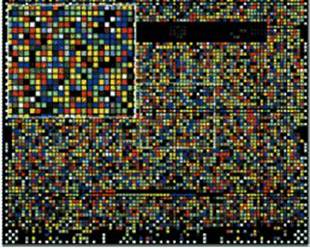
DNA sequencing was performed using Affymetrix GeneChip Human Mapping 10,000 SNP arrays.

This isn’t the first case of a gene being traced to early immigrants. In 2004 researchers announced that a mutation in the MSH2 gene, also linked to increased risk of colorectal cancer, was brought to Pennsylvania by German immigrants in the early 1700′s.The one thing that bothered me was that according to study author Deb Neklason, the mutation has not been found in England and thus is believed to have originated with Mr. or Mrs. Fry. Probably too far-reaching of a conclusion at this point – how much study has been done in England related to this mutation? And, of course, it could have originated with Mr. or Mrs. Fry’s parents, or grandparents, etc. Really just a minor point.

So what does this mean for genealogists? I believe that this will become more and more common as the cost of DNA sequencing descreases. Five years ago, this study might have been too expensive to complete. When people begin to combine genetic sequencing with family trees, these studies will be limited only by the availability of family trees and computing power (I imagine that some of it will be quite complex). At first it might seem a little far-fetched, and it worries many people (perhaps rightfully so), but it is likely that at some point in the not-so-distant future scientists will be able to trace many of the SNPs in an individual’s genome back to a specific ancestor. Personally that possibility seems exciting, although I certainly respect and appreciate the privacy worries that many people have.

On a final note, I would hate to think that founder families will be known merely for their mutations. Although the Fry’s may have brought this harmful gene with them to the New World, their DNA made possible the lives of every one of those descendants.

For more information:

The Personal Genome Project Has a New Website

The Personal Genome ProjectAs of the end of November, the Personal Genome Project has a newly-designed and user-friendly website. Compare the OLD site and the NEW site – what an improvement! Misha Angrist, aka genomeboy.com and one of the “First 10″ aptly called the site “PGP 2.0″.

The new site is extremely well organized and contains information about the project and about participating in the project, if one is so inclined. Since this project will contain so much personal information about each individual that joins, participants will go through an extensive consent process that will include education, physician assistance, and even an online assessment to gauge the participant’s grasp of genetics and the risks of participation, among other things. I know that the team is working feverishly behind the scenes to gather as much information as possible to create an extensive consent protocol.

pgp8_thumb.jpg PGP 2.0 contains the official biographies of the “First 10″, which they call the PGP-10. I assembled biographies of the First 10 back in July when their names were released, and upon quick comparison it looks like I did a good job. The new site also contains a picture of 8 of the “First 10″ (note that the picture is missing Stan Lapidus as well as the mysterious 10th individual who has not yet been identified).

On a related note, the Personal Genome X-Team (PGx), which is led by George Church (leader of the PGP) has just become the sixth contender for the Archon X-Prize for Genomics (see my discussion of this X-Prize here).

So what does all this mean? For genetic genealogists, the PGP and the Archon X-Prize for Genomics means that affordable whole-genome sequencing is getting closer and closer every day (my prediction – which is based solely on my own educated guess – is that I will be able to sequence my entire genome for $1,000 or less by the end of 2009). As of 2007, genetic genealogists have done amazing things with just a few 100 or few 1000 sequenced bases. When we have access to the data from thousands of entire genomes, the field of genetic genealogy will explode.

New DNA Analysis of Native Americans

PLoS Genetics has a new paper (PLoS Genet 3(11): e185. doi:10.1371/journal.pgen.0030185) that examines autosomal microsatellite markers (repeating units of base pairs) from Native American DNA:

“We examined genetic diversity and population structure in the American landmass using 678 autosomal microsatellite markers genotyped in 422 individuals representing 24 Native American populations sampled from North, Central, and South America. The Native American populations have lower genetic diversity and greater differentiation than populations from other continental regions. We observe gradients both of decreasing genetic diversity as a function of geographic distance from the Bering Strait and of decreasing genetic similarity to Siberians—signals of the southward dispersal of human populations from the northwestern tip of the Americas”

From the press release, the data shows that:

“Genetic diversity, as well as genetic similarity to the Siberian groups, decreases the farther a native population is from the Bering Strait – adding to existing archaeological and genetic evidence that the ancestors of native North and South Americans came by the northwest route.”

“A unique genetic variant is widespread in Native Americans across both American continents – suggesting that the first humans in the Americas came in a single migration or multiple waves from a single source, not in waves of migrations from different sources. The variant, which is not part of a gene and has no biological function, has not been found in genetic studies of people elsewhere in the world except eastern Siberia.”

HT: Yann Klimentidis’ Blog and henry on genetics.

Genetic Genealogy in the Classroom

genographic.JPG

Forty advanced placement science students at Soldan International High School in St. Louis have submitted their DNA for testing with the National Geographic Society’s Genographic project. An article in the St. Louis-Post Dispatch highlights some of the statements made by the students and faculty:

“Many times students don’t see the relevance of what they’re learning,” said Assistant Principal Alice Manus, the Soldan project coordinator. “What they’re learning here will have all sorts of relevance because, really, we’re looking into their lives.”

One student, named John, had more reason to be excited about this test than most – his father died when he was only 13. “I never knew him that well,” said the Soldan sophomore. “Maybe this will tell me more about who he was and where he came from.”

I think this is a great way to introduce students to issues associated with genomic sequencing including the science, the societal impact, and the ethical issues. I do wonder, however, how the class afforded the testing. Sometimes companies will offer reduced rate packages to encourage testing. I would hate to think that this sort of project would only be available to affluent communities that can afford the price of the test (even the $99 test at the Genographic project).

Discovering Biology in a Digital World blogged about this yesterday. One of that post’s concerns was how a teacher would deal with potential non-paternal events revealed by the testing. This is definitely a valid concern, although it would be rare since non-paternal events are most often uncovered through comparative genetic genealogy.

I was especially shocked to read the comments at Discovering Biology in a Digital World. A comment left by a Christopher stated that he “had no idea that National Geographic had this Project – or that its actually open to the public as well.” Christoper, don’t you know that there’s an entire blog devoted to genetic genealogy?

Genetic Genealogy Eliminates Two As Descendants of Joseph Smith

Update: Ugo Perego is not affiliated withh the website mentioned in the last two sentences.

Did Joseph Smith father children with any of his plural wives? The Deseret News has a lengthy article about recent efforts by a geneticist to answer the long-debated question about the founder of the Latter Day Saint movement.

Ugo Perego, the director of operations at the Sorenson Molecular Genealogy Foundation, has used genetic genealogy in an attempt to identify or rule out potential descendants of Smith. In 2005, Perego showed that three males were not descendants of Smith, and new testing has shown that two more alleged descendants of Smith are not his true descendants.

In order to rule out descendants, it was first necessary to characterize the Y-DNA thought to belong to Joseph Smith. According to the article:

“Perego has mapped Smith’s DNA by retrieving samples from living descendants of two sons he had with Emma Smith [his first wife] — Joseph Smith III and Alexander Hale Smith. ‘Their Y chromosomes were identical, so we know for 100 percent sure what Joseph Smith’s Y chromosome looked like. We can now use that standard to verify any other alleged sons,’ which he did with those who have been eliminated as possible descendants.”

Interestingly, Perego was able to show that the men (1) were not the descendants of Smith, and (2) were actually descendants of the other men who were married to these wives of Joseph.

I especially like Perego’s motivations for doing this independent project supported by Sorenson:

“As a scientist, I like to look for truth. If there is a book that says this person was Joseph’s son, and I have evidence that’s not right, it’s important for me to offer an alternative explanation from science that people can refer to. New authors in the future can then take that new genetic evidence into consideration.”

Perego has an interesting website describing his efforts.  There is a website that discusses the ongoing DNA research, but Perego is not in any affiliated with that site.