The Genetic Genealogist

Adding DNA to the Genealogist's Toolbox

Archive for August, 2010


Sequencing the Genome of Sitting Bull and Other Famous People

ScienceNews reports that researchers led by Eske Willerslev at the University of Copenhagen are attempting to sequence the genome of legendary Native American “Sitting Bull” (see “Genome of a Chief”).

Earlier this year (2010), Eske Willersleve announced the successful sequencing of approximately 80% of the genome of “Inuk,” a man from Greenland who left behind a few small fragments of bone and four hairs frozen in permafrost when he died about 4,000 years ago (see “Long-Locked Genome of Ancient Man Sequenced”).  Using these ancient DNA sequencing techniques, Willersleve’s group is analyzing DNA from other samples.

One of these samples is a lock of hair from Sitting Bull.

Sitting Bull (c. 1831 – Dec. 15, 1890) was a Hunkpapa Lokota Sioux born in South Dakota.  Sitting Bull played an important role in the June 25, 1876 Battle of the Little Bighorn, and later toured as a performer in Buffalo Bill’s Wild West show.
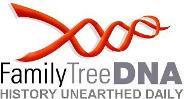
It is not clear from the ScienceNow article, but the lock of hair being used for the analysis could be the same lock of hair that was repatriated to Ernie LaPointe, the great-grandson of Sitting Bull, in December 2007 (see “Assessment of a Lock of Hair and Leggings Attributed to Sitting Bull, a Hunkpapa Sioux, in the National Museum of Natural History, Smithsonian Institution”).  Ernie LaPointe is believed to be the closest lineal descendant of Sitting Bull, and one of his few remaining descendants (see “Smithsonian traces Sitting Bull’s descendants”).  The lock of hair was acquired from Sitting Bull’s body upon his death in 1890 by U.S. Army surgeon Dr. Horace M. Deeble, and when Deeble died in 1896 it was loaned to the National Museum of Natural History.

It’s unknown when the researchers plan to release their results.  The ScienceNews article mentions that one of the researchers, Cristina Valdiosera, revealed the plan to sequence Sitting Bull’s genome at an August 2010 scientific meeting:

“Valdiosera said that the researchers have the approval of Sitting Bull’s descendents to perform DNA tests on a sample of his hair, and that the team is trying to extract a full genome. If so, his would become the first ancient, non-frozen, Native American genome sequenced.”

Interestingly, it appears that working with Sitting Bull’s genome may be a life-long dream for Willersleve (see “Fossilized feces found in Oregon suggest earliest human presence in North America”):

“[Willersleve] said his own interest in the subject [of ancient American DNA] was sparked by a boyhood fascination with Sitting Bull and other American Indians.”

Sequencing Famous Genomes

As new techniques for sequencing ancient or low-quality DNA samples are developed, researchers will begin to analyze any famous or ancient genome they can get their hands on, which is already beginning to happen.  As a genealogist, I know very well the affiliation humans have for keeping mementos of the past.  There are probably hundreds of famous and ancient DNA samples waiting their turn for sequencing.

Off the top of my head, here are 5 people – either known or likely to have DNA kicking around – that I would nominate for analysis:

  • Albert Einstein;
  • Abraham Lincoln;
  • Ötzi (I believe this one is already in the works);
  • Juanita the Peruvian Ice Maiden (a 600-year-old mummy); and
  • My great-grandmother Helen (hey, I can’t deny my genealogy side!).

Whose genome would you nominate for sequencing?

Ethical Issues

The ScienceNews article notes “the researchers have the approval of Sitting Bull’s descendents to perform DNA tests on a sample of his hair.”  Certainly they needed permission to obtain DNA from the hair clipping, but did they need permission to sequence that DNA? (setting aside for the moment the many ethical concerns regarding Native American remains).

For example, if I find a hair clipping in a book I purchased at an estate sale, do I have a duty to find the owner’s descendants and ask for permission before sending it away for sequencing?  What if the hair clipping is clearly labeled with the owner’s name and other identifying information?  Further, can I leave instructions for my descendants that they do not sequence or give permission to sequence my DNA?

I’m not a believer in genetic exceptionalism, so I look outside the realm of DNA for insight.  If that book I’d purchased at the estate sale was an old diary or journal, it most likely would not cross my mind to contact the author’s descendants before reading it.  And, interestingly, that diary or journal is much more likely to reveal personal information about the author than anything I could possibly discover in their genome.

What are your thoughts?  What permission might be required when sequencing ancient or famous DNA?

Exploring New Scientific Research With My Genotype In Hand

This morning, a single tweet sent me on a 2-hour tour (more, if you count drafting this post!) of my genome.

In the tweet, Mary Carmichael expressed interest in a potential book regarding the orchid/dandelion theory recently described in a December 2009 article in The Atlantic “The Science of Success.”  Before this morning, I was not familiar with either the article or the theory.

The introduction to the article, reproduced below, does a good job of summarizing the main thrust of the very long (but extremely interested and worthwhile) report:

“Most of us have genes that make us as hardy as dandelions: able to take root and survive almost anywhere.  A few of us, however, are more like the orchid: fragile and fickle, but capable of blooming spectacularly if given greenhouse care.  So holds a provocative new theory of genetics, which asserts that the very genes that give us the most trouble as a species, causing behaviors that are self-destructive and antisocial, also underlie humankind’s phenomenal adaptability and evolutionary success.  With a bad environment and poor parenting, orchid children can end up depressed, drug-addicted, or in jail—but with the right environment and good parenting, they can grow up to be society’s most creative, successful, and happy people.”

As the introduction suggests, the article examines the complicated interaction between environment and genetics and suggests that while genetics can present hurdles in life, environmental factors can increase or perhaps even eradicate those hurdles.

Nature v. Nurture

The article begins with a discussion of complex behavioral science experiments using humans or monkeys before bringing in recent studies of genetics that tie into these experiments.  For example, the author mentions the 5-HHTLR gene, which is involved in serotonin processing:

“As I researched this story, I thought about such questions a lot, including how they pertained to my own temperament and genetic makeup. Having felt the black dog’s teeth a few times over the years, I’d considered many times having one of my own genes assayed—specifically, the serotonin-transporter gene, also called the SERT gene, or 5-HTTLPR. This gene helps regulate the processing of serotonin, a chemical messenger crucial to mood, among other things. The two shorter, less efficient versions of the gene’s three forms, known as short/short and short/long (or S/S and S/L), greatly magnify your risk of serious depression—if you hit enough rough road. The gene’s long/long form, on the other hand, appears to be protective.”

From SNPedia:

“5-HTTLPR (serotonin-transporter-linked polymorphic region) is a degenerate repeat polymorphic region in SLC6A4, the gene that codes for the serotonin transporter. It has been extensively investigated in connection with the behavioral, psychiatric, pharmacogenetic aspects of neuropsychiatric disorders.  In contrast to earlier reports, a June 2009 article in JAMA showed no association between 5-HTTLPR genotype and depression.”

My 5-HTTLPR Status

Perhaps not surprisingly for anyone who has read The Genetic Genealogist, I was immediately interested in determining my own 5-HTTLPR status.  Based solely on my personal history (for example, I’ve never been overly prone to depression) and family history, I quickly predicted that my status would be S/L.

The author of The Atlantic article was also interested in his 5-HTTLPR status and sent away a saliva sample to a researcher she knew for analysis.  You can read the article to learn his status in the last few terrific paragraphs.

However, being one of the most extensively genotyped people in the world (which still doesn’t require much genotyping; I’ve had whole-genome scans performed by two different companies, along with Y-DNA and mtDNA testing), I turned to the results I already had in hand.

Unfortunately, the main SNPs used to examine the S or L version of 5-HTTLPR are not examined by 23andMe.  However, there has been extensive discussion of the gene in the 23andMe forums, and one member pointed out (here) that a 2009 study associated the CA haplotype of SNPs rs4251417 and rs2020934 is coupled with the short allele of 5-HTTLPR (although not perfectly, with r(2) = .72).

Of these “surrogate SNPs,” 23andMe only tests rs4251417.  A quick glance at my results revealed that I am C/C homozygous at rs4251417, suggesting that I might be 5-HTTLPR S/S, not S/L as I had predicted.  (I should note here that with just the rs4251417 allele and with a combined r(2) of 0.72, it is not clear how well the rs4251417 allele alone predicts 5-HTTLPR status despite the discussions found in the 23andMe forums).

There are a myriad of articles examining the S/L alleles, including research regarding their effect on stress (“We found that the s allele of 5-HTTLPR was associated with depression and perceived stress in patients with coronary disease.”); aggressive behavior in alcoholics (“Data suggests that the presence of s allele may confer a genetic vulnerability factor to the development of aggressive behaviour in alcohol dependent subjects, specially, in interaction with acute alcohol consumption stage”); and my favorite, financial risk (“We find that the 5-HTTLPR s/s allele carriers take 28% less [financial] risk than those carrying the s/l or l/l alleles of the gene.”).  Interestingly, it appears that none of this research considered the environmental factors that appear to be so influential on the 5-HHTLPR genotype, something that is undoubtedly endemic to genotype/phenotype studies.

The Future

Now that my wife has had her genome analyzed, I can do something that I couldn’t do with my results alone; I can predict the possible 5-HTTLR genotypes of our offspring.

This is, of course, tricky business.  I’m still not sure how I feel about purchasing genetic testing for my children, but this is a far cry from buying them a test.  I’m simply using basic genetic techniques to predict possible genotype outcomes, something that high school biology students have been doing for decades (determining the % of blue vs. brown eyed-children using various parental genotypes, for example).

Although an interesting exercise (and one that I’ve been performing often), given the state of the 5-HHTLR science I don’t believe that I’ve gained any useful or actionable information from an estimate of my children’s genotype.  Of course, I’m not even sure exactly how strong the research would have to be to make almost any genotype actionable!

Caveats

This discussion and analysis is for my personal interest only.  Specifically, I’m intrigued by the (as-of-yet unregulated) ability to check my own genotype against the results of new research.  I do not plan to make any lifestyle or parenting changes based on the results discussed in this post, and I do not suggest that you should do so either.  I simply examined my genetic code to determine my allele status and then examined the primary research to review the discussion of that allele status in the literature.  And I certainly hope I will be able to continue to do this in the future.

Edit Before Posting:

I was finally able to obtain a copy of the 2009 study that associated the CA haplotype of SNPs rs4251417 and rs2020934 is coupled with the short allele of 5-HTTLPR.  The authors include the following in their analysis, revealing that the rs4251417 SNP is not a useful proxy for determining your 5-HTTLPR status:

“Unfortunately, rs2020934 has not been genotyped as part of the HapMap project and has not been included on any of the genome-wide SNP platforms.  SNP rs4251417 is included on the Illumina 610K and 1M chips, but on its own, it is not a useful proxy for 5HTTLPR (r2 = .06).”

While this means that the above analysis was not fruitful, it emphasizes three very important points regarding personal genomics: (1) people will increasingly turn to their personal genotype as they read new research; (2) be sure to confirm everything for yourself; and (3) at this stage of the game, you should be prepared for everything you’ve discovered and/or concluded to be turned on its head with new research.

Family Tree DNA’s 6th International Conference on Genetic Genealogy Announced

From a Press Release issued by Family Tree DNA on August 11, 2010:

FAMILY TREE DNA’S 6th INTERNATIONAL CONFERENCE ON GENETIC GENEALOGY FOR GROUP ADMINISTRATORS TO BE HELD OCTOBER 30 & 31, 2010 IN HOUSTON

HOUSTON, (August 11, 2010) — Family Tree DNA, the world leader in genetic genealogy, will host its 6th International Conference on Genetic Genealogy on October 30-31, 2010, at the Sheraton North Houston in Houston, Texas. Each year, world renowned experts in genetics and science present cutting-edge developments and exciting new applications at this two-day educational forum which draws attendees from Family Tree DNA’s Group Administrators from around the world. This year’s conference will focus on the new Family Finder test which allows customers to find relatives across all ancestral lines.

Founded in April 2000, Family Tree DNA was the first company to develop the commercial application of DNA testing for genealogical purposes. Previously, this type of testing had only been available for academic and scientific research. Almost a decade later, the Houston-based company continues to establish standards and create new milestones in the increasingly popular and rapidly growing field of genetic genealogy.

Today – with over 300,000 individual records – Family Tree DNA has the largest DNA databases in genetic genealogy, a number that makes it the prime source for anyone researching recent and distant family ties. Family Tree DNA’s database also encompasses over 95,000 unique surnames and nearly 6,000 lineage and geographic projects.

In 2005, Family Tree DNA was selected by National Geographic and IBM as the designated DNA testing company for their Genographic Project, a history-making study of the migrations of mankind. To date, the company has processed more than 300,000 Genographic Project DNA tests. Family Tree DNA’s own laboratory-the Genomics Research Center-participated in the Genographic Project’s first published paper and other scientific papers.

Offering the most popular and wide-ranging DNA-testing service in the field of genetic genealogy, Family Tree DNA prides itself on its commitment to the practice of solid, ethical science. Since its beginnings, the company has associated itself with leading researchers and scientists in the field, many of whom will be speaking at this year’s conference. Among these prominent names are Dr. Michael Hammer, Dr. Doron Behar, and Thomas Krahn. Family Tree DNA has also been involved with several scientific papers and has provided assistance in updating the YCC Y-Chromosome Phylogenetic Tree.

* * * * *

Online information and registration for the 2010 conference is available at: http://www.familytreedna.com/conference/

For registration information, please contact Jane Buck-tel: 713-868-1438; e-mail: info@familytreedna.com

Media contact for Family Tree DNA: Sharon Weisz, W3 Public Relations-tel: 323-934-2700; e-mail: Sharon@familytreedna.com

For media information on The Genographic Project, please contact Glynnis Breen at National Geographic-tel: 202-857-7481; e-mail: gbreen@ngs.org

A Review of Family Tree DNA’s Family Finder – Part II

Last week I wrote about the results of my Family Finder autosomal DNA test by Family Tree DNA (see “A Review of Family Tree DNA’s Family Finder – Part I“).  The Family Finder test uses a whole-genome SNP scan to find stretches of DNA shared by two individuals, thus identifying your genetic cousins (and will soon include the Population Finder analysis of admixture percentages).  I currently have over 33 genetic cousins in Family Finder, and I’m working with them to identify our common ancestor(s).

The Affymetrix microarray chip used by FTDNA includes over 500,000 pairs of SNPs located on the X chromosome and the autosomes (no Y chromosome SNPs).  Via SNPedia:

FamilyTreeDNA uses an Affymetrix Axiom CEU microarray chip with 3,269 SNPs removed (563,800 SNPs reported) for autosomal and X (but not Y or mitochondrial) ancestry testing for $289. Other sources have cited 548011 snps. This platform tests 1871 of the 12442 snps in SNPedia.

FTDNA states that the Family Finder test is not intended to be medical.  From the FTDNA FAQ:

Question: Is the Family Finder test medical?

Answer: No, it is not.

This is entirely accurate of course; FTDNA does not analyze the test results for health, traits, or other medically-relevant information, and does not provide the user with any medical information or analysis tools that might reveal medical information.

However, when DNA is involved there is almost never any such thing as a completely non-medical test.  It’s often impossible, at any given point in time, to know which of an individual’s SNPs might be affiliated – remotely or closely – with a medical state or condition.  Ann Turner recently wrote the following at the Rootsweb GENEALOGY-DNA mailing list in response to another individual’s question:

Question:  “I am wondering if FTDNA really left out the genes and just lists the intergenic areas?”  Answer:  “No, the claim was that they scrubbed medically significant SNPs.  They still include over 1600 SNPs with entries in SNPedia, which would have some phenotype implications, according to an analysis posted at DNA-Forums: http://tinyurl.com/27slbj8.”

Indeed, as of August 3rd, 2010, there are 12,442 SNPs in SNPedia, of which a total of 1,871 are tested by Family Tree DNA’s Family Finder test.

Promethease Analysis

I was curious as to what information my Family Finder results might contain, so I ran my results through Promethease, a free software tool used to analyze whole-genome SNP scan results.  From the Promethease website:

“Promethease is a tool to build a report based on SNPedia [an impressive database of annotated SNPs] and a file of genotypes [i.e., your Family Finder results]. Customers of testing services (23andMe, deCODEme, Navigenics, …) can use it to learn more about their DNA. It can also pool the data from multiple testing services. The program runs for approximately 3 hours. An optional $2 payment per run unlocks extra features and reduces runtime to approximately 5 minutes.”

Similar to several of the other autosomal SNP scan testing companies, Family Tree DNA allows the customer to download their own DNA testing results.  Autosomal results and X-chromosome results are separately downloaded as compressed files which can then be extracted for analysis.  After downloading and installing Promethease, I ran the program using just my Family Finder results (after paying the $2 for a faster runtime.  I’m impatient.).

Promethease was  indeed able to analyze my Family Finder results and returned a report that included 1881 annotated genotypes. Here, for example, is a screenshot from my results (click to embiggen):

In addition to the “most interesting snps” category, there are categories for “medicines”, “medical conditions” (below), and others.  After clicking on “more” for each category, I receive more information about those annotated SNPs.  To get an idea of what the full results look like, there are a number of people who have shared their real promethease reports.

Promethease also lets you upload your results from different companies, so I also analyzed my Family Finder results together with the results of my 23andMe test.  Since there isn’t much overlap between the SNPs in the FTDNA test and the SNPs in the 23andMe test (see this ISOGG Wiki page for more information about FTDNA’s testing versus 23andMe’s testing, for example), I was able to extract information about 7691 of my personal genotypes using the SNPedia database (compared to 1881 genotypes with my Family Finder results alone).  Thus it appears that the 23andMe results are more likely to contain SNPs that are annotated in SNPedia.  This isn’t surprising considering that, according to reports, FTDNA designed their chip to contain fewer annotated SNPs.

My Results

Since I have taken whole-genome tests before and was familiar with both testing and the interpretation of results, my report was not surprising.  Indeed, I was already aware of my increased risk of type-2 diabetes (see Personalized Genomics: A Very Personal Post ), as well as the fact that I’m “probably light-skinned” (see e.g., my bathroom mirror).  However, it might not be clear to those taking these tests that the results contain a large amount of medically-relevant information.  This can be problematic when considering the fact that Family Finder test-takers might share or reveal their data with other people.  Indeed, even knowledge that you share a region of DNA with another person can reveal medically-relevant information that the two people share in that region.

On the other hand, this ability to apply Family Finder results to information in SNPedia will be of great interest to a number of test-takers who are interested in this type of genetic analysis.  This type of “do-it-yourself biology” is becoming more and more popular everyday.  Although there is still much debate regarding the utility of such information, exploring one’s genome can be highly interesting, informative, and interesting (and, to date, no one has adequately shown that exploring one’s genetic data is harmful for anything other than a tiny minority of people).

Conclusions

In conclusion, it is important for consumers to realize that ALL genomic information has the potential to reveal medically-relevant information (even Y-DNA and mtDNA results can include health information, for example).  By no means, however, am I suggesting that people should forgo whole-genome SNP scans, or that governmental regulation is needed.  Instead, I think it is vital that consumers understand the testing process and possible outcomes before testing, and I fully believe that it is the consumer, not the government, who should decided whether the consumer should or can undergo testing.

Indeed, rather than expend thousands of dollars in hearings, [faulty] investigations, and regulation, the government could use that money to fund programs that educate the population about genetics and DTC testing.  After all, we are entering a future that will involve our personal genomes in many aspects of our lives.

I’m interested to hear your thoughts on this subject, so please feel free to leave a comment below.

(Disclaimer: Please note that I received my Family Finder test without charge from Family Tree DNA for purposes of this review.  Regardless, I have attempted to review this product as honestly and as objectively as possible in order to provide valuable information about Family Finder to my readers.  I am also a consultant for Pathway Genomics.)

Using Genome-Wide SNP Scans to Explore Your Genetic Heritage

Mary Carmichael, a science editor for Newsweek, is in the midst of a week-long dilemma.  This Friday, after reading a series of articles written by members of the DTC genetic testing community, she will decide whether she should purchase a genome-wide SNP analysis.  Although the decision might be a simple one for some, in light of the recent critique of DTC genetic testing in the media, in the literature, and by the government, it is certainly understandable that Mary is looking for further insight into her decision.

Today, Mary is asking “What Can I Learn From At-Home DNA Tests?” and has gathered answers to her question from a wide variety of writers and scientists, including myself.  Since the Newsweek site only has space for a brief introduction to each topic, this post is meant to be a more in-depth answer what Mary could learn about her ancestry from a DTC test.

Genome-wide SNP scans explore a test-taker’s autosomal DNA, the 22 pair of non-sex chromosomes found inside the nucleus of each of our cells (although some tests examine the sex chromosomes as well as the mtDNA).  Rather than sequence the entire genome, an endeavor that is still too expensive for the average consumer, genome-wide SNP scans analyze roughly 600,000 locations in the human genome.

Using the results of a SNP scan, testing companies offer an array of educational and/or recreational analyses that offer exciting and informative insight into ancestry, medical propensities, and phenotypic traits such as eye color.  However, these tests are not without certain concerns and limitations.

To help Mary – and perhaps you – make an informed decision about whether to purchase a genome-wide SNP test, we will explore several of the most important benefits and limitations of the ancestral side of autosomal DNA testing.

Explore Your Genetic Tree

One of the most important – and confusing – concepts that people who are new to autosomal testing encounter is the fact that everyone has both a Genetic Tree and a Genealogical Tree.  Your genealogical tree includes every one of your ancestors throughout history.  Your genetic tree, however, only includes those ancestors who were lucky enough to contribute DNA to your genome.

Your parents are absolutely in your genetic tree, as are your grandparents and great-grandparents.  Go back a few more generations, however, and your genealogical ancestors start disappearing from your genetic tree.  Thus, your genetic tree is actually a tiny subset of your genealogical tree.  Further, while a genealogical tree remains constant (an ancestor will always be in a particular genealogical tree), a genetic tree changes with every new generation (that is, some ancestors will fall off the genetic tree with each new generation).

I recently posed the following hypothetical questions regarding the genealogical tree vs. genetic tree issue:

“At 10 generations, I have approximately 1024 ancestors (although I know there is some overlap). How many of these ancestors are part of my Genetic Tree? Is it a very small number? A surprisingly large number?”

“What percentage, on average, of an individual’s genealogical tree at X generations is part of their genetic tree?”

Luke Jostins at Genetic Inference kindly looked into my questions and offered some helpful and creative insight. Using a statistical analysis that he based on data from a recent study, Luke concluded that. based on his data, on average only about 120 of our 1024 genealogical ancestors at 10 generations (or 11.7%) are our genetic ancestors.  Luke also concluded that:

“The probability of having DNA from all of your genealogical ancestors at a particular generation becomes vanishingly small very rapidly; there is a 99.6% chance that you will have DNA from all of your 16 great-great grandparents, only a 54% [chance] of sharing DNA with all 32 of your G-G-G grandparents, and a 0.01% chance for your 64 G-G-G-G grandparents. You only have to go back 5 generations for genealogical relatives to start dropping off your DNA tree.”

So what does this mean for Mary?  It means that it is important for her to note that her autosomal ancestry testing results will only apply to her genetic tree, not to her entire genealogical tree.  With this limitation in mind, we can explore some of the analyses offered by most autosomal ancestry testing companies.

Discover Your Ancient Ancestry

Genome-wide SNP scans often explore the test-taker’s Y-chromosome and mitochondrial DNA (or “mtDNA”).  The Y-chromosome is passed down from a father to only his sons, so only males possess a Y-chromosome.  The mtDNA, however, is passed down from a mother to her children, so everyone has mtDNA.

(Image Courtesy of Wapondaponda)

SNP testing has been used for well over 30 years to classify Y-chromosomes and mtDNA into discrete but related groups called ‘haplogroups.’  For example, all humans on Earth are maternally descended (i.e. through our mother’s mother’s mother’s mother…and so on) from Mitochondrial Eve, a woman who is believed to have lived about 200,000 years ago in Africa.  Mitochondrial Eve passed on her mtDNA to all humans who are alive today.  However, in the intervening 200,000 years, her mtDNA has repeatedly branched off into different haplogroups through the accumulation of SNP mutations.  Thus, through analysis of a few SNPs on the mtDNA genome, an individual’s mtDNA can be classified into a particular haplogroup.  And, since research has shown that particular SNP mutations arose in certain areas at certain times, it is often possible to assign the haplogroup – and thus the test-taker’s ancient ancestry – to a broad geographic location.

Similarly, all humans on Earth are paternally descended (i.e. through our father’s father’s father’s father’s father…and so on) from Y-chromosomal Adam, a man who is believed to have lived about 80,000 years ago in Africa.  Just like mtDNA, Y-chromosomes have accumulated SNP mutations that allow scientists to group them into haplogroups and broadly estimate the time and place in which the mutation arose.

SNP testing of my own mtDNA haplogroup, for instance, has shown that it belongs to haplogroup A2 which is most often found in Native populations in the Americas.  This suggests that my mother’s mother’s mother’s…mother was Native American.

SNP testing of the Y-chromosome and mtDNA does have some limitations.  As critics often like to point out, at best Y-chromosome and mtDNA analysis only reveals information about 2 ancestors.  However, this fact typically doesn’t prevent the genetic pioneers and explorers from taking these tests, since learning about those 2 ancestors can be extremely rewarding and enjoyable.

Although Mary does not have a Y-chromosome, her genome-wide SNP scan will include an analysis of her ancient maternal ancestry using her mtDNA.

Reveal Your Genetic Admixture

One of the most exciting products offered by autosomal ancestry testing companies is the admixture analysis.  This analysis examines segments of the autosomal DNA and determines for each segment whether it was likely to have been inherited from ancestors in Africa, Asia (including Native Americans), or Europe (and sometimes sub-populations in those regions, depending on the test).  For example, my 23andMe test suggested that I am 97.89% European, 1.84% Asian, and 0.27% African, as shown in my 23andMe Ancestry Painting:

So do these results mean that exactly 97.89% of my genetic ancestors were European, and that 1.84% were Asian?  Not really.  An individual’s admixture results can differ from company to company based on which SNPs are used for analysis, which reference populations are used for analysis, and which algorithm is used for the analysis.  For example, my deCODEme admixture analysis (also based on my 23andMe results) suggested that I am in fact 87% European, 9% European, and 4% African.

While the exact percentages can vary, the admixture test results provide the test-taker with an important and previously unavailable glimpse into their genetic heritage.  For example, my results unexpectedly revealed African ancestry, which in hindsight this makes perfect sense considering that I likely have Garifuna/Caracol ancestry from the island of Roatan.  As my own results show, the genome can hold long-forgotten information about your personal heritage that can be uncovered and explored for the first time in hundreds of years.

So what does this mean for Mary?  On the one hand, it means that with the purchase of a test she can receive her own admixture results and explore her genetic heritage, thereby possibly uncovering long-hidden ancestry.  On the other hand, it means that: (i) her admixture results will not be absolutes, and that they might change if new SNPs, data, or algorithms are used; and (ii) she should be prepared for the possibility of unexpected results.  In my own experience, however, I’ve found that many consumers are fascinated by unexpected results.

Identify Genetic Cousins

Another primary driver of the autosomal ancestry market is the ability of test-takers to identify and connect with genetic cousins, both close and distant.

Again, however, the dichotomy of the genealogical tree versus the genetic tree is important.  It’s important to note that everyone of us have both genealogical cousins to whom we are related because we share a common ancestor with them, and genetic cousins to whom we are related because we both inherited DNA from a common ancestor.  While a cousin can be both genealogical and genetic, often they will only be one or the other.

The genetic ancestry market has developed specific tools that allow consumers to identify and connect with genetic cousins.  23andMe offers Relative Finder, a service that looks for segments of DNA that a customer shares with other 23andMe customers.  If two people in the 23andMe database share a segment of DNA, this suggests that they share a common ancestor.  The amount of shared DNA, which is reported by the companies, can suggest how recent their common ancestor was.  Thus, in addition to identifying genetic cousins these products offer a suggested relationship range for the cousins.  Similar to 23andMe’s Relative Finder, Family Tree DNA offers a product called Family Finder which compares segments of the test-taker’s DNA to DNA in the Family Finder database.

Once a match is discovered, the genetic cousins can share their genealogical trees as well as their suggested relationship in order to identify an overlap in their trees.  That overlap is potentially the common ancestor from whom they inherited the same stretch of DNA, and thus this ancestor is located in their genetic trees.

For example, I’ve discovered a relative in Family Finder with whom I share at least 12 ancestors in the past 200-400 years.  Many other customers report success finding a single shared ancestor with their genetic cousins.  Identifying a shared genetic ancestor, together with the segment of shared DNA from that ancestor, allows genetic cousins to trace the path of the shared segment through both time and space from that ancestor to themselves.

A genome-wide SNP scan, therefore, will potentially allow Mary to track segments of her genome through both time and space!

Possibly Reveal Medical Information

In addition to ancestral information, most autosomal DNA testing companies offer some type of analysis regarding physical traits and medical propensities.  Other companies offer limited tests that look at only ancestry or only medical information.  Regardless of the type of test purchased, it is important to note that it is almost impossible to separate medically-relevant DNA from ancestrally-relevant DNA.

Although a SNP or short stretch of DNA used for ancestral analysis may not currently harbor any known data regarding physical traits or health information, a paper could be published the very next day which shows that the same bit of DNA actually reveals one’s propensity for a certain medical condition.  As a result, sharing raw DNA data with another individual – even if that data is only believed to reveal ancestral information – can potentially reveal medical information.

What does this mean for Mary?  Education is always the best method of preparation.  Knowing that raw data can reveal medical information, Mary will be aware of the possibilities and can use that information to decide the level of sharing she is most comfortable with.

Do-It-Yourself Biology

In addition to the myriad tools offered by DTC genetic ancestry testing companies, the ability to download raw data gives users the ability to explore their ancestry and genome in other ways.  Several members of the DTC genetic testing community and the genetic genealogy community have created novel tools for further analysis of DTC test results.

David Pike, for example, has created a suite of tools for analyzing raw data from 23andMe and/or FTDNA, including the following:

Dienekes Pontikos of Dienekes’ Anthropology Blog created Euro DNA Calc, which uses 23andMe or deCODEme data to calculate the probability that an individual is Northwest European, Southeast European or Ashkenazi Jewish.

Promethease is a free utility that uses the SNPedia database to generate a report about medical information and traits.  It uses raw data from most of the major testing services and can even pool data from multiple testing services.

Adriano Squecco maintains the Y-Chromosome Genome Comparison database, which is a spreadsheet of raw Y-DNA results from male 23andme customers.  The data is being used to identify new SNPs for Y-DNA testing.

Dr. Doug McDonald performs a BGA Analysis, which analyzes raw data to determine global similarity and admixture percentages.

These tools offer analysis beyond what testing companies currently offer, allowing the user to be an early explorer in this area.

Conclusions

Through autosomal DNA testing, Mary can learn about her genetic heritage and connect with long-lost genetic cousins to explore her genetic family tree.  Further, Mary can use her results in novel do-it-yourself ways using tools developed by the DTC genetic testing community.  By being cognizant of the privacy issues and limitations known to be associated with genetic ancestry testing, Mary can also make informed interpretations of her data and decide with whom she will share her results.

(Potential Biases:  Although I don’t have a direct financial stake in the success of DTC companies, I have performed consulting work for Pathway Genomics, a DTC genetic testing company, and have received a  complementary SNP scan from 23andMe and Family Tree DNA for reviews here on the blog.  I am opposed to any unreasonable or paternalistic regulatory barrier to our genetic information, but I also believe that potential test-takers should perform their own research and investigation into genetic testing in order to understand the benefits and limitations of these tests prior to purchasing a test.)