The Genetic Genealogist

Adding DNA to the Genealogist's Toolbox

Archive for July, 2010


A Review of Family Tree DNA’s Family Finder – Part I

Since late 2007, several “direct-to-consumer” or “DTC” genetic testing products have entered the marketplace, many of which offered some degree of autosomal ancestry analysis (including 23andMe, deCODEme, and Pathway Genomics, among others).
In early 2010, genetic ancestry testing company Family Tree DNA announced that it would begin offering a new genetic genealogy product (see “Announcing Family Finder – An Autosomal Test From Family Tree DNA”).  The new product, called “Family Finder,” is one of only a very few autosomal genetic genealogy tests available to consumers.

The Family Finder test uses an Affymetrix microarray chip that includes over 500,000 pairs of locations called single nucleotide polymorphisms (SNPs) in your autosomal DNA.  Once the SNPs are analyzed, FTDNA detects linked blocks of DNA that indicate a common ancestor.  The number and size of these linked blocks is used to determine how recently or closely two people are related.  From the Family Finder FAQ page:
“The Family Finder test works by comparing your autosomal DNA to that of other people in our database who have taken the test. Your relationship with a match is calculated based on sharing linked segments of DNA. Although any two people from the same population may have some of their DNA in common, as a matching segment of DNA becomes longer and you share more segments, it becomes more likely that the sharing is due to a recent common ancestor than a chance match.”

Thus, the results of the Family Finder test are used to find stretches of DNA shared by two individuals, to identify your “genetic cousins” (as compared with “genealogical cousins,” who you may or may not share DNA with).

The Family Finder landing page is packed with information, including videos and information about the potential uses of the product:

“We place you in control. When you take the Family Finder test, your results are compared against our Family Finder database. Your list of matches is designed to be quickly sorted to allow you to focus on your near or distant cousins. Because email addresses are provided for easy communication with your near or distant cousins you will be able to share research easily. We notify you by email when you have new matches. Your raw data file is freely available for download.”

Frequently Asked Questions Page

The Family Finder FAQ page is especially well-developed for such an early stage product.  There are currently over 75 FAQs including a wide range of questions and answers, including the following:

Question: What is the probability that my relative and I share enough DNA to be detected by Family Finder?

Answer: If you are related within five generations (3rd or more recent cousins) then Family Finder is almost sure to detect your relationship. Testing will also detect many 4th and 5th cousins and a small percentage of more distant cousins.  Chances of finding a match if the relationship is:

Relationship Match Probability
2nd cousins or closer > 99%
3rd cousin > 90%
4th cousin > 50%
5th cousin > 10%
6th cousin and more distant remote (typically less than a few percent)

Connecting with Cousins:

Unlike 23andMe’s Relative Finder, where communicating with genetic relatives in their database can be challenging (although 23andMe is launching improvements to the system that will make identifying and communicating with relatives easier), this product is intended for and marketed to genealogists.   The results are provided using the following format (picture courtesy of the ISOGG wiki Family Finder page, image has been altered for privacy reasons):

The results provide information about the identified genetic cousin, including the suggested relationship, the predicted relationship range, the shared cM (centimorgans), the longest block of shared DNA, and the ancestral surnames that the user has provided in their profile (if any).  Also provided is a link to the user’s email address to facilitate communication.

As a result, there are several privacy issues involved in the Family Finder test that test-takers should be aware of.  It is important to recognize that your name and the email address you sign up with will be made available to your genetic relatives.  For most genealogists this is a welcome development, but it is worth highlighting.  Additionally, if you share closely-matching DNA with an individual, that individual will see your name in their results and can share that information with other people.  Although ethically all test-takers should always keep these privacy issues in mind, there is nothing to prevent them from sharing the information.  Please be informed before you order this test.

Chromosome Browser:

Family Finder also provides a Chromosome Browser which test-takers can use to explore and compare the blocks of DNA that they share with genetic cousins.  Users can compare the blocks of up to 3 people, and can filter blocks from 10+ cM, 5+ cM, 3+ cM, down to 1+ cM.  Users can also view the comparison information in a table and download it to an Excel file.

Download of Results

Like 23andMe, Family Tree DNA offers customers the ability to download the results of the SNP test.  The autosomal results and X-chromosome results are offered in separate zipped files.

My Results:

I currently have 33 genetic relatives in the Family Finder database with the following break-down:

  • Only one person with a suggested relationship (my closest relative in the database), suggested at the 4th cousin stage, with a range of 3rd to 5th cousin;
  • Eight cousins at the 4th cousin to distant cousin stage; and
  • 24 cousins at the 5th cousin to distant cousin stage.

I am communicating with my matches in order to identify a shared ancestor in our respective trees.   In the one instance where we’ve identified shared ancestry, we share relatives in a minimum of twelve different lines (via the early colonial era).  I’ve also matched several relatives from an isolated geographic region where I have confirmed recent ancestors, although we have not yet identified a common ancestor.

Future Developments

Ancestral Percentages

At the current time, the Family Finder test results do not include information about possible ethnicity or biogeographical ancestry.  However, it appears that Family Tree DNA plans to offer this type of information in the future.  See, for example, “Relative Finder vs. Family Finder” at The Melungeon Historical Society blog.  There Roberta Estes writes the following:

“Family Tree DNA does not initially offer the percentages of ethnicity, but that will be added shortly. The 23andMe ethnicity percentages (European, African and Asian) are very, very conservative and I believe so conservative as to be significantly incorrect. Suffice it to say that I have been involved with the new ethnicity percentage information and presentation at Family Tree DNA, and it will blow the socks off of anything out there today.”

23andMe Results at FTDNA

What if you’ve already tested at 23andMe?  Once again, Roberta Estes writes the following (which includes information I’ve seen at several other places):

Family Tree DNA will (shortly) facilitate an upload of 23andMe raw data for a $40 and they will then compare the 180,000 (280,000 by inference) common locations between their data base participants and your 23andMe data. If you later decide to take the Family Finder FtDNA test, they will credit your $40 to that test. Only the people who ordered the full health traits and ancestry version of the 23andMe product can gain access to their raw data at 23andme. Everyone who participated in the beta can download their raw data.”

Experiences and More Information:

Family Finder Links:

Conclusions

I first had part of my genome sequenced over 7 years ago via an AncestryByDNA test.  Since then I’ve had mtDNA sequencing, Y-DNA sequencing, SNP scans, and a number of other tests performed.  Accordingly, I consider myself to be an early explorer in the field of DTC genetic testing.  I enjoy learning about my genetic ancestry, about genetic cousins, and about my own genome.  Many of the other early adopters of the Family Finder test are also pioneers.  I would recommend this test to anyone who is interested in their genetic ancestry, or anyone that is interested in learning more about their own genetic heritage.

One of the best things about the Family Finder test is that it gives the user information and then allows them to use that information as they so choose.  Although the test does reveal your name and email address to genetic relatives, it is up to you whether you reply to requests or explore those relationships.  Family Finder is yet another tool that allows personal genome explorers to learn about themselves.

Have you used FTDNA’s Family Finder test?  I’d love to hear about your experiences in the comments section.

More Soon…

Stay tuned, in the next week or so I’ll be posting more of my review of Family Tree DNA’s Family Finder, including some advanced tools for Family Finder and/or 23andMe users .

Disclosures

I received my Family Finder test without charge from Family Tree DNA for purposes of this review.  Regardless, I have attempted to review this product as honestly and as objectively as possible in order to provide valuable information about Family Finder to my readers.  I am also a consultant for Pathway Genomics.

How Neanderthal Are You?

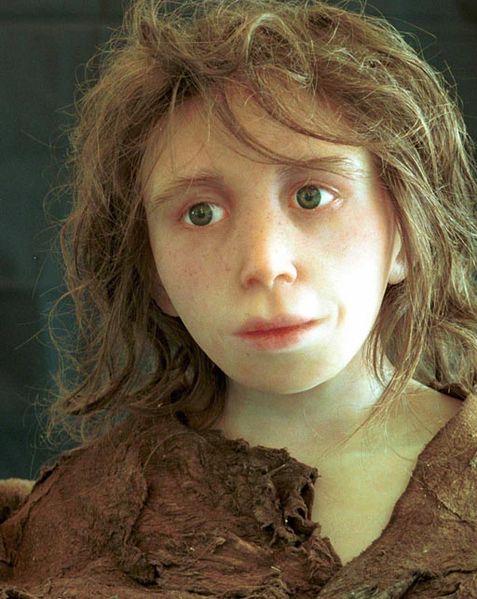
On May 6, 2010, the Max Planck Institute for Evolutionary Anthropology in Leipzig, Germany presented the world with a draft of the genome sequence of the Neanderthal (press release here (pdf) and full article here (free), NYT article here).  As part of the announcement, the team presented their conclusion that 1% to 4% of the genome of non-Africans is derived from Neanderthals:

“An initial comparison of the two sequences has brought some exciting discoveries to light. Contrary to the assumption of many researchers, it would appear that some Neandertals and early modern humans interbred. According to the researchers’ calculations, between one and four percent of the DNA of many humans living today originate from the Neandertal. ‘Those of us who live outside Africa carry a little Neandertal DNA in us,’ says Svante Pääbo.  Previous tests carried out on the DNA of Neandertal mitochondria, which represents just a tiny part of the whole genome, had not found any evidence of such interbreeding or ‘admixture.’”

Once this study came out, I knew it was only a matter of time before companies began offering tests that examined the percent of Neanderthal contribution to a test-taker’s genome.

The Neanderthal Index

In May 2010, DNA Consultants began offering a test called the Neanderthal Index.  Priced at USD $90.00, the test purports to “estimate how much Neanderthal is in your ancestry.”  From the test description:

“Created in response to the phenomenal interest generated by the revelation in scientific journals on May 8, 2010 that most humans are part Neanderthal (Green et al), our autosomal DNA Neanderthal Index can be added to your DNA Fingerprint Test or DNA Fingerprint Plus. It reports any strong matches you have with populations identified as Archaic, those preserving the earliest earmarks of interbreeding between Neanderthals and humans (Homo sapiens sapiens). The stronger the match the higher the likelihood that your ancestors gave you Neanderthal genes.”

The site also provides an FAQ page, and a sample test result (pdf).  The test returns results on a scale of 0.1 to 5.0, but it is unclear if this is meant to be a percentage.

It is vital to understand that this test does NOT test SNPs.  Instead, it uses CODIS markers to estimate whether a test-taker’s results are likely to be found in “archaic populations,” which themselves are hypothesized to be more likely to possess Neanderthal DNA (i.e., “relatively little genetic inflow.”).  The list of archaic populations is found in the FAQ, and includes many Middle Eastern and worldwide indigenous populations.  From the test description:

“Note that this test does not directly examine your genetic material. Only a large-scale genomic sequencing procedure like the Human Genome Project or Draft Neanderthal Genome can do that. The Neanderthal Index is based on probabilistic predictions of the occurrence of your unique DNA Fingerprint in Archaic Populations retaining Neanderthal genomics and traits.”

While the website does a good job of explaining that it does not identify any specific “Neanderthal SNPs” but rather makes a incredibly rough probabilistic estimate based on the Science paper, it is important to fully understand the many limitations of this test.

DIY Genomics

Meanwhile, over at 23andMe, several test-takers refuse to wait for commercial companies to offer Neanderthal-specific testing.  In addition to asking in the 23andMe forums when the Ancestry Painting will include the percentage of Neanderthal DNA, others have proposed several so-called “Neanderthal SNPs” based on research published in other recent papers.  These SNPs include rs1864325 (forum discussion here) and rs930557 (forum discussion here).   This collaborative effort by 23andMe’s test-takers is just one of the many reasons that personal genomics and affordable sequencing are so exciting.

Although the science behind these Neanderthal SNPs is only in its infancy and should only be taken with an enormous grain of salt at this stage, there will be more of these types of studies in the future to provide companies and pioneers with new data to explore.  And we, the personal genome pioneers, will get to learn and explore as these developments unfold.

Conclusions

While there aren’t yet any commercially-available tests that examine your genome for evidence of Neanderthal contribution, there will undoubtedly be such tests in the next few years, especially as further drafts of the Neanderthal genome are released.

Welcome, Doctor Radio Listeners!

Doctor Radio

I was recently asked to participate in a discussion with Dr. Deb Neklason, Ph.D on the satellite radio channel “Doctor Radio,” hosted by Dr. Ira Breite.  We largely spoke about a 2008 study, led by Dr. Neklason (who I thought did a wonderful job of explaining the science and results in layman’s terms during the show), in which it was concluded that a gene that often causes cancer traces back to a Mr. and Mrs. George Fry who came to America in 1630.  I have a write-up of the study here (http://www.thegeneticgenealogist.com/2008/01/03/a-single-colon-cancer-gene-traced-to-1630-the-future-of-genetic-genealogy/).  There was also some brief discussion of mtDNA testing and the future of personal genomics.

Here is Dr. Breite’s description of this morning’s show:

“Colon Cancer is extremely common in the United States: it is the number two cancer killer of both men and women. Some families have a mutation which makes relatives who have it have an even higher risk than the general population. Now it turns out that this gene may have literally come over, if not with the Mayflower, then pretty darn close to that! Join me and Dr. Deb Neklason, Ph.D and Dr. Blaine Bettinger as we talk about how a single mutation in a single gene in a single person from 1630 has led to thousands of colon cancer cases today.”

For new visitors from the show looking for more information, feel free to browse the archives and featured articles here at The Genetic Genealogist.

Genomes Unzipped

I’m excited to announce the launch of a new personal genomics blog called “Genomes Unzipped.”  It’s authored by some of the best and brightest bloggers (and non-bloggers) in this area, including:

The blog (although it sounds like this will be much more than a blog!) promises the following:

Welcome to Genomes Unzipped, a new group blog bringing together experts in the scientific, legal, ethical and commercial aspects of genetics. Our goal is to provide you with independent analysis of advances in the field of genetics, with a particular focus on implications for the budding industry of personal genomics. We’ll also be discussing ways in which you can make the most of your own genetic data using online resources and techniques developed by researchers.

If you’re interested in genetic genealogy and/or personal genomics, I highly recommend subscribing to this blog (here) and their Twitter account (@genomesunzipped).  Also, look for a “major announcement” on the blog in the near future laying out some future plans for the group.

I wish everyone at Genomes Unzipped the best of luck, and I look forward to reading!