I recently received an interesting question from a reader (see this comment) about 23andMe’s Relative Finder, and thought it would be worth sharing the question and my answer with all my readers.
The Question:
I’m a man who recently took a 23andMe test, and I have a question about Relative Finder. Another man who I match on 36 of 37 Y-DNA markers via Family Tree DNA also took a 23andMe test. We believe that we are third cousins, but this individual does not show up as related in Relative Finder, nor does he show any similarities in the Family Inheritance section. Does this mean that we are not related at all?
The Answer
If two individuals do not share any DNA in the Family Inheritance section of 23andMe or do not appear as relatives in Relative Finder or a people check if you look online (see here), this absolutely does not mean that they are not or cannot be relatives. It does suggest, however, that the two individuals might not share any DNA. Although your Y-DNA test suggests that you share a recent common male ancestor, it appears that apart from your Y chromosomes you do not share any other DNA.
DNA is randomly passed down from generation to generation. A parent does not pass on their entire genetic makeup to a child; as a result, bits and pieces of DNA are lost in each generation.
Cousins will only share DNA if they happen to have randomly inherited that DNA from their shared ancestors. With each generation that separates the cousins, the probability that they share DNA decreases, because with every generation it is more likely that they will not inherit DNA from their ever-more-remote shared ancestors.
Third cousins, for example, share only 2 of their 16 ancestors at 4 generations. In this example, it appears that those two ancestors did not contribute an identical segment to both you and your third cousin. Interestingly, it is possible that both you and your cousin have segments of DNA from these ancestors, but they wouldn’t show up as a match in Family Inheritance or Relative Finder unless they were the same segment of DNA.
Also keep in mind that a 23andMe test is only comparing those sections of the DNA that are examined by the test; a whole-genome test, currently not available to consumers (at least at an affordable price), is the only test that can compare an individual’s entire DNA makeup to another’s.
Two Family Trees
In reality, everyone has two family trees. The first is a Genealogical Tree, which is every ancestor in history that had a child who had a child who had a child that ultimately led to you. Every decision made by every person in that tree contributed to who and what you are today.
However, not every person in that tree contributed a segment of your DNA sequence (because of random inheritance, as discussed above). As a result, we have a second family tree – a Genetic Tree – which is a tree that contains only those ancestors who contributed to our DNA. No one has yet been able to construct their Genetic Tree, but soon it will be a reality thanks to advances in genetic sequencing and comparison such Relative Finder. These tools are using relatedness between people living today to deduce the inheritance of DNA from people who have been dead for centuries.
I have many questions about Genetic Trees that I’m looking forward to answering with new tools in the future, including the following:
- At 10 generations, I have approximately 1024 ancestors (although I know there is some overlap). How many of these ancestors are part of my Genetic Tree? Is it a very small number? A surprisingly large number?
- What percentage, on average, of an individual’s genealogical tree at X generations is part of their genetic tree?
What questions about Genetic Trees can you come up with?
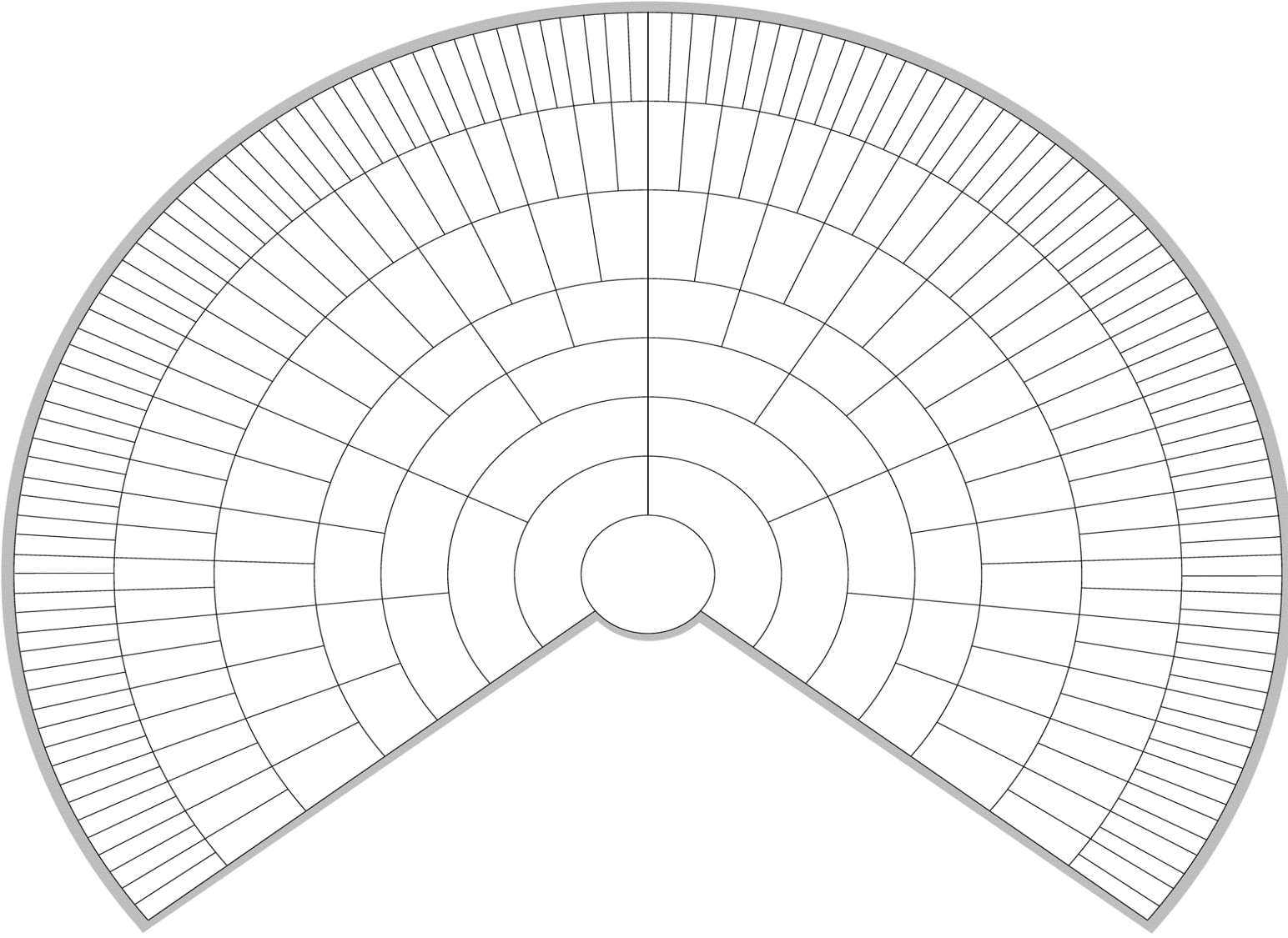
EDIT (22 September 2013): I’m adding the figures below to further help people understand the concept of a Genealogical Family Tree versus the Genetic Family Tree. Note that the Genetic Family Tree illustrates a concept rather than an exact representation of someone’s actual genetic family tree. The Genealogical Family Tree contains ALL of your biological ancestors. You know that there is a name that goes in EVERY field, even if you don’t know the name:
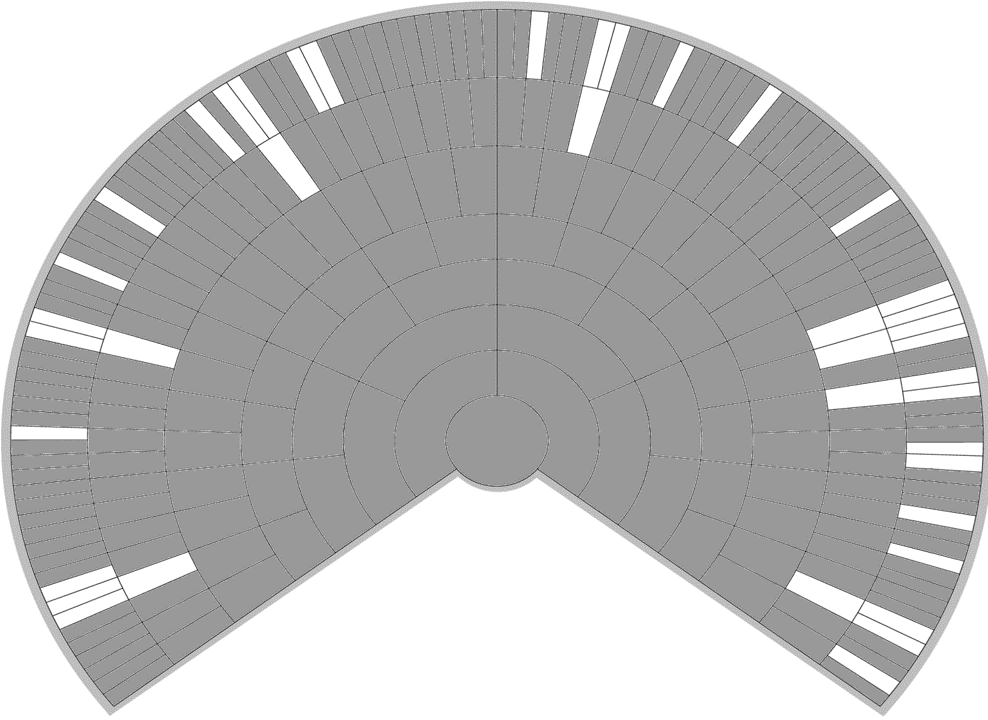
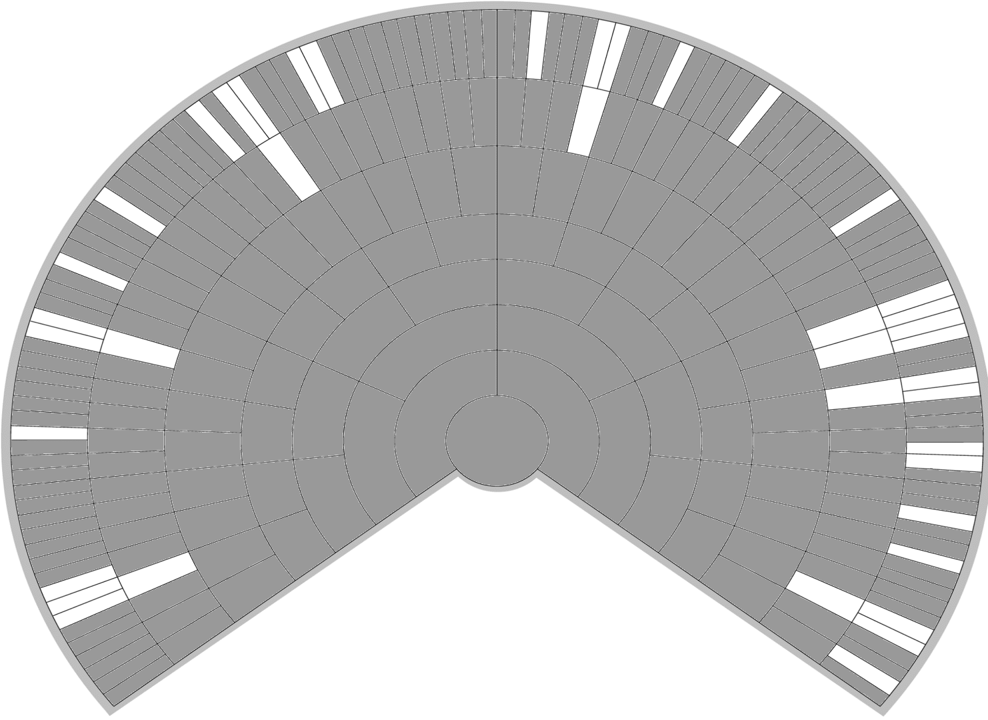
In contrast, a Genetic Family Tree contains a small subset of your biological ancestors (where ancestors that DID provide DNA to your genome are shaded in gray):
Due to the nature of the Genealogical versus the Genetic Family Tree, entire populations, ancestors, and ethnicities are regularly lost entirely from your DNA! For example, in the following example of a Genetic Family Tree, the ancestors in blue are not represented in the test taker’s DNA. As a result, the test taker will not have direct matches through those ancestors, and any ethnicity results won’t include that ancestor (and the same is true for ALL the ancestors in white):
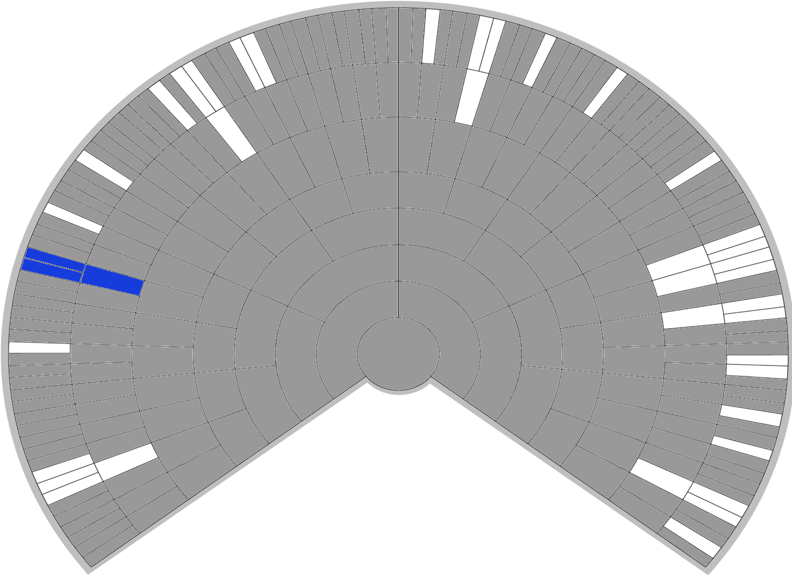
Again, just to emphasize, this is a SAMPLE genetic family tree. No one has yet constructed a full genetic tree to this level of detail. So your non-DNA ancestors (the ancestors represented by white blocks) will vary!
This is quite an informative article. It is also an excellent summary for what is happening right now at 23&Me with Relative Finder, Thank You.
This is a great post – Hadn’t ever thought of it quite like this but it makes perfect sense!
Blaine,
Surfing for similar topics I came upon another blog (Luke Jostins’) that presents an answer to the last two questions in your post above. See it here:
How many ancestors share our DNA?
http://www.genetic-inference.co.uk/blog/?p=728#more-728
The genetic tree should be a very interesting project constructing your very own genetic tree. Exciting things to come
Thanks for this info. Will need to reread when my mind is fresh, but printed it for early morning. Need to make sure I grasp all!
I have been doing genealogy for a number of years and was just looking into DNA testing to try and piece togther some distant relatives. Thus is the first time I had ever heard of having a genetic tree. Now that I understand it I am looking forward tot ehday we can have whole-genome testing available to us.
Question; what do you say to 23andMe’s claim that what changes across generations is not the relative number of shared segments, but their size? With every generation the segments of shared DNA get smaller because of being progressively chopped up. So that if you’re fourth or fifth cousins, you ought to share a segment that is so big.
I find it very hard to believe that third cousins would not have significant DNA in common. Specifically – one sixteenth!
There is no such thing as “genetic trees”. If you are related you share DNA – it’s that simple.
Of course you might not in fact be related to your third cousin if there has been funny business in the family – that is the first thing I would look at.
JF, co-ordinator COAD, BLOOD and CORNWALL