The Genetic Genealogist

Adding DNA to the Genealogist's Toolbox

Archive for July, 2008


Genetic Genealogy Patents – A Brief Review

Yesterday, DNA Heritage issued a press release (reproduced below) regarding an opinion issued by the UK Intellectual Property. The opinion (available here) was the result of inquiry into whether claims 4-7 of a 2004 patent in England are valid. The patent, held by Bryan Sykes of Oxford Ancestors, was issued in 2004 and is directed at creating and using a database of Y-DNA haplotype information to examine surname relationships and determine the likelihood of common ancestry between individuals. The UK IPO’s opinion holds that the claims are invalid because they are either not novel, or did not require an inventive step (i.e., they were obvious). Most intellectual property offices, such as those in the UK and the US, require that an invention at least be novel and nonobvious.

Interestingly, Sykes obtained a similar patent from the U.S. Patent Office on July 24, 2007 (US 7,248,970). During prosecution (i.e. the process of obtaining the patent), the patent examiner stated that the patent was not novel in view of certain references such as scientific articles by Paoli et al. and Jobling et al., but the applicant was able to argue around that point. The issue of obviousness was never raised by the examiner.

While the UK opinion doesn’t affect the validity of the U.S. patent, the same references that were used to argue that the UK patent is not novel or lacked an inventive step could potentially be used to argue invalidity of the US patent if someone were to challenge it.

As many of you know, I’m currently studying to be a patent attorney, so this is right up my alley. I wondered how many other patents related to genetic genealogy exist, so I did a quick patent search and came up with the following list. Only the first item is an issued patents; the others are published applications, meaning that they are or were pending before the patent office but have not yet been issued as final patents. Note that all is information is public information available through the PAIR system at the United States Patent Office.

  • 7,248,970 – Forensic and Genealogical Test – Discussed above. The inventor is Bryan Sykes.
  • 2003/0172065 – System and Method for Molecular Genealogical Research – A method for identifying commonalities in haplotypes and other genetic characteristics of two or more individual members of a biological sample. The inventors are James L. Sorenon, Scott R. Woodward, Joel Myres, and Natalie Myres.
  • 2004/0029133 – Mitochondrial DNA Polymorphisms – A method of using SNPs to detect diseases, determine haplogroups, or establish genetic relationships. The inventor is Corinna Hernstadt. This application is currently marked as abandoned.
  • 2004/0229231 – Compositions and Method for Inferring Ancestry – A method using Ancestry informative markers to draw inferences about traits. The inventors are Tony N Frudakis and Mark D. Shriver. See also 2007/0037182, a related application from the same applicants.
  • 2006/0025929 – Method of Determining a Genetic Relationship to at Least One Individual in a Group of Famous Individuals Using a Combination of Genetic Markers – the title describes the method. The inventor is Chris Eglington. This application is currently marked as abandoned.
  • 2007/0042369 – Methods of Selection, Reporting and Analysis of Genetic Markers Using Broad-Based Genetic Profiling Applications – A method for determining whether an individual has an enhanced, diminished, or average probability of exhibiting a phenotype, or for determining the genomic ethnicity of an individual. The inventors are Martin G. Reese and Charles White.
  • 2007/0178500 – Methods of Determining Relative Genetic Likelihoods of an Individual Matching a Population – the title describes the method. The inventors are Lucas Martin and Eduardas Valaitis.

Now, before you get up in arms, let me make a point. Intellectual property is perhaps the most valuable asset most companies possess. Additionally, our patent system has been the model for hundreds of systems around the world and arguably is responsible for much of the success of our country in the last 200 years. If the patents in the list above contain inventions that are useful, novel, and nonobvious, then they are valid and should be respected.  If not, then they should be challenged and invalidated.

The text of the DNA Heritage press release is as follows:

DNA Heritage success in patent battle helps keep genealogy DNA test prices low.

DNA Heritage has recently overcome patent claims held by a competitor which would have severely restricted the use of DNA testing and databases that allow families around the world to match and connect up through their DNA. The patent covers the use of surnames and Y-chromosomes to establish a family connection. The UK Intellectual Property Office (UK IPO) has now rendered a formal opinion stating that the relevant claims are all invalid.

Alastair Greenshields, principal of DNA Heritage said “Patents are often needed to provide an incentive for innovative work, but in this case the academic work lacked inventiveness as other researchers had already shown the connection between surnames, Y-chromosomes and family history. This is a great outcome and allows DNA Heritage and other test companies to continue offering these tests and database services to the ever-growing genetic genealogy community without having to raise prices due to royalty payments.”

An infringement challenge from patent assignees Oxford Ancestors, which had been running for over two years, was thwarted when DNA Heritage asked the UK IPO to re-evaluate the patent claims in the light of work by previous researchers. After considering submissions from both parties, an Opinion provided on the 8th April 2008 (with a 3 month review period) found that of the four claims contested, all four were invalid for lack of an inventive step, and one was additionally lacking novelty.

Results from DNA Heritage’s testing using at-home cheek swabs and their accredited laboratory can both be fed into an in-house and public-access Ybase database. These have become invaluable tools for those researching their direct male lineage and surname.

About the company:

Established in 2002, DNA Heritage provides advanced genetic tests to the genealogy community and those tracing their roots. An innovator in providing multi-lab compatible tests and the open-access Ybase database, DNA Heritage enables many genealogists around the world to enhance their families’ research.  For more information, visit http://www.dnaheritage.com.

TGG Interview Series IX – Ana Oquendo Pabón
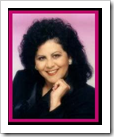
image The ninth and final edition of the TGG Interview Series is with Dr. Ana Oquendo Pabón.  Dr. Oquendo Pabón is DNA and Historical advisor to the Lost Colony DNA and Research Group, and is an Administrator or Co-Administrator to numerous DNA projects.  Her bio is can be seen here.

In the following interview, Dr. Oquendo Pabón discusses her introduction to the field of genetic genealogy, her own experiences with genetic testing, and her thoughts about the future of genetic genealogy.  It’s a terrific interview, so read on.

TGG: How long have you been actively involved in genetic genealogy, and how did you become interested in the field?

Ana Oquendo Pabón: I have been involved in genetic genealogy since very early in 2003. My brother and I have been traditional genealogists for about 28 years. Due to the excellent records on the island and hard research, we had long known all of our 64 grandparents except for one and all except 4 or 5 couples of our 128 ancestors. I had been keeping track of the news online concerning the “new science” and unique way of tracing your ancestral roots. I think everyone had heard about the Thomas Jefferson and Sally Hemmings story by that time. I had also read about a particular genealogist named Bennett Greenspan’s own amazing quest to confirm his paternal DNA with an individual in Argentina and how he had started a genetic testing company to help others accomplish what he had done using yDNA. In 2003, I decided to give my brother a DNA kit as a combined birthday and anniversary present. We were among the first ten thousand genetic genealogy pioneers to take advantage of this new way of research. This spurred the idea of helping others in our field of expertise which was the genealogy of Puerto Rico and the Puerto Rican Project (Proyecto ADN de Apellidos Puertorriqueños) was born.

TGG: Have you undergone genetic genealogy testing?

AP: I initially had the mtDNA HVR1 + HVR2 in 2003 as well as the biogeographic test. Since then, I have had the complete mtDNA and all autosomal markers available. My brother has had 67 markers and SNP testing. My son, daughter, grandson and I also have had testing through SMGF.

TGG: Were you surprised with the results?

AP: Yes and no. As an admixed individual of European (mainly Spaniard), Taino and African cultures, I expected to find a tri-cultural diversity in my personal DNA. Yet, where one test did find African heritage, another found none despite a known slave in the fifth generation and in others. The test did however find that I was 24% East Indian which could only mean my indigenous ancestry.  The indigenous fact was definitely not a surprise since my ancestors had been on the island since the colonization but the high percentage was. Without a doubt, DNA can broaden our perspectives as to our ancestral origins and where to look further but it must go hand in hand with the traditional genealogy.

The greatest personal satisfaction to me is that by emphasizing mtDNA which was not even considered relevant to genetic testing as paternal yDNA Surname Projects of that time, we were able to make it an important aspect of our own project from the outset in 2003. Through mtDNA testing, we were able to dispel, one member Native American result after another, any notion of the complete extinction of  the people who first greeted Columbus to the New World. After five years of intense recruiting, we have proven through our project that our Taino and indigenous ancestry is very much present in our people in a very large way. In fact, we have one of the highest frequencies of indigenous ancestry ~62% of Haplogroups A, C, B and D for such a small geographic area. We have also been able to determine the DNA of many of the first Colonos and Criollos, the first Spanish Colonists and their descendants who intermarried with Taíno or indigenous women and of other European colonists and immigrants from the 16th century forward.

TGG: Did the results help you break through any of your brick walls or solve a family mystery?

AP: Through my personal mtDNA or my brother’s yDNA, we have not. Neither of us has any exact high resolution matches. Since our mother was an orphan, and our father lost his father when he was three, our personal quest has been to determine the DNA signatures of our other lines through close relatives. In that way, we have been able to confirm our traditional genealogy and determine many of our other great great plus grandparents’  DNA.  In fact, of the 300 members in our Puerto Rican DNA Project, we are probably related to ~75 % either on the paternal or maternal side due to our island’s geographic isolation during large periods of history and the high level of consanguinity and endogamy.

To date, we have confirmed through both traditional genealogy and DNA, our maternal mtDNA: L1c1a, paternal yDNA: E1b1a*, maternal grandfather: J2, mother’s paternal grandmother: Haplogroup C, another maternal ggg grandmother: Haplogroup A, our 3rd, 4th, 5th, 6th, 7th and 8th maternal great grandfathers: E1b1b1 (E3b1), R1b1b2 (R1b1c), J1, R1b1, T (K2), J2a2 and our paternal great grandfather’s R1b1. However, it takes time, knowledge of the history and connections bewteen families of the period, the genealogy of surnames of the period and not just your own and recruiting the correct individuals who themselves have well documented records.

TGG: You are also a DNA Project administrator.  What projects do you lead?

AP: I am Co  Administrator and Co Founder of the Puerto Rican DNA Project, Co Administrator of the Sepharad in Puerto Rico DNA Project, the Cape Coloured DNA Project and the Flores DNA Project. I am Administrator of the American Indian Q3 Project, Administrator and founder of the The African DNA Project, the Casa de España DNA Project and the Amerind Founder DNA Project. I also administer many yDNA Surname Projects.

TGG: You were recently named to the advisory board of the Lost Colony Center for Science and Research as the advisor for DNA and Historical Research.  Can you tell us a little more about the Center, including its goals and the progress that has been made so far?

AP: Due to a difference in focus and perspective, neither I nor any of the other previous board members are now associated with the Lost Colony Center for Science and Research.

We have formed the new Lost Colony DNA and Research Group and the Lost Colony DNA Project.  I assist on their board as DNA and Historical advisor especially as it pertains to Spanish records and Native American and African mtDNA. Our goal is to not only recruit individuals who may be posible descendants but to educate and help connect families in the Roanoke area by DNA testing. We also make available all sources and documents that will assist those with Lost Colony surnames or who belong to families of interest in their own research. This includes wills, deeds, land grants and any other type of document of that specific time period and forward. To that end, we have also begun making contacts with researchers in England to assist in finding relatives of Lost Colony families acroos the pond to have DNA tesing. This is a project which takes much dedication on the part of volunteers and which will be of considerable duration, requiring intense research and collaboration. We have an excellent group of genetic genealogists and researchers which includes Roberta Estes, Joe Chandler, Anne Poole, Jennifer Sheppard, Janet Crain, Rob Noles, Penny Ferguson, Nelda Percival and myself. We are fortunate to have researchers knowlegeable in archaelogical digs, the history of Roanoke Island and North Carolina in general, the Lumbee and other Native American tribes in the region.

The Lost Colony Site is at:
http://www.rootsweb.ancestry.com/~molcgdrg/rs/sur-coord.htm
and there is an excellent blog at:
http://the-lost-colony.blogspot.com/

TGG: What do you think the future holds for genetic genealogy?

AP: As more and more individuals read through the hype and wean through the misinformation that is sometimes perpetuated in the press, there are increasing numbers of everyday people realizing the value of genetic genealogy to their own traditional genealogical research. However, what is blatantly overlooked by the press is that it is through the diligence and persistence of genetic genealogists that the field is advancing so quickly. Genetic genealogists are from all walks of life but its ranks are also full of PhDs, MDs, biologists, physicists, chemists, sociologists, priests, ministers, rabbis, psychologists and many other disciplines. In other words, we understand the intricacies of explaining a non parental event to someone. We can refer to those who can better explain questions pertinent to a particular discipline. Indisputably, we as genetic genealogists share a common bond and that is to learn and educate while we search for our own ancestral roots. It is time to give credit where it is due. Sensationalism of genetic genealogy may dissuade some individuals from testing but it is through volunteer societies such as the International Society of Genetic Genealogists that individuals will find unbiased facts and obtain education on every aspect of the field.  The best part is that they will receive the information from individuals just like themselves who were once interested in learning what genetic genealogy holds for them and once stood in their shoes not knowing where to turn for answers.

Genetic Genealogists’ own research into their own families has begun to bring invaluable genetic information to the attention of academics. Through the voluntary genetic genealogy testing in the private sector, has come the discovery of new SNPs helpful in reshaping the Y DNA Tree, has come the discovery of new mtDNA sequences and sub clades in mtDNA including the European, African and Native American groups. We, through voluntary testing are building and adding to the largest databases of genetic sequences available. With complete analysis through companies such as DeCode Me and 23 and Me, will come the knowledge and discovery of mutations which will eventually assist in the clues to finding cures to disease or the drugs to fight them. The continued and rising voluntary submission of complete mitochondrial genomes by genetic genealogists to Gen Bank is a boon and a readily accessible resource to population geneticists, medical geneticists, molecular biologists and other academics alike. The processing and analysis of those complete mtDNA genomes were obtained through just as or more stringent protocols as required in academia. Again, it is time to give credit where it is due: We are helping and are PARTNERS in this science. Politically, Genetic Genealogists are a viable, knowledgeable and formidable group who are the strongest advocates against the use of DNA for discrimination of any individual seeking health care or other insurance coverage because of their genetic ancestry.

Many of us, as parents and grandparents, are leaving our own genetic information for our children and grandchildren and to science for research and posterity
The time will come, sooner than later whereby every child will have their genetic makeup known at birth and the knowledge will be available to prevent any disease for which they may be at risk.

This will come through the help of genetic genealogists who one day, curious about their ancestors’ genetic make-up, who their parents were and where they migrated from in more recent and in earlier generations , decided to to take a Q-tip and swab the inside of their cheek to learn how their DNA all came together in one place and time to form you and me.

TGG:  Thank you, Ana, for a wonderful interview!

View every interview in this fascinating series:

And, in conclusion, I would like to extend my appreciation to everyone who participated in this series.  I learned a great deal about the early roots of genetic genealogy, some of the individuals who have been involved from the beginning and along the way, as well as some thoughts about the future of genetic testing.

The Genetic Genealogist’s Wordle

Since everyone else in the genealogical world has already submitted a version of their Wordle, I thought I’d join in on the fun.

Here’s mine:

And another:

TGG Interview Series VIII – Max Blankfeld
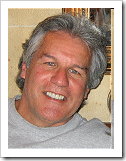
image The eighth edition of the TGG Interview Series is with Max Blankfeld.  Max is Vice-President of Marketing and Operations at Family Tree DNA, one of the largest genetic genealogy companies in the world.  In addition, together with Bennett Greenspan, Max launched DNA Traits, a company that tests DNA for genetic diseases and inherited conditions.  Max is a frequent contributor to genetic genealogy mailing lists and has answered many people’s questions about testing, results, an the field in general.

From the “About” page at Family Tree DNA:

“Originally from Brazil, received his BBA from Fundação Getulio Vargas, and MBA from Rice University. While his first college education was in the field of Aeronautical Engineering, he gave it up to become a foreign correspondent. After that, he started and managed several successful ventures in the area of public relations as well as consumer goods both in Brazil and the US.”

In the following interview, Max discusses his lengthy roots with genetic genealogy, the launch of DNA Traits, and the future of genetic genealogy.

TGG: How long have you been actively involved in genetic genealogy, and how did you become interested in the field?  Have you undergone genetic genealogy testing yourself?  Were you surprised with the results?  Did the results help you break through any of your brick walls or solve a family mystery?

Max Blankfeld: I was introduced to the concept of genetic genealogy at the very beginning when Bennett was talking about doing the “proof of concept” with Mike Hammer at the University of Arizona, even before the name Family Tree DNA had been registered. This was in 1999, and since I have the habit of not trashing my emails, I still have our exchanges on the subject dated from 1999.

I certainly did test, in 2000, and while the results did not surprise me, it helped find and confirm distant relationships, and also gave me very close matches with people that I was not aware of.

So here’s my DNA break through: in 1983, when I was still in Brazil, our family received a letter from a Blankfield living in Australia, where he gave us some of his genealogy and asked if we could possibly be related. The problem was that my father passed away in 1981, and never discussed very much his family with me because he was a Holocaust survivor, and both parents and sisters were murdered by the Nazis in 1942. So, I didn’t have any facts to check against that letter. I kept the letter in the drawer. Fast forward to the year 2000, and the start of genetic genealogy. I start looking for Blank(en)f(i)elds to be test. Saul Isseroff, an avid genealogist  from England tells me that he’s related to some Blankfields in South Africa, and gives me the name of a female Blankfield. She convinces her father to be tested. High expectations. Results come in and bingo – very close match. I ask for their family tree and guess what – that man from Australia is in that tree! We put together both trees, and it looks like we shared the same great-great-great-great-grandfather! (I must say that I had a previous attempt with another Blankfield that did not show a relationship)

TGG:  Is there any concern that people with little experience in the area of genetic genealogy will confuse ancestry testing with personal genomics services, especially in light of all the recent negative press about personal genomics?

MB: Certainly. That is why our first priority has always been to educate before selling. I remember that the first trade-shows that Bennett and I went, we never took kits to sell, and our entire approach was just to make people aware of genetic genealogy and how they could use it. With time, people started coming to our booth and ask if we brought kits to test them.

As a former journalist I can tell you that negative press will always be there, no matter what area of business one is in. Unfortunately, many journalists write about topics that they are not experts, and this leads to negative press or some absurd and totally wrong statements (I have good stories from my times as a foreign correspondent, but I will leave this to a different forum).

Educating is the key. Not just the customer, but also the press. We spend hours on the phone with journalists from all over the United States and abroad, in very detailed conversations so that they can understand the subject. In fact, our favorite thing is to educate people about it and we do not measure the time we spend on the phone for this purpose.

TGG: You recently launched DNATraits together with Mr. Greenspan.  Could you tell us a little bit about the new company and what it offers?

MB: This is a field that we were reluctant to get in, as genealogists normally don’t like to mix genealogy and health information. However, we noticed that over the years more and more people approached us on the subject of genetic diseases or inherited conditions. This lead us to form a separate entity for this specific purpose, where we use totally different test kits, absolutely unrelated to Family Tree DNA tests and stored DNA. It is currently offering Mendelian tests for several inherited diseases, and we will be adding more tests every few months. We want to change the paradigm in this field, allowing people to get tested for substantially less than what the current market price is. We want for DNATraits to make a difference in this area, and by being very affordable, allow the widest number of people to get tested so that the quantity of people with inherited diseases can be reduced.

TGG: What do you think the future holds for genetic genealogy?

MB: It may not grow at the rate that we have seen it growing in the past years, but it will still grow, and also, with the team of scientists that Family Tree DNA has, we will keep seeing additional discoveries, and offering additional tests that can help further one’s genealogical research. And, as we integrate additional features in the future, more tools that embed more traditional genealogy along with the results of DNA testing, Family Tree DNA will continue being positioned as the leader, as the most complete and scientifically accurate company in the market – and of course, with the largest database – which is a key element in this field.

TGG:  Thank you Max for a great interview!

The Tenth and Final PGP Volunteer is Revealed!
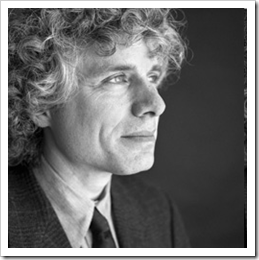
image Thomas Goetz has written another terrific article about genetic testing and the Personal Genome Project.  This article, entitled “The Gene Collector,” appears in Wired Magazine.  The article provides some new information about the PGP, including some of the incredibly detailed phenotype information that will be collected from the next 100,000 volunteers in the project.

The article also reveals the tenth and final participant of the “First 10″, the original 10 volunteers in the PGP.  I wrote about the first nine volunteers in the PGP almost exactly one year ago and noted that the tenth participant had not yet released his or her name.  The Wired article, however, mentions a number of participants including George Church, Esther Dyson, Rosalynn Gill, John Halamka, and Steven Pinker.  Indeed, a check of the PGP website confirms that Steven Pinker is the last PGP volunteer to be identified.

From the PGP-10 website:

Steven Pinker, Ph.D. is the Johnstone Family Professor of Psychology at Harvard University, and has also taught at Stanford and MIT. His research on visual cognition and the psychology of language has won prizes from the National Academy of Sciences, the Royal Institution of Great Britain, and the American Psychological Association. He has also received five honorary doctorates, several teaching awards, and numerous prizes for his books The Language Instinct, How the Mind Works, and The Blank Slate. He serves on the Usage Panel of the American Heritage Dictionary and many editorial boards, and often writes for Time, The New York Times, The New Republic, and other publications. He has been named Humanist of the Year, and is listed in Foreign Policy and Prospect magazine’s “The World’s Top 100 Public Intellectuals” and in Time magazine’s “The 100 Most Influential People in the World Today.” His latest book is The Stuff of Thought: Language as a Window into Human Nature, published by Penguin books in the fall of 2007.”

There is more information at Dr. Pinker’s Harvard website and at Wikipedia.

TGG Interview Series VII – Katherine Hope Borges
image The next interview in the TGG Interview Series with members of the Genetic Genealogy field is with Katherine Hope Borges.  Katherine is the Director of the ISOGG, the International Society of Genetic Genealogists.  In June of last year, I highlighted a video interview with Katherine done by Roots Television.

In addition to the her work with the ISOGG, Katherine recently launched DNA Fund to provide scholarships and funding for DNA testing, which can often be expensive.

In the following interview, Katherine talks about her introduction to genetic genealogy as well as the launch of DNA Fund.

TGG: How long have you been actively involved in genetic genealogy, and how did you become interested in the field?

Katherine Hope Borges: I learned about genetic genealogy in 2003 from a speaker at a Daughters of the American Revolution (DAR) meeting.  The speaker, a DNA Project Administrator, shared her success in using DNA for genealogy so I decided to try it.  My father tested in May 2003 and I established a DNA project in October of the same year.

TGG: You are one of the founders of the International Society of Genetic Genealogy.  How did the group come about, and what are the goals of the organization?
KHB: The birth of ISOGG was a result of the 2004 International Conference on Genetic Genealogy hosted by Family Tree DNA.  Part of the credit goes to one of the conference speakers, Megan Smolenyak-Smolenyak, who mentioned how there were so many misconceptions about genetic genealogy that people were being banned from forums and lists for even talking about it.  This illustrated the lack of education on the subject and the need for a supportive network for genetic genealogists.  I held meetings in Northern and Southern California to find out if others shared this vision and those people became the Founders.

ISOGG is a dues free society with no revenue sources.  It probably sounds a little crazy to run an organization with no funding, but as a dues paying member of several lineage and genealogical societies, if I have extra spending money, I want it to go to DNA testing!  Since ISOGG is primarily an internet-based society, the costs are relatively low.  Those who share the mission of ISOGG, to promote and educate about genetic genealogy support it by answering questions on the mailing lists, compiling information on web pages, giving a speech to a local society, etc.

TGG: Has genetic genealogy helped you break through any of your brick walls or solve a family mystery?

KHB: Many times now, but what is funny is that when my father tested and compared against two others of the same surname, no one matched!  Good thing a close match came in later that year or otherwise, I might have thrown in the towel on the whole business.

The brick wall that was broken by my father’s match was whether two men with the same surname in the same county listed in the 1790 South Carolina U.S. Census were related or not.  Indeed they were and a bible record was later discovered showing the two men were brothers.

TGG: What do you think the future holds for genetic genealogy?

KHB: Currently, genetic genealogy still seems to be used as a  “last resort”  to get through  a brick wall;  but I think that as it grows in popularity and use, that people just beginning genealogy may start by doing a DNA test.  Additionally, I think that advances in genetics research hold many amazing discoveries to come on what can be learned about our ancestral origins.

TGG: Aside from the ISOGG, what other genealogy-related projects are you involved with?

KHB: I recently launched The DNA Fund www.dnafund.org – an organization to provide scholarships and grants for DNA testing.  There is a real need for this as it can be a rather costly aspect of genealogy, but I also want it to benefit the scientific genetics community as the two are symbiotic.
I am also very involved in DAR and have formed a local society of Children of the American Revolution.  In addition, I am a Girl Scout Leader and the first badge my troop earned as Cadettes was the heritage badge!  (What else, right?  There is no “DNA badge”…yet…)
All of this leaves little time for traditional genealogy research, but I do manage a few days for that out of the year.  I attend an annual family reunion in South Carolina and always try to fit in research at either the South Carolina Archives or  the University of South Carolina.  If I have the opportunity to attend DAR Continental Congress in Washington DC, then most of my free time there is spent in the stacks of the DAR Library.

TGG: Thank you for a great interview Katherine!