The Genetic Genealogist

Adding DNA to the Genealogist's Toolbox

Archive for February, 2008


Genetic Genealogy and Black History Month

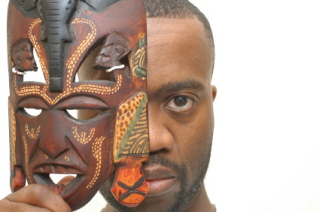
bhm1.jpg

With the popular African American Lives series on PBS and numerous news stories and magazine columns, Black History Month often results in increased attention to the genealogy and genetic history of African Americans. I saw a similar increased interest in genetic genealogy last February as well.

The Multiracial Roots of Americans

Diverse has an article entitled “More Americans Are Discovering Their Multiracial Roots.” The article discusses traditional genealogical research, then mentions genetic genealogy – particularly automosal testing:

“One of the more fascinating developments with the new genealogy is the extent to which DNA testing is revealing the multi-racial ancestry of Americans. While there’s some controversy about the claims of DNA testing firms as to how accurately they can match individuals to ancestors from specific communities and ethnic groups, there’s a consensus that proper testing can roughly specify a person’s relative mix of his or her ancestors’ geographic origins.”
The Pursuit of Happyness

Another great article is in Medill Reports, “DNA Traces African Past.” Christopher Gardner, the real-life story behind “The Pursuit of Happyness,” was recently given the results of an mtDNA analysis and genealogical study by African Ancestry. According to the analysis, Gardner’s mtDNA likely originated in Sierra Leone, and he had relatives aboard the Amistad slave ship (although how they made this connection is unclear). The article states:

Gardner left the luncheon with a smile on his face. He said he needed time to “take in” his newfound information. “This is so overwhelming,” Gardner said. “It’s something that I want to encourage more people to do, especially African-Americans.”

The tests offered by African Ancestry (and the Kittles-Gates controversy) were also discussed in the cover story to N’DIGO Online, “African Roots? Test Your DNA!

Re-Root Family Trees

The Daily Advertiser in Lafayette, LA has “Black History Month: Records help re-root family trees; see photo gallery from museum.” Earl Gates, president of the Lafayette Genealogical Society, presented a workshop on African-American genealogy this month and recommended that “genetic testing should be used as a tool and not proof of origins beyond a reasonable doubt.” Great advice.

More Interesting Links From The Genetic Genealogist

TGG3 On the heels of my recent post discussing all the interesting information that’s recently entered the blogosphere about genetic genealogy and DNA studies, here are a few more:

Misha Angrist, one of the Personal Genome Project’s “First 10“, wrote an article about the inevitability of DNA sequencing at News Observer. The article is a response to a recent editorial in the NEJM.

VisiGen Biotechnologies announces that IF their technology works as planned, the $1000 genome is just months or a few years away. See more at Genetics and Health and Next Generation Sequencing. Pacific Biosciences (PacBio) has made a similar announcement.

John Hawk’s Anthropology Weblog, “Viking Ancestry, Surnames and Medieval Genetics” examines a recent study in Molecular Biology and Evolution “investigating whether the Viking influence on surnames in England is mirrored by Y chromosomes.” It’s a great post, especially for genetic genealogists.

At Anthrpology.net, “Genetic Structure of Native American inferred from diversity in 280 bases of mtDNA.” The original paper is here. The abstracts states that “In this study, we analyze the mitochondrial DNA sequence between positions 16040 and 16322 of the Cambridge reference sequence. Our sample represents a total of 886 people from 27 indigenous populations from South (22), Central (3), and North America (2).” The authors find that “Eastern South America harbors more genetic variation than has been recognized.”

Examination of Chinese mtDNA and Y chromosomes in “Pinghua population as an exception of Han Chinese’s coherent genetic structure”, co-authored by the Genographic Project, reveals that the Pinghua, a small subgroup of Han Chinese, have non-Han Chinese genetic origins. The results are discussed at Yann Klimentidis’ Weblog and Diekenes’ Anthropology Blog.

A new paper examines the ancient migration across the Bering land bridge in “A Three-Stage Colonization Model for the Peopling of the Americas.” Particularly interesting to anyone with Native American Y-chromosomes or mtDNA (such as myself!). See more discussion at Anthropology.net.

Illumina has sequenced the first African genome from an anonymous Nigerian male sample in the HapMap project. The sequencing “yielded over 3.7 million single nucleotide polymorphisms (SNPs), including more than one million novel SNPs.” HT: Next Generation Sequencing.

Interesting Links From The Genetic Genealogist

dna-stock_phixr.JPGThere is so much to talk about, and so little time to write. So I thought I’d do a round-up post to bring these interesting stories to your attention. I hope you enjoy the following:

Of great significance to genetic genealogists, the Wall Street Journal says that as many as 1 in 25 children are the result of non-paternal events! The number seems very high, but it is based on a 2005 report in the Journal of Epidemiology and Community Health studying families in “the U.S., Europe, Russia, Canada, South Africa and several other countries.”

SNP studies are coming out left and right. The recent studies have examined variation among genomes from numerous populations using SNP chips that examine 600,000 or more SNPs. See more at GenomeWeb News, The Spittoon, and Genetic Future. A great quote comes from a discussion of one of these SNP studies at the terrific Dienekes’ Anthropology Blog:

“Before I get into the details of the paper, I want to reiterate my conviction that the problem of human origins is not really a hard one. It just requires a lot of data, a lot of populations, individuals sampled, a lot of genetic markers. Our history, our race, and now it seems even our ethnicity can be read off our genes. We just need to invest the money and effort to find out.”

As genetic genealogists, I think we can all agree. We do our part, one test at a time.

GenEdNet is hosting the Third Annual National DNA Day Essay Contest for Middle and High School Students in honor of DNA Day, which is April 25, 2008. First place winners get $350.00 (and their teacher gets $2,000 for classroom equipment!), second place winners get $250.00, and third place winners get $150.00. The due date for submissions is March 17, 2008. (HT: Tracing the Tribe).

Turns out that identical twins are not so identical after all, according to a recent reports. The results might not be surprising to anyone who has known identical twins that are as different as night and day. See more at “Genetic Differences Between Identical Twins” at Eye on DNA, “Non-Identical Identical Twins” at John Hawks Weblog, and “More on Twins: Identical Twins Have Genetic Differences” at DNA Direct Talk.

John Hawks Anthropology Weblog presents “The Random Scholar: brother-sister marriage in Roman Egypt,” a brief review of a 1997 paper that examined the extremely high rate of brother-sister marriages in Roman Egypt.

More 23andMe in the News

image Earlier today I posted about the recent updates to the 23andMe service, including an enhanced Gene Journal section and the new Paternal Ancestry.

To get a much more thorough analysis of these new additions, read David P. Hamilton’s “23andMe makes genomics personal — and slick” at VentureBeat: lifesciences. Hamilton’s articles are always insightful and well-written, and I would highly recommend this one, especially if you are considering a personal genomics service.

Interestingly, Hamilton gives 23andMe’s website high marks over deCODEme’s similar service. Hsien-Hsien Lei at Eye on DNA recently highlighted (in a post entitled “Ann Turner on Personal Genomics Companies 23andMe vs deCODEme“) an article written by genetic genealogist Ann Turner for the GENEALOGY-DNA mailing list in which she compared the services offered by the two companies. Genetic Future picked up Eye on DNA’s post and wrote “Ann Turner compares 23andMe and deCODEme.”

Of special interest to genetic genealogists, I’ve begun to hear rumblings on the DNA mailing lists of people collecting and studying the SNP results from 23andMe and/or deCODEme to identify new genealogically-relevant SNPs. While people should only share their genetic information with extreme and thought-out caution about the potential ramifications of doing so, this is undoubtedly the next step for genetic genealogists. Raw Y-chromosome and then even autosomal information from tens, then hundreds, and then thousands of people will be used to identify new genetic genealogy markers. One of the most important steps in this process will be to collect diverse data, of course. It will be interesting to see what these types of analyses reveal.

23andMe Adds Paternal Ancestry and an Updated Gene Journal

The Spittoon (23andMe’s blog) announces their new paternal ancestry tool. The information was already obtained from all male participants, so no further sampling is needed. I’m not sure which SNPs they are using to determine haplogroup status, but I’ll look into it.

The Gene Journal (here) adds 30 conditions and traits to bring the total number to almost 60. Interestingly, the conditions and traits are classified as either “Established Research” or “Preliminary Research” based on the studies from which they are derived.

And finally, there is a free demo account that “lets you explore all the features of our service using genetic data from our sample family, the Mendels.” It’s a good way to examine how the genomic data is analyzed and returned to customers using a browser interface.

23andMe also recently discussed the decision to name the company ’23andMe.’ I wrote about the name on the blog a little while ago (here).

Bryan Sykes Interviewed By The UK’s Telegraph

Anyone who is interested in genetic genealogy has likely heard of Professor Bryan Sykes. Sykes is the founder of the genetic genealogy testing company Oxford Ancestors and author of very influential books such as Blood of the Isles, Adam’s Curse, and The Seven Daughters of Eve.

Sykes was recently interviewed by The Telegraph in an article entitled “Curiosity Drives the Gene Genie to a £1m Turnover.The article mentions that Oxford Ancestors, created in 2000, is currently bringing in £ 1m year (USD $1.96million), which is an increase of 10 times its initial year! There is discussion of Sykes’ upbringing, and the difficulty in commercializing scientific research.

Lastly, Sykes discusses some future directions, including using genetic research to help solve crimes:

” ‘We have revolutionized genealogy in the last few years. If we reversed it there could be great forensic benefits. For example, if we took a sample of DNA from a crime scene we are able to predict a range of surnames that might match that of the offender,’ says Sykes.”

Hopefully there will always be a very clear, understandable, and bright division between genetic genealogy for fun and genetic genealogy for any other purpose.

GINA – The Genetic Information Nondiscrimination Act

The International Society of Genetic Genealogy (ISOGG) is sponsoring the Save GINA contest. I’ve written about GINA before (see “GINA: A Primer“), which is legislation currently before the Senate the seeks to protect people from discrimination based upon their DNA. The legislation is on hold in the Senate (see my summary here and here).

From the ISOGG contest site:

“GINA is the acronym for “The Genetic Information and Non-Discrimination Act” a bill that has already passed in the U.S. House of Representatives and pending a vote in the Senate except that Senator Tom Coburn of Oklahoma has placed a “hold” on the bill to stall it from being voted upon. You can read the politics involved in the following article in Nature: http://www.nature.com/nature/journal/v451/n7180/full/451745b.html

To enter the contest, you must be a U.S. registered voter and must send an email or snail-mail letter to your state Senator requesting that the hold be removed (and send the email or letter to isogg@msn.com). There is a $150 gift basket which includes a DNA test.

Legislation like GINA has been introduced in Congress every one of the past few years, proving that it is an important topic that our representatives should be discussing. Sending notice of your support for this legislation will alert your Senator to just how important protection against genetic discrimination is.

See more at Megan’s Roots World and Genomeboy.

Family Tree DNA Launches DNATraits, A New DNA Testing Company

image

Bennett Greenspan and Max Blankfeld [I apologize for the previous misspelling of Greenspan's and Blankfeld's names] of the genetic genealogy testing company Family Tree DNA have launched a new service called DNATraits to examine a customer’s DNA for evidence of genetic disease. According to the website, DNATraits:

“provides direct-to-consumer genetic data from tests conducted on individual DNA samples. DNATraits offers tests that are broader in scope and less expensive than any in the world, complete with a free consultation with our genetic counselors before testing (optional) and a free consultation after testing (required) to discuss your results.”

DNATraits claims that their service is different from other DNA testing companies, as explained in their comparison page. Notably, the process of returning the results to the consumer appears to be different from some other companies: the DNA results are returned to the “DNATraits medical doctor for review and confirmation” before being sent to a genetic counselor. The customer is then emailed and directed to set up a telephone appointment with the genetic counselor. After the consultation, the customer is given direct access to all their test results.

The DNATraits website has tutorials available on their website, including ‘How the Testing Process Works‘ and ‘Frequently Asked Questions,’ and I love the figures in ‘Introduction to Inheritance.’

The company was established by two long-time members of the genetic genealogy community: “With years of experience in genotyping for large corporations and delivery of DNA-related information to hundreds of thousands of customers, a group of scientists and entrepreneurs formed DNATraits to lead a paradigm shift in the way DNA tests related to inherited traits are made available to the general public.” See the ‘About Us‘ page.

Interestingly, the company also offers extended memberships to customers. The Standard Membership ($50) includes a DNA collection kit, any one test offered, free genetic counseling, and storage of DNA for five years. The Premium membership ($150) includes a DNA extraction kit, any one test offered, free genetic counseling, storage of DNA for five years, and a 25% discount on individual tests and 10% discount on panel tests for two years.

DNATraits currently offers the following tests:

Group Tests:

Individual Tests:

HT: Rootsweb’s GENEALOGY-DNA mailing list.

Genetic Genealogy On The NBC Nightly News

DNA Last week the NBC Nightly News had a three-part special series “Who We Are: The Truth About DNA.

The first video, “Genealogy for Sale” (although it is spelled ‘geneology’!!), is a report from chief science correspondent Robert Bazell. Bazell follows a couple who experience genetic genealogy for the first time. He mentions the use of online websites and databases, including Sorenson and Genetree. In the two minutes of the piece, Bazell does a decent job of highlighting some of the benefits and limitations of genetic genealogy. Just below this video on the main page is a ‘web exclusive’ that continues the couple’s story a bit further.

The second video and third videos are interesting, but are not directly related to genetic genealogy. For anyone that might be interested in more, the Truth About DNA page at MSNBC has a number of interesting links and stories.

Here is the video of the first (genetic genealogy) segment:

And here is the extra follow-up segment:

More discussion at Eye on DNA.

Watch DNA Videos From Roots Television Here at TGG

Thanks to Megan Smolenyak Smolenyak and her team at Roots Television, I am able to offer an assortment of incredibly interesting videos about DNA and DNA testing here at The Genetic Genealogist! If you click on the link here you’ll be taken to the new page with the permanent video player (with more videos being added all the time!). This new feature will be readily available to everyone at any time by clicking on the link in the header labeled “Roots Television – The DNA Channel”.

Right now there are videos about three different genetic genealogy success stories. Unfortunately, genetic genealogy has received a bit of bad press lately, and many people are unaware that the tool has been used by hundreds (if not thousands) of people to examine and answer important genealogical questions. As I’ve said many times, genetic genealogy goes best when it goes hand-in-hand with traditional genealogical research.

So, stop by and watch these very interesting stories!

(and if you have any trouble viewing the videos, please let me know)