The Genetic Genealogist

Adding DNA to the Genealogist's Toolbox

Archive for December, 2007


The Personal Genome Project Has a New Website

The Personal Genome ProjectAs of the end of November, the Personal Genome Project has a newly-designed and user-friendly website. Compare the OLD site and the NEW site – what an improvement! Misha Angrist, aka genomeboy.com and one of the “First 10″ aptly called the site “PGP 2.0″.

The new site is extremely well organized and contains information about the project and about participating in the project, if one is so inclined. Since this project will contain so much personal information about each individual that joins, participants will go through an extensive consent process that will include education, physician assistance, and even an online assessment to gauge the participant’s grasp of genetics and the risks of participation, among other things. I know that the team is working feverishly behind the scenes to gather as much information as possible to create an extensive consent protocol.

pgp8_thumb.jpg PGP 2.0 contains the official biographies of the “First 10″, which they call the PGP-10. I assembled biographies of the First 10 back in July when their names were released, and upon quick comparison it looks like I did a good job. The new site also contains a picture of 8 of the “First 10″ (note that the picture is missing Stan Lapidus as well as the mysterious 10th individual who has not yet been identified).

On a related note, the Personal Genome X-Team (PGx), which is led by George Church (leader of the PGP) has just become the sixth contender for the Archon X-Prize for Genomics (see my discussion of this X-Prize here).

So what does all this mean? For genetic genealogists, the PGP and the Archon X-Prize for Genomics means that affordable whole-genome sequencing is getting closer and closer every day (my prediction – which is based solely on my own educated guess – is that I will be able to sequence my entire genome for $1,000 or less by the end of 2009). As of 2007, genetic genealogists have done amazing things with just a few 100 or few 1000 sequenced bases. When we have access to the data from thousands of entire genomes, the field of genetic genealogy will explode.

Famous DNA Review, Part III – Niall of the Nine Hostages

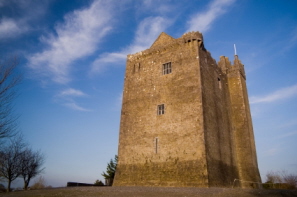
ireland2.jpgAs many as 3 million men worldwide might be directly descended from a single Irish warlord named Niall of the Nine Hostages who was the High King at Tara from 379 to 405.


In February 2006, researchers at Trinity College in Dublin released a paper that studied that Y chromosome signature of men throughout Ireland. They found that 8% of men sampled had the same Y chromosome, with a cluster in the northwest where fully 21% of men carried the signature chromosome (which fell into Haplogroup R1b1c7). The article appeared in The American Journal of Human Genetics and was titled “A Y-Chromosome Signature of Hegemony in Gaelic Ireland.”

The researchers looked at 17 STR markers on Irish Y chromosomes to determine the relatedness of samples they had obtained. They found that there was a strong association between the most common signature and surnames that were related to the most significant dynasty of early medieval Ireland – the Uí Néill. Some of the surnames included (O’)Gallacher, Boyle, O Doherty, O’Connor, Cannon, Bradley, O’Reilly, Flynn, (Mc)Kee, Devlin, Donnelly, Egan, Gormley, Hynes, McCaul, McGovern, McLoughlin, McManus, McMenamin, Molloy, O’Kane, O’Rourke and Quinn (list from Oxford Ancestors). Of course there were no surnames at the time of the earliest Uí Néill dynasty, but when the Irish took surnames around 1,000 A.D., many chose names that were associated with Uí Néill dynasties.

This association suggests that men with the signature Y chromosome are descended from the founder of the dynasty Uí Néill, Niall of the Nine Hostages. Niall of the Nine Hostages, who was the High King at Tara from 379 to 405, founded the dynasty Uí Néill, which ruled until the 11th century. According to the legend, Niall had 12 sons, many of which were rulers after Niall’s death.

The biggest caveat of this research is that without testing DNA from Niall’s remains, it is impossible to say with 100% certainty that Niall is the ancestor (and some argue that there never was a real Niall). For instance, Mrs. Niall could have only reproduced with the friendly neighbor, or a large fraction of the men with the signature Y chromosome could be descended from Niall’s promiscuous uncle George (I don’t know if there was an uncle, or if his name was George – it’s just an example).

As the authors of the study pointed out:

“The fact that about one in five males sampled in northwestern Ireland is likely a patrilineal descendent of a single early medieval ancestor is a powerful illustration of the potential link between prolificacy and power and of how Y-chromosome phylogeography can be influenced by social selection.”

Not surprisingly, the signature Y chromosome has also spread around the world, suggesting that there may be as many as 3 million people who carry it. Using international DNA databases, the chromosome was found in roughly 1 in 10 men in Scotland, and in about 2% of European-American New Yorkers.

For more information, see Times Online, NY Times, Family Tree DNA, Oxford Ancestors, and Wikipedia (for info about the life of Niall of the Nine Hostages, including the source of the name).

Other Posts in the Famous DNA Series:

deCODEme DNA Results At Roots Television

Megan Smolenyak Smolenyak, one of the founders of Roots Television and the author of Megan’s Roots World recently released a screencast of her husband’s deCODEme results at “A First Look at deCODEme DNA Results.” Megan is the Chief Family Historian of Ancestry.com and is co-author of Trace Your Roots With DNA, and thus is both extremely interested in genetic genealogy and aware of the limitations of this type of DNA analysis. The 17-minute review includes a brief look into the different aspects of deCODEme’s analysis, including health and ancestral information.

My 2008 Blogging Goals

2008small.jpgAs 2007 comes to a close, I thought I would take a moment to reflect upon the past year of blogging and set some goals for the coming year.

The Genetic Genealogist was created just 10 months ago. My first post on February 12, 2007 was “New estimates for the arrival of the earliest Native Americans.” Interestingly, this research was just named one of the Top 100 Science Stories of 2007 according to Discover Magazine.

Since the debut, I have written a total of 211 posts. There have been over 32,000 visitors and almost 100,000 page views since February. My eBook, “10 DNA Myths Busted, and Other Favorite Posts”, has been downloaded almost 150 times. My top 10 most viewed posts are the following, which represent a wide array of topics:

  1. The First Personal Genomic Sequencing Test Offered for $985
  2. 23andMe Revisited
  3. Carnival of Genealogy, 35th Edition
  4. Navigenics – A Personal Genomics Start-Up
  5. A Round-Up of Discussions Following the Launch of deCODEme and 23andMe
  6. New DNA Analysis of Native Americans
  7. Genetic Genealogy in the Classroom
  8. 23andMe and Google
  9. To Sequence or Not to Sequence – That is the Question
  10. The Personal Genome Project’s “First 10″

To top the year off, I have met an amazing array of individuals through this blog, including professional genealogists, people in the DNA Network, The Genealogists Network, members of genetic genealogy companies, commentators, and many others. In addition, I would like to thank all of the readers and visitors who make blogging such a rewarding experience.

So, in closing and as part of the “Group Writing Project: 2008 Blogging Goals” by DailyBlogTips, here are a few of my goals for 2008:

1. I would like to increase the number of comments and promote conversation among readers;

2. I would like to continue to increase the number of readers and visitors to TGG (which would of course also help #1!);

3. And I would like to blog about a wider variety of sub-topics within the field of genetic genealogy (maybe a few interviews with surname project leaders, more about recruiting members to projects, just to name a few).

What are your blogging goals for 2008?

Me? A GeneaAngel?

The footnote Maven created an ‘angelic’ collage of genealogy bloggers at “A Choice of GeneaAngels.” I was graciously included in the collage. Can you find me without looking at the list? Sure would be fun to hear us all sing together, wouldn’t it?

On a related note, the footnote Maven also started a Blog Caroling meme where we post the lyrics from our favorite Christmas carol. Since my favorite song was already taken, I thought I’d go with my second favorite. In high school my French teacher would have us sing Christmas carols in French and one of my favorites was the following:

Bring A Torch, Jeannette, Isabella:

English
Bring a torch, Jeanette, Isabella!
Bring a torch, to Bethlehem come!
Christ is born. Tell the folk of the village
Mary has laid him in a manger.
Ah!* Ah! beautiful is the Mother!
Ah! Ah! beautiful is her child!
It is wrong when the Baby is sleeping,
It is wrong to speak so loud.
Silence, now as you gather around,
Lest your noise should waken Jesus.
Hush! Hush! see how the Baby slumbers;
Hush! Hush! see how the Baby sleeps!
Softly now unto the stable,
Softly for a moment come!
Look and see how charming is Jesus,
Look at him there, His cheeks are rosy!
Hush! Hush! see how the Child is sleeping;
Hush! Hush! see how he smiles in dreams!
French
Un flambeau, Jeanette, Isabelle –
Un flambeau! Courons au berceau!
C’est Jésus, bons gens du hameau.
Le Christ est né; Marie appelle!
Ah! Ah! Ah! Que la Mère est belle,
Ah! Ah! Ah! Que l’Enfant est beau!
C’est un tort, quand l’Enfant sommeille,
C’est un tort de crier si fort.
Taisez-vous, l’un et l’autre, d’abord!
Au moindre bruit, Jésus s’éveille.
Chut! chut! chut! Il dort à merveille,
Chut! chut! chut! Voyez comme il dort!
Doucement, dans l’étable close,
Doucement, venez un moment!
Approchez! Que Jésus est charmant!
Comme il est blanc! Comme il est rose!

According to Wikipedia, the song was first published in 1553 in France and is unique among Christmas carols in that it is in 3/8 time (the fast pace is one reason I enjoy the song so much).

The Genetic Genealogy Timeline

tiemline.jpgGenealogists spend many of their days (and much of their money!) tracking the history of their ancestors. They hunt through ancient records to elucidate even the smallest clue as to some facet of their ancestors’ lives. Since the majority of genetic genealogists started their journey as traditional genealogists, it is only natural that they enjoy record-keeping and tracking as well.



The DNA Genealogy Timeline is a free public resource maintained by Georgia K. Bopp and hosted by rootsweb.com. The timeline attempts to track the significant developments associated with genetic genealogy. It begins with “Before 1980″ and was updated most recently as of October 2007.

What immediately stands out is that genetic genealogy has been around much longer than people realize, especially given the recent media attention. I began my exploration of genetic genealogy in 2003, but by 2000 there were already as many as 4 surname projects begun by hobbyists! As of September 2007, one company (Family Tree DNA) had over 4,200 surname projects that contained more than 66,000 surnames. There are even more surname projects hosted by other companies, including Heritage DNA.

The timeline also shows that genetic genealogy was first developed by geneticists and anthropologists to analyze a wide variety of problems facing researchers. The technology was later embraced by genealogists who saw that it could be used to answer some of the problems faced by other genealogists.

As the introduction states:

“This Timeline began when I could not find an informal context – a simple history – to use when called upon to explain the new field of DNA and genealogy to those who knew less about it than I (a beginner in October 2002 – and not a scientist). This contains items I’ve found as well as contributions by others, primarily Ann P. Turner and participants of the RootsWeb GENEALOGY-DNA discussion list and members of the ISOGG community.

This is a great resource, and I’m thankful that Ms. Bopp has made it freely available to all. The site mentions that corrections and additions to the timeline are welcome.

myDNAchoice – Are Your Surfing Habits the Result of Your Genome?

mydnachoice-logo.gif

VortexDNA today announced the launch of myDNAchoice, a website and Firefox extension aimed at mapping the DNA of “human intention” to help users map their interactions with the internet. Nick Gerritsen, a director of VortexDNA, believes that “this includes better search results, meeting people like you, letting people find you on your favourite sites, and much more–without ever compromising your privacy.”

Although it is a bit confusing, myDNAchoice is a browser tool to help users organize the web based on their interactions with the internet, both previous (reflected in the short survey taken at installation) and future (new surveys taken through time). This browser tool, the company asserts, may result in as much as a 14% increase in search relevancy as compared to Google Search.A user begins by installing the mywebDNA Firefox extension in Firefox:

The genome, “coded as a seven digit number it reveals the true determinants of our lives – the beliefs, with the same helix/vortex structure as our physical DNA, that are the building blocks from which we create order and meaning.”

The user then maps their “intention genome” through a short survey. This “web genome” becomes part of the Web Genome Project. The website states:

“We can work together collaboratively to map the characteristics of the genome of human intention, including mapping the Web to make it more relevant to everyone. Unlike the Human Genome Project, the Web Genome Project is a mass collaboration across the Web by ordinary people who have chosen to make a difference in their lives and get a better Web experience.”

Once installed, the Firefox plug-in circles the two Google search results that are the most relevant to your personal “web genome.” The user has the option of completing more surveys over time, thus refining the results and relevancy.

So what would collaboration in this project give to the user? According to the press release:

“In an independently verified test with Google Search results, the technology was able to demonstrate a 14% improvement in relevance between links with low relevant and links with high relevant based upon a user’s DNA.”

There is a short video about the company, available through YouTube:

What about privacy? The company assures users that the user’s privacy is guaranteed, since the results are based on a seven digit number, not search history.

The link between web-browsing habits and DNA or even epigenetics is probably tenuous at best, suggesting that the use of the term “DNA” is more of a marketing tool and not any actual correlation. This browser tool does NOT reveal any information about your DNA, your ancestry, or your propensity for disease! There would only be a correlation, perhaps, if a person’s browsing habits are the result of their genome, and this is currently unknown. This type of analysis won’t be available for a few years (until cheap genome sequencing becomes available to researchers),

If anyone has tried myDNAchoice, or is planning to try it, please leave a comment below. VortexDNA was previously covered by Eye on DNA.

More Genetic Genealogy In The News

Genetic genealogy is everywhere right now – Science, CBC, Reuters, and LiveScience, just to name a few. This week two articles came out that gave readers both the ups and downs of genetic genealogy, gathering and presenting information and quotes from both sides.

The first article, “DNA testing for genealogy grows in popularity, but some urge restraint” appeared in the Wisconsin State Journal on the 9th. The second article is entitled “Ancestral DNA testing is not exact science” and although the assertion in the title wasn’t developed in the short article, the author went to authorities with opposite viewpoints and presented both in the article.

Megan Smolenyak Smolenyak, who was quoted in the second article, blogged about some of her thoughts on the topic yesterday.

The Latest on 23andMe

23andme-logo1.jpg

Three weeks ago, 23andMe launched their personal genome service. In the meantime, the launch has prompted a great deal of discussion. Additionally, a few of the earliest customers have already received their results. Here are links to some of the most interesting posts regarding 23andMe’s service.

To Be or Not to Be: 23andMe
LaunchSquad received their 23andMe kit in the mail, causing them to ponder the benefits, considerations, and services involved in genetic testing. After introspection, they decide to spit and mail.

Know Your Genes, Know Your Future
GeneratedMadness decides that the benefits of 23andMe’s service outweighs the potential negatives.

I Like The Way You Stink
Mark Brooks at Online Personals Watch has already received the results of his analysis.

23andMe Unboxing
Mark Fletcher at Wingedpig.com unboxes the kit he received on November 21st. Although the results were supposed to be due in 4 to 6 weeks, they were ready in just a few weeks – see 23andMe Results. There weren’t any surprises in the Ancestry section, but the Gene Journal and the Genome Explorer sections were especially interesting.

23andme – Do I really dare?
Professor Gunther Teubner discusses the hurdles that he will have to overcome before feeling comfortable with genome analysis.

Step 1: I Purchased A 23AndMe DNA Test
Michael Arrington at TechCrunch decided to “bite the bullet” and buy “a DNA test from 23andMe’s new Personal Genome Service.” The post sparked a lengthy discussion that is playing out in the comments (over 50 so far).

Michael Arrington purchased magic beans
Sammy at Health Information analyzes the TechCrunch post and some of the ensuing comments.

Fundraising Updates for Andrew’s DNA Test
Andrew at BuzzYeah is gathering donations for a testing kit from 23andMe.

Are Home Genome Tests a Step Away from Eugenics?
Annalee Newitz at Alternet asks some philosophical questions (be sure to read the discussion in the comments as well).

I Won’t Spit, Don’t Ask Me
Leigh Anne Jasheway-Bryant lists the reasons she is not interested in genome analysis.


Are You Thinking About Genetic Testing?

dna-stock_phixr.JPGIf you’re thinking about jumping into the field of genetic testing (whether for genetic genealogy or any other form of genetic test), you should be sure to do some research first. The results of any genetic test are incredibly personal, and can potentially have a huge impact. As a result, the decision to undergo testing should only be made after doing some vital research.

Luckily, a fellow DNA Network blogger has written a post that will help you do this important pre-testing research. Hsien at Eye on DNA has written “How to Prepare Yourself for a Genetic Test.” Hsien provides the following advice:

“Although you can’t change your DNA, it is possible to prep yourself for a DNA test just as it’s possible to prep yourself for a driving test. It is critically important that anyone undergoing DNA testing learn as much as they can about the results they can expect to receive, the interpretation of these results, and the impact results may have on their life choices.”

She then lists and describes 5 different things you can do to prepare yourself for genetic testing. I highly recommend this post to anyone who is thinking about buying a test.