The Genetic Genealogist

Adding DNA to the Genealogist's Toolbox

Archive for September, 2007


Genetic Genealogy News

dna_logo.gif

The DNA Ancestry Blog has a new post about needs and concerns regarding Ancestry.com’s DNA project. If you have something insightful or valuable to share, the post lists an email address.

There’s a relatively new Genetic Genealogy blog called Haplogroup I which has some interesting information and news about the field. Welcome to the blogosphere, and I hope to learn more about you and about Haplogroup I!

The big news (ok, not really) in Genetic Genealogy this week is that Ben Affleck is joining the Genographic Project. The Boston Globe has a story here. My favorite part was the ending:

As with any other test, the project did lead to some bragging rights. Ramiro Torres, who hosts a morning show on radio station Jam’n 94.5, was pleased to learn his enterprising relatives trekked across all of Asia before crossing the ice bridge and populating North and South America.

“I just want to give a big shoutout to haplogroup A and let anybody else know we are the best,” he said. “I don’t care if you’re the mayor, or a soccer player, or Ben Affleck – unless you are in my group, you are nobody.”

As I am myself a member of Haplogroup A, I can see some merit in what he says!  HT: Dana Waring at pgEd and EyeonDNA covered it here.  By the way, speaking of Dana, she and the Personal Genetics Education Project got a mention in another article in the Boston Globe, available here. Congrats Dana!

Genetic Genealogy in the News

Megan Smolenyak at Megan’s Roots World has some great links to recent news about genetic genealogy.  The first post is “Genealogical Round Up“, and the second is “More Genetic Genealogy.”  If you’re interested in GG, stop by.

I also saw a recent story in the IndyStar called “Unearthing Their Roots“, about African Americans using DNA in an attempt to identify their ancestral origin.  Although this exact topic has been very popular in the press this year, this article is more balanced than some.

By the way, I would like to remind everyone that Roots Television is a great resource for anyone who might be interested in genetic genealogy, or genealogy in general.  I especially enjoy seeing interviews and presentations from conferences that I am unable to attend.  It’s a wonderful resource.

I wish there was an online Science Television that presented material from all the conferences I can’t attend (oh man, if only I had more time!  It sure would be fun to go around interviewing scientists and recording meetings).

A List of Books for the Genetic Genealogist

A lot of people write me to ask me questions about genetic genealogy, and a few have asked if there are any books on the subject that might help them learn more about it.  I thought I should provide a list of great reading material to help someone who might not have time to ask (but keep the questions coming!).

Great beginner books which are specifically about genealogy and DNA:

Trace Your Roots with DNA: Use Your DNA to Complete Your Family Tree by Megan Smolenyak and Ann Turner (Published October 7, 2004):

The Seven Daughters of Eve: The Science That Reveals Our Genetic Ancestry by Bryan Sykes (Published July 9, 2001):

How to Interpret Your DNA Test Results for Family History & Ancestry: Scientists Speak Out on Genealogy Joining Genetics by Anne Hart (Published December 2002):

How to DNA Test Our Family Relationships by Terrence Carmichael and Alexander Kuklin (Published December 1, 2000):

DNA & Genealogy by Colleen Fitzpatrick, Ph.D. (Published November 30, 2005):

Genetic Genealogy DNA Testing Dictionary by Charles F. Kerchner, Jr., P.E., available at http://www.kerchner.com/books/ggdictionary.htm.

The more scientific books:

Forensic DNA Typing, Second Edition: Biology, Technology, and Genetics of STR Markers by John M. Butler (Published Feb 22, 2005):

Forensic Genealogy by Colleen, Ph.D. Fitzpatrick (Published June 30, 2005):

Beyond Genetics: The User’s Guide to DNA by Glenn Mcgee (Published November 9, 2004):

Reflections of Our Past: How Human History is Revealed in Our Genes by John H. Relethford (Published May 6, 2003):

Adam’s Curse: The Science That Reveals Our Genetic Destiny by Bryan Sykes (Published May 2005):

Deep Ancestry: Inside the Genographic Project by Spencer Wells (Published November 21, 2006):

The Journey of Man: A Genetic Odyssey by Spencer Wells (Published February 17, 2004):

Unlocking Your Genetic History: A Step-by-Step Guide to Discovering Your Family’s Medical and Genetic Heritage (National Geneological Society Guide, 6) by Thomas H. Shawker (Published August 11, 2004):

The Origins of the British: A Genetic Detective Story by Stephen Oppenheimer (Published October 2006):

Saxons, Vikings, and Celts: The Genetic Roots of Britain and Ireland by Bryan Sykes (Published December 11, 2006):

Ancestry.com Has a New Blog

Ancestry.com has established a new blog, located at blogs.ancestry.com.  Let me just say that they have excellent taste in WordPress themes (it’s the same as mine)!

5 Reasons to Save Your Grandmother’s DNA – A Busy Day Re-post

1. You got those big blue eyes from your grandmother, but chances are you inherited less desirable genes as well. We inherit our DNA from our parents, who inherited it from their parents. Since we all possess genes that can cause or contribute to disease, knowing one’s DNA and family medical history can be a great resource for someone who learns they have a genetic disorder.

2. Full genome sequencing is right around the corner! The X-prize quest for the $1000 genome will lead to efficient and affordable whole-genome sequencing. As commercial companies crop up and compete for customer’s business, leading to even lower prices.

3. Your grandmother’s DNA contains clues to her ancestry. X-chromosome, mtDNA, and autosomal genealogy tests contain clues to a person’s ancestry, both recent and ancient.

4. Even if you aren’t interested in this whole genetic genealogy craze, somebody you know will be! Genealogy is one of the most popular hobbies in America, and the use of DNA to augment traditional genealogical research is growing faster than ever. Chances are that someone you know will someday be interested in your grandmother’s DNA!

5. All the undiscovered possibilities. No one knows what uses will be discovered for DNA in the future. Save that DNA just in case!

Disclaimer: Some people are very uncomfortable with the thought of gathering and storing a loved one’s DNA, and those beliefs should be honored and respected. It is ALWAYS best to obtain your grandmother’s permission before you gather her DNA. So don’t delay, call her now!

Reconstructing the Worldwide Family Tree

I first saw mention of Mike Elgan’s story, “Coming Soon: The Mother of All Genealogy Databases” at Jasia’s Creative Gene (The Google Family Tree?), and then I saw it at the Genealogue (NothingWill Save Us From Boredom).

In the article, Mr. Elgan imagines an enormous future database that combines traditional genealogical records and DNA to link everyone together.  Two individuals could then, for instance, search the database to find their closest relationship to each other.  My first thought, of course, is of privacy issues and plain old bad genealogical data (of which the internet is full).

The Early Stages of the Genetic Genealogy Revolution – Part II

rpi.gif

I’ve spoken before about the enormous effect that affordable SNP and whole-genome sequencing will have on genetic genealogy. In that previous article, I mentioned a study using SNP analysis to identify a person’s ancestry based on autosomal DNA (all the nuclear non-sex DNA). Another study, released today in PLoS Genetics, used SNP chips to identify SNP markers that are characteristic of a certain ancestral origins. According to the authors:

“We have developed a novel algorithm to identify a subset of SNP markers that capture major axes of genetic variation in a genotypic dataset without use of any prior information about individual ancestry or membership in a population.”

To accomplish this, the researchers:

“…studied here 274 individuals from 12 populations (20 Mbuti, 20 Mende, 22 Burunge, 42 African Americans, 42 Caucasians, 20 Spanish, 11 Mala, 20 East Asians, 20 South Altaians, 20 Nahua, 20 Quechua, and 19 Puerto Ricans). Three of these populations are admixed (Caucasians, African Americans, and Puerto Ricans). All individuals were typed using the 10K Affymetrix array.”

The “10K Affymetrix array” is a chip that tests for about 11,500 SNPs (single nucleotide polymorphisms, or mutations) in each individual. Personally, I don’t know why more genetic genealogy companies aren’t doing this type of research themselves. The chips are relatively cheap these days, and there are plenty of people willing to send in DNA from all around the world with extensive ancestral information. This is the future of genetic genealogy, and they should be a part of it.

The most interesting paragraph from the news release:

“Their program was more than 99 percent accurate and correctly identified the ancestry of hundreds of individuals. This included people from genetically similar populations (such as Chinese and Japanese) and complex genetic populations like Puerto Ricans who can come from a variety of backgrounds including Native American, European, and African.”

The researchers then used their data to analyze an admixed population to evaluate their results, with great success. Here’s a figure related to the paper, here is Dr. Petros Drineas‘ lab website, and here’s the entire news release:

“A group of computer scientists, mathematicians, and biologists from around the world have developed a computer algorithm that can help trace the genetic ancestry of thousands of individuals in minutes, without any prior knowledge of their background. The team’s findings will be published in the September 2007 edition of the journal PLoS Genetics.

Unlike previous computer programs of its kind that require prior knowledge of an individual’s ancestry and background, this new algorithm looks for specific DNA markers known as single nucleotide polymorphisms, or SNPs (pronounced snips), and needs nothing more than a DNA sample in the form of a simple cheek swab. The researchers used genetic data from previous studies to perform and confirm their research, including the new HapMap database, which is working to uncover and map variations in the human genome.

“Now that we have found that the program works well, we hope to implement it on a much larger scale, using hundreds of thousands of SNPs and thousands of individuals,” said Petros Drineas, the senior author of the study and assistant professor of computer science at Rensselaer Polytechnic Institute. “The program will be a valuable tool for understanding our genetic ancestry and targeting drugs and other medical treatments because it might be possible that these can affect people of different ancestry in very different ways.”

Understanding our unique genetic makeup is a crucial step to unraveling the genetic basis for complex diseases, according to the paper. Although the human genome is 99 percent the same from human to human, it is that 1 percent that can have a major impact on our response to diseases, viruses, medications, and toxins. If researchers can uncover the minute genetic details that set each of us apart, biomedical research and treatments can be better customized for each individual, Drineas said.

This program will help people understand their unique backgrounds and aid historians and anthropologists in their study of where different populations originated and how humans became such a hugely diverse, global society.

Their program was more than 99 percent accurate and correctly identified the ancestry of hundreds of individuals. This included people from genetically similar populations (such as Chinese and Japanese) and complex genetic populations like Puerto Ricans who can come from a variety of backgrounds including Native American, European, and African.

“When we compared our findings to the existing datasets, only one individual was incorrectly identified and his background was almost equally close between Chinese and Japanese,” Drineas said.

In addition to Drineas, the algorithm was developed by scientists from California, Puerto Rico, and Greece. The researchers involved include lead author Peristera Paschou from the Democritus University of Thrace in Greece; Elad Ziv, Esteban G. Burchard, and Shweta Choudhry from the University of California, San Francisco; William Rodriguez-Cintron from the University of Puerto Rico School of Medicine in San Juan; and Michael W. Mahoney from Yahoo! Research in California.

Drineas’ research was funded by his National Science Foundation CAREER award.”

There’s still a long way to go, but this is a great start.

Non-Scientist Summary: A group of researchers used SNP (single nucleotide polymorphism) analysis to identify particular SNPs which are associated with an individual’s particular ancestry (for example, Caucasian, African American, Japanese, etc..). Using this information, they could test individuals with unknown ancestry for those SNPs, in effect characterizing their ancestry based on the SNPs that they possess.

DNA to the Genealogical Rescue, Again

In today’s Washington Post there’s a story about The Boy in the Iron Coffin. This coffin was accidentally discovered by a construction crew in Washington, D.C. in 2003. Research conducted by the Smithsonian’s Museum of Natural History discovered that the body inside, still wearing a white burial suit, was that of William T. White, about age 15. William, who appears to have had a heart defect that would have made him sickly, died on January 23, 1852:

“The boy was extremely well preserved and clad in white cotton clothing that included a pleated shirt and vest with cloth-covered buttons, flared trousers, darned socks and ankle-length underdrawers.”

According to the article, the body “had been buried in a cemetery that probably belonged to Columbian College, the precursor to George Washington University, in what is now Columbia Heights, and had been a student at the college preparatory school when he died.”

The museum researchers, led by Deborah Hull-Walski and Randal Scott, found evidence that the body might belong to William and built a 788-person family tree to track down relatives for DNA comparison. They were able to find a relative (the article said ‘descendant’, but I doubt a sickly 15-year-old had much luck in the 1850’s – and, of course, they used mtDNA which he wouldn’t have passed along anyway) in Pennsylvania. 64-year-old Linda Dwyer agreed to compare her mtDNA to mtDNA that was gathered from William’s shinbone. It was a match.

“I think it’s awesome,” Dwyer said yesterday, adding that she believes she is White’s great-great-great-grandniece. “The whole technology of finding me and putting it all together. . . . It’s so cool.”

Interestingly, this was not the researcher’s first attempt to find an mtDNA match. They had originally believed that the boy was Lemuel P. Bacon, the son of Columbia’s president Joel Bacon, who died at age 12 on May 27, 1852. Using traditional genealogical methods, they were able to identify a relative of Lemuel who agreed to provide mtDNA. The comparison, however, revealed that they were not a match. This happened again when they thought the boy might be a William Henry White.

At one point, it was thought that the boy in the coffin might be a William T. White who was mentioned in the will of a Levin White. Unfortunately, the boy’s DNA did not match that of a descendant of Levin White. After further research, it was discovered that the Levin White that they had traced was from a different family. As it turns out, the boy in the iron coffin, William T. White, was an orphan, son of a William A. White. Using this new information, the researchers were able to track down Dwyer and find the match. The comparison was performed for free by Mitotyping Technologies of State College, Pennsylvania.

A caveat: this is HIGHLY suggestive that the boy in the iron coffin is William T. White. DNA tests are never evidence by themselves – they are just a piece of the puzzle. However, with the traditional genealogical/historical evidence AND the DNA evidence, this is practically an open-and-shut case. I think it’s great that the Smithsonian devoted so much effort into identifying this lonely body.

HT: The Genealogue

Sorenson Molecular Genealogy Foundation Collects Panamanian DNA

On the heels of last week’s announcement that Sorenson Molecular Genealogy Foundation (SMGF) will be collecting DNA samples in Mongolia comes new information that the company will be conducting a similar project in Panama.

According to the announcement, SMGF has partnered with the Gorgas Memorial Institute (Instituto Conmemorativo Gorgas de Estudios de la Salud Panama) and will attempt to collect 1,500 to 2,000 DNA samples with pedigree charts. The project will gather DNA from each of Panama’s nine provinces and three territories and will include individuals from all major ethnic groups, and from both urban and rural areas:

“We are honored to join with Gorgas Memorial Institute, Panama‘s primary institute for health and population studies, to study this country’s diverse, multi-faceted populations,” said Dr. Scott Woodward, executive director of the Sorenson Molecular Genealogy Foundation. “Panama is a fascinating melting pot, its genetic and cultural mix having been influenced by a broad array of Native American populations, Africans from the slave trade, and Europeans and Asians from multiple eras.”

Panama, of course, has always been a land bottleneck, forcing all southward human migrations through a 60-mile-wide corridor. As a result, the country has “been heavily trafficked by various Native American populations emigrating north and south, Africans from the slave trade, Spanish conquistadores and other European explorers and settlers, and various Asian populations working on the Panama Canal and other projects.”

Interestingly, the project will also analyze ancient bone samples that were recently discovered in Panama Viejo. Panamanian project leaders are hoping that this will help bolster Panama’s national identity:

“ ‘Knowing the genetic composition of the people that lived in Panama more than 1000 years ago may give us proof that permanent human settlement has been present here for a long time and that this country is not only a bridge for people to walk by,’ said Motta. Knowing the genetic mix of our people will also teach us that we are not simply made of whites, blacks, American Indians and Asians, but that we are a rich and beautiful mixture of all of these races.’”

SMGF has a map that displays all the areas in the world in which the project has performed DNA collection projects.

Genetic Genealogy Spreads Around the World

dubai1.jpg

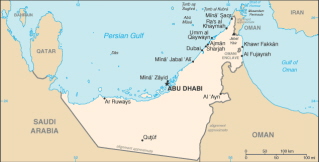
Commercially available genetic genealogy isn’t just for Americans and Europeans anymore. Eastern Biotech & Life Sciences, centered in Dubai, recently sent me an email announcing their new venture into the field of genetic genealogy testing.

Although it wasn’t apparent from the email that I received, Eastern Biotech & Life Sciences has partnered with Family Tree DNA to offer genetic genealogy testing. The following sentence comes from a press release at i-newswire: “Eastern Biotech & Life Sciences is proud to be associated with Family Tree DNA to create a database for the Middle Eastern population.”

From the Email:

“Dubai: 09/12/2007-Eastern Biotech & Life Sciences is set to launch a new Wall Chart of DNA Ancestry services to the people of the Middle East to help them invent their deep ancestors from 150,000 years ago. The roots of this tree lie more than 100,000 years in the past, at a time when our hunter-gatherer ancestors were living in Africa. As the branches of the tree multiply, they record the history of our species and the dramatic stories of how pioneering groups of humans explored and populated our planet. The different journeys they made shaped the world we know today.

From a simple mouth swab you can identify key genetic markers within your unique DNA. “By comparing these markers with genetic information taken from thousands of men and women living all across the world, we can reveal how your personal family history is descended from these epic events”, said Eng. Aida Omar, Marketing Executive of Eastern Biotech & Life Sciences.

DNA forms an unbroken chain from generation to generation, connecting you to your ancestors some 150,000 years ago, around 7,000 generations back. “Your DNA is passed from both of your parents. That is the reason we offer two paths (Paternal & Maternal) to construct your wallchart” said Eng. Aida Omar.

Maternal Ancestry (DNA-Mother)- mt DNA The DNA-Mother Wallchart tells the story of your ancient ancestors, based on scientific analysis of DNA you inherited from your mother. DNA-Mother works through analysis of mitochondrial DNA. This DNA is passed down to both genders so this service is open to all. Paternal Ancestry (DNA-Father)- Y-Chromosome. The DNA-Father Wallchart reveals the story of your ancient ancestors, based on scientific analysis of your DNA which you inherited from your father. DNA-Father traces the Y chromosome, passed down from father to son and therefore only found in males. If females are interested in tracing this side of their family tree, their DNA can be mapped by using a DNA sample from any close male relative of hers like father/brother.

Eastern Biotech & Life Sciences is a new generation provider of Predictive Genetics Testing services to the Middle Eastern people. Their aim is to be a pioneer of predictive and personalized healthcare by offering high quality services to their clients.”

Note that this product was also announced to the DNA Network a few months ago at EyeonDNA. To learn more, read this recent story in Eye of Dubai (in no way affiliated with Eye on DNA!).